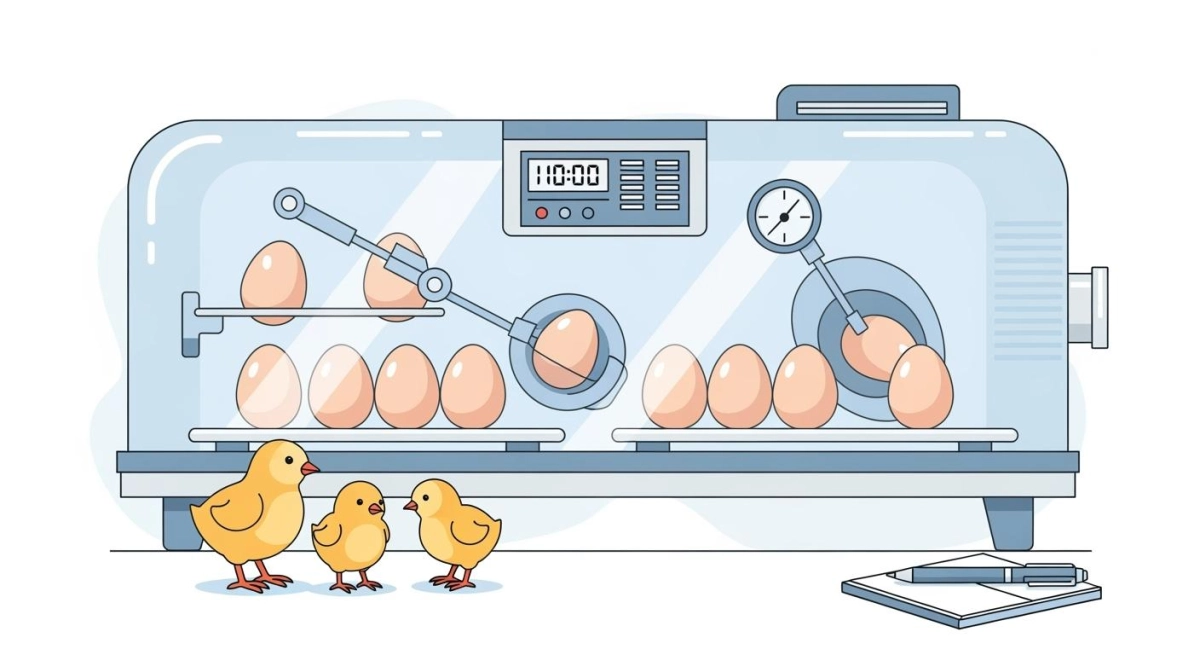
Hatching at home is easier when an incubator manages the routine for you. An egg incubator with automatic turning and humidity control reduces lid openings, limits errors, and keeps conditions stable so embryos develop consistently.
-
Automation saves time by providing frequent, gentle turns without manual effort.
-
Stable temperature, humidity, and turning improve overall hatch consistency and outcomes.
These features simplify the process and help you achieve dependable results.
Key Takeaways
-
An incubator with automatic turning streamlines daily care, and reliable humidity control supports clean, successful hatches.
-
Match the unit to your goals and batch size. Beginners often prefer compact models that are easy to learn and manage.
-
Hold temperature near 99.5°F (37.5°C). Keep humidity at 45–55% through day 18, then raise to 65–75% for lockdown (~last 3 days).
-
Verify sensors at egg height and recalibrate as needed to prevent drift.
-
Clean and disinfect between batches, then allow complete drying before reassembly.
Egg Incubator Scenarios & Capacity
User Types: Beginners, Classrooms, Home Breeders
Choose features based on who will use the incubator and what success looks like for you—first-time hatching, classroom demonstrations, or ongoing home breeding. The table below highlights typical needs:
| User Scenario |
Needs and Considerations |
|---|---|
| Classroom |
Plan for life cycle lessons and chick care/rehoming; maintain stable, safe conditions. |
| Home Breeders |
Target healthy chicks and consistent hatch rates; ensure space and husbandry skills for grow-out. |
| Beginners |
Favor clear controls and simple routines to avoid common mistakes. |
Tip: If you are new, start with a compact unit (about 6–12 eggs). It’s easy to manage and lowers the learning curve.
Batch Size Goals & Planning
Plan batch size before setting eggs. Align the number of eggs with your brooder space and care capacity. Use this simple workflow:
-
Select clean, crack-free eggs from healthy flocks. Set within ~5–7 days for better viability.
-
Store at 55–60°F with ~70–75% RH before incubation; warm to room temperature before setting.
-
Preheat a forced-air incubator to 99.5°F (37.5°C) to stabilize conditions.
-
Calibrate temperature and humidity sensors at egg height; place the unit where airflow and room temperature are steady.
-
Log temperature, humidity, and turning routine to spot trends and improve future batches.
Note: Classrooms should plan for chick care after hatch; home breeders should confirm space and time for growing birds.
Smaller batches suit beginners and classrooms; larger batches fit experienced users with more space and structured routines.
Automatic Turner & Humidity Control Benefits
How Automatic Turning Works
Frequent, gentle turning prevents membrane adhesion and promotes even nutrient exchange. Automatic systems reduce missed turns and keep the routine consistent across the day.
Higher turning frequency generally improves uniform development, especially early in incubation. Stop turning during the final ~3 days so chicks can position for hatch.
Tip: Use automatic turning throughout incubation and plan to stop about three days before hatch (lockdown).
-
Turning benefits include:
-
More uniform development
-
Fewer handling errors
-
Steadier hatch outcomes
-
Humidity Control Methods
Humidity protects embryos from excess moisture loss while supporting clean hatches. Modern incubators manage RH in different ways:
| Type of System |
Accuracy |
Ease of Use |
|---|---|---|
| Fully Automatic |
High – adjusts humidity automatically using a pump and hygrometer |
Very easy – program the target RH and keep the reservoir filled |
| Manual |
Variable – depends on user adjustments and monitoring |
More hands-on – add water and track RH regularly |
External refill ports and automatic humidifiers limit lid openings and keep RH steady. For manual systems, check water levels frequently and adjust ventilation carefully.
Note: Keep the lid closed as much as possible. Use external refill ports or automated humidification to avoid sudden RH swings.
Hold 45–55% RH through day 18. Increase to 65–75% RH for lockdown. Too little moisture causes excess weight loss; appropriate RH during hatch keeps membranes pliable.
Impact on Hatch Rates
Automation supports consistent routines that are hard to maintain manually. Accurate turning and stable humidity reduce common causes of late-stage loss and improve overall hatch quality.
-
Automatic turners:
-
Deliver consistent rotation
-
Reduce missed turns and handling errors
-
-
Controlled humidity:
-
Limits excessive moisture loss
-
Supports clean, timely hatches
-
With steady conditions, you can expect simpler, more repeatable results from batch to batch.
Temperature & Airflow Essentials
Forced Air vs. Still Air
You need to pick the best airflow for your incubator. Forced-air units use a fan to move air and keep conditions even; set 99.5°F (37.5°C). Still-air units rely on natural convection; measure at the top of the eggs and set 101–103°F. Forced air is generally easier for beginners and reduces hot/cold spots.
Tip: Even airflow supports uniform temperature and humidity across trays.
| Airflow Type |
Temperature Setting |
Best For |
Notes |
|---|---|---|---|
| Forced Air |
99.5°F (37.5°C) |
Beginners, hobbyists |
Uniform conditions; simpler humidity control |
| Still Air |
101–103°F (top of eggs) |
Experienced users |
Monitor multiple spots to avoid gradients |
Ventilation & Lockdown Period
Fresh air is essential for oxygen exchange. Keep vents partially open during days 1–18; at day 18, raise RH to 65–75% and open vents further for lockdown. Avoid direct drafts on eggs, but ensure steady exchange.
Note: During lockdown, high humidity and good airflow work together—open the lid only when necessary.
Sensor Placement & Calibration
Place thermometers and hygrometers at egg height to reflect what embryos experience. Cross-check with a second instrument, set alarms, and calibrate before each batch. Keep room conditions stable to reduce drift.
-
Steps for consistent readings:
-
Position sensors at egg level.
-
Verify with a backup thermometer/hygrometer.
-
Use alerts for temperature and humidity deviations.
-
Calibrate prior to setting eggs.
-
Stabilize the room environment.
-
Tip: Accurate sensors and routine checks prevent small issues from becoming hatch problems.
Egg Incubator Features & Setup
Key Specs Checklist
You want an incubator that is easy and safe to use. Prioritize these features for beginner-friendly operation and steady results:
-
Clear digital display for temperature and humidity.
-
External water port to refill without opening the lid.
-
Viewing window for quick checks without disturbance.
-
Built-in candler to assess development progress.
-
Alarms for out-of-range temperature or humidity.
-
Automatic recovery of settings after power loss.
These features make monitoring straightforward and reduce the chance of avoidable errors.
Sizing & Hygiene
Size and design affect cleaning and longevity. Look for smooth surfaces and removable parts that simplify sanitation.
| Feature |
Benefit |
|---|---|
| Slidable fan cover |
Allows access for dust removal and routine cleaning |
| Individual fan blade access |
Keeps airflow components working efficiently |
| ABS material |
Durable and resistant to routine wear |
| Robust design |
Simplifies maintenance for repeated use |
| Easy cleaning |
Reduces contamination risks |
Tip: Wear gloves during cleaning. Wash with mild soap, disinfect using one approved method, and let all parts dry completely.
Setup & Calibration Tips
Set up the incubator methodically for stable performance:
-
Place the unit on a flat, steady surface away from direct sun and drafts.
-
Ensure clearance around the cabinet for airflow.
-
Clean, disinfect, and dry all removable parts before use.
-
Fit tray modules to the egg type for proper support.
-
Preheat for 12–24 hours. For forced air, set 99.5°F (37.5°C); for still air, set 101–102°F. Target 45–55% RH initially.
-
Use two instruments to verify readings at egg height.
-
Calibrate sensors and test alarms before setting eggs.
-
Record temperature, humidity, and turning schedule for each batch.
Note: A simple checklist—temperature, humidity, turning, and ventilation—keeps daily routines consistent.
Quick Reference Card
Chicken Egg Incubation Summary
This table shows the main settings for hatching chicken eggs. Keep it handy during each batch.
| Parameter |
Value / Range |
|---|---|
| Incubation Period |
21 days |
| Forced-Air Temperature |
99.5°F (37.5–37.6°C) |
| Still-Air Temperature |
101–103°F (measured at egg top) |
| Humidity (Days 1–18) |
45–55% |
| Humidity (Lockdown) |
65–75% |
| Egg Turning |
Frequent micro-turns (automatic) or 3–6 times/day |
| Turning Stop |
Day 18 (start lockdown) |
| Weight Loss Target |
11–13% by day 18 |
| Ventilation |
Increase during lockdown |
Tip: Always check temperature at egg height for the most accurate reading.
Turning & Humidity Schedule
Follow a simple, consistent routine for turning and humidity:
-
Turn eggs regularly from day 1 to day 18.
-
Use automatic turning or turn by hand 3–6 times daily.
-
-
Stop turning on day 18.
-
Maintain 45–55% RH for the first 18 days.
-
Raise to 65–75% RH for the final three days (lockdown).
-
Avoid opening the incubator during lockdown.
Reminder: Turning stops during lockdown so chicks can position for hatch.
Storage & Lockdown Tips
Use these guidelines for storage and the final stage:
-
Store eggs at 53–60°F with ~70–80% RH before incubation.
-
Set pointy end down or lay eggs on their side.
-
Handle clean eggs gently to protect shells and membranes.
-
Candle before lockdown to assess development.
-
On day 18, stop turning, raise humidity, and keep the lid closed.
-
Open only if necessary during lockdown.
Note: Careful storage and a steady lockdown improve hatch quality.
With automatic turning, controlled humidity, and stable temperature, you can reduce routine workload and avoid common mistakes. Choose clear digital controls and keep a simple daily checklist to maintain consistency.
Next Steps:
-
Compare units with automatic turning and humidity control.
-
Prepare eggs and stabilize settings at 99.5°F and 45–55% RH.
-
Print the quick reference card to keep settings close at hand.
Reliable equipment and steady routines make hatching more predictable and enjoyable.
FAQ
How often should you turn eggs in the incubator?
Use automatic turning or turn by hand about 3–6 times per day. For chicken eggs, stop turning on day 18.
What is the best humidity level for hatching chicken eggs?
Maintain 45–55% RH for days 1–18. Raise to 65–75% RH for the last three days (lockdown). Verify using a hygrometer at egg height.
Where should you place the incubator for best results?
Set the unit on a flat, stable surface away from direct sunlight and drafts. Leave clearance so air can circulate.
How do you clean the incubator before setting eggs?
Wash removable parts with warm, soapy water. Disinfect using one approved method (for example, properly diluted bleach or hydrogen peroxide). Rinse if required and let all parts dry completely.
What should you do if the temperature or humidity changes suddenly?
Confirm setpoints, check with a backup thermometer/hygrometer, add water if RH drops, and allow the chamber to restabilize without frequent lid openings.
Data authenticity note: Guidance here reflects industry practice, equipment manuals, and aggregated hatch logs. Settings may require minor adjustments for your specific incubator model and room conditions. No external sources are linked.
References :
1. Industry practice and field logs (multi-batch observations).
2. Equipment manuals for forced-air and still-air incubators (various models and revisions).
3. Hatchery SOPs and maintenance checklists.
4. Poultry incubation texts and training materials (2015–2025 editions).
0 Comments