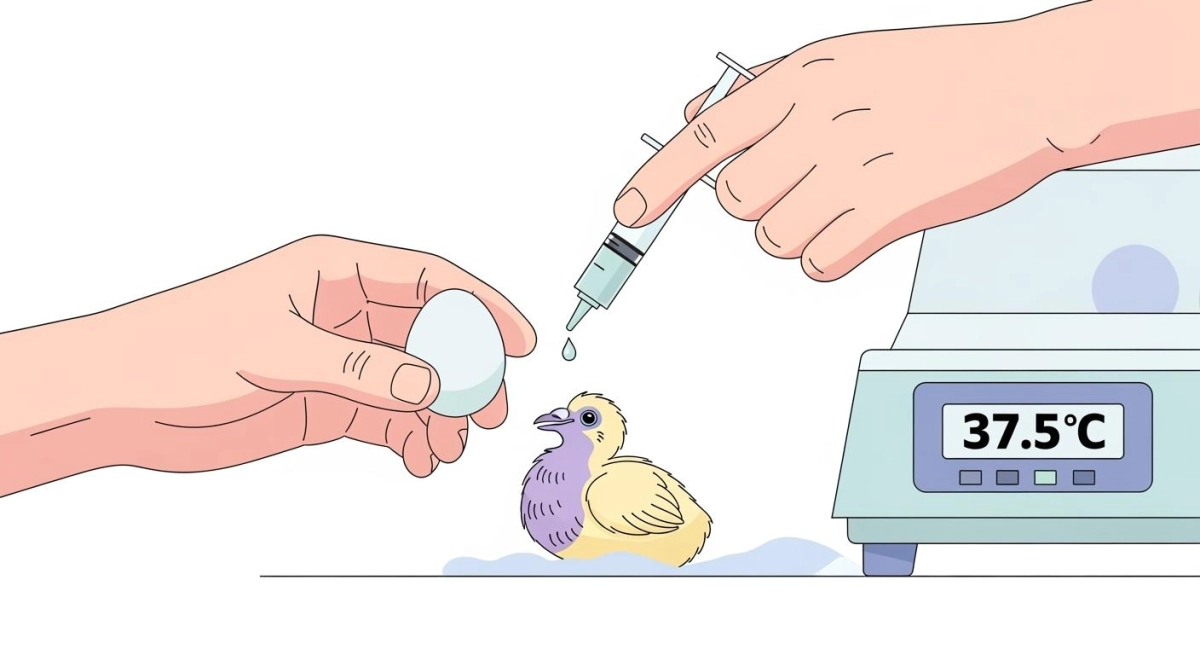
Pigeon eggs usually hatch in about 18 days when conditions stay steady. Aim for an incubator temperature around 99.5°F and humidity between 55% and 60%. Treat these numbers as working ranges and focus on keeping them stable. Artificial incubation and hand-feeding are delicate jobs and can be more demanding than letting parent pigeons raise their chicks. This guide walks you through the basics, from incubator settings to early squab care. For serious problems, always talk with an avian vet. Do not take eggs or babies from wild pigeons or doves; call a licensed wildlife rehabilitator if you find them in trouble. With clear steps and close observation, you can support healthy pigeon incubation and help chicks grow strong.
Key Takeaways
-
Pigeon eggs typically hatch in 17 to 19 days, with many hatching around day 18. Track your set date so you can follow the incubation timeline.
-
Keep the temperature steady at 99.5–100.0°F and humidity between 55% and 60%. Stable conditions help eggs develop and hatch well.
-
Use a forced-air incubator with a reliable thermometer and hygrometer. These tools help you monitor conditions and keep them consistent.
-
Turn the eggs often. Use an automatic turner every 1 to 2 hours, or turn them by hand 3 to 5 times each day. Stop turning the eggs 48 to 72 hours before they hatch.
-
Candle the eggs on days 5 to 7 and again on days 10 to 12. Look for veins and movement inside the eggs to confirm growth.
-
If you need to hand-feed squabs, use a commercial formula. Wait about 12 hours after hatching before feeding so the chick can finish absorbing the yolk.
-
Watch for chicks that are too wet or too dry, as these signs can point to humidity problems. Adjust your incubator settings as needed.
-
Write down details about your incubation process, including temperature, humidity, and feeding times. Simple records make it easier to improve future hatches.
Pigeon Incubation Cheat Sheet
Key Numbers: Time, Temp, Humidity
Keep your settings steady for good hatch rates. pigeon incubation time is usually 17 to 19 days. Most eggs hatch around day 18 if conditions stay stable. Set the incubator between 99.5°F and 100.0°F (37.5–37.8°C). Try to keep humidity at 55% to 60% for most days, then raise humidity to 65%–70% for the last 2 or 3 days. Small swings are normal, but large jumps in temperature or humidity make hatching harder. Consistency matters more than chasing a single “perfect” number.
Tip: Pigeon eggs need more humidity than chicken eggs, especially near hatching. Extra moisture in the final days helps prevent chicks from drying out or getting stuck in the shell.
Essential Equipment Checklist
You need a few key items to get started with pigeon eggs. Here is a simple list:
-
A reliable desktop egg incubator with controls for temperature and humidity
-
Good thermometer and hygrometer (digital is usually easiest to read)
-
Automatic egg turner or a plan to turn eggs by hand 3–5 times a day
-
Candling light or small LED flashlight to check eggs
-
Clean room with no drafts and steady temperature (about 68–77°F)
-
Brooder for chicks after hatching (heat source, bedding, and a thermometer)
-
Commercial hand-feeding formula for squabs (do not use milk, bread, or insects)
-
Feeding syringes or other soft feeding tools
Note: You do not need hand-feeding tools for chicks raised by their parents. Use a brooder and feeding tools only if you must hand-feed or in emergencies.
When to Use Artificial Incubation
Use artificial incubation when natural incubation is not possible or safe. If parent pigeons leave the eggs, or eggs get cold or wet, move them to an incubator. High humidity in summer can spoil eggs, and low temperatures in winter can freeze them. Artificial incubation can also help if you need tighter control over timing or want more chicks each year. For larger clutches, a multi-tray egg incubator for small birds can keep conditions more even across several eggs. Always try natural incubation first if the parent birds are healthy and caring.
Reminder: Artificial incubation is best used as a backup plan. Parent pigeons usually provide the most natural warmth and care unless something is wrong.
If you follow these steps and keep your settings steady, your pigeon eggs have a good chance to hatch on time. Remember, pigeon incubation time is shorter than chicken eggs, and humidity needs are different. Watch your numbers and check for changes every day.
Pigeon Incubation Time and Hatch Window
Typical Incubation Time: 17–19 Days
You can expect pigeon eggs to hatch in about 17 to 19 days. Most hatches happen right around day 18 if you keep the temperature and humidity steady. This period is often called the pigeon incubation time. If you see no signs of hatching by day 21 or 22, check the eggs for movement. Sometimes eggs take longer if the temperature runs low or if the eggs sit in a cooler spot in the incubator.
Tip: Write down the date you set the eggs. Tracking your pigeon incubation time makes it easier to spot early or late hatches.
Incubation Milestones and Pipping
You will notice several key milestones during incubation. Here is what to look for:
-
Day 5–7: Candle the eggs to check for veins and early development. You should see a network of blood vessels if the egg is fertile.
-
Day 10–12: Candle again to see embryo movement and a growing air cell. The chick should look more solid, and the air cell should get larger.
-
Day 17: Most chicks make their first internal pip. This means the chick breaks into the air cell inside the egg. You may see a shadow or movement near the large end of the egg.
-
Day 18–19: The chick makes an external pip. This is a small crack or hole in the shell. Hatching usually follows within 12 to 24 hours, but sometimes it can take up to 48 hours if conditions stay steady.
If you do not see any pipping or movement by day 21, the egg may not be viable. Always candle the egg before deciding what to do next.
Note: Pipping is a sign that the chick is ready to hatch. Internal pip comes first, then external pip, and finally the chick pushes out of the shell.
Pigeon vs Chicken Egg Timeline
Many people know about chicken eggs, so it helps to compare them with pigeon eggs. Here is a quick bullet list to show the main differences:
-
Incubation Time:
-
Pigeon eggs: 17–19 days (most hatch on day 18)
-
Chicken eggs: 21 days
-
-
Incubation Temperature:
-
Pigeon eggs: 99.5–100.0°F (37.5–37.8°C)
-
Chicken eggs: 99.5–100.0°F (37.5–37.8°C)
-
-
Humidity (Main Period):
-
Pigeon eggs: 55–60% RH
-
Chicken eggs: 45–55% RH
-
-
Humidity (Hatch/Lockdown):
-
Pigeon eggs: 65–70% RH
-
Chicken eggs: 65–70% RH
-
-
Sensitivity to Drying Out:
-
Pigeon eggs: More sensitive, need higher humidity to avoid dry chicks
-
Chicken eggs: Less sensitive, can handle slightly lower humidity
-
You will notice that pigeon incubation time is shorter than chicken eggs. Pigeon eggs also need more humidity, especially near hatching. If you use the same settings as chicken eggs, you may see problems like dry chicks or late hatches. Adjust your incubator for pigeon eggs to get the best results.
�� Remember: Track each step and milestone. This helps you spot problems early and gives your chicks the best chance to hatch strong and healthy.
Incubator Settings for Pigeon Eggs
Temperature and Humidity Targets
You need to set your forced-air incubator to 99.5–100.0°F (37.5–37.8°C). Try to keep temperature swings within ±0.5°F. If the temperature goes above 100.5°F, chicks may hatch early or have trouble. For most of the cycle, keep humidity at 55–60% relative humidity (RH). In the last 2–3 days, called "lockdown," raise humidity to 65–70% RH. This helps chicks hatch without getting stuck in the shell.
Tip: Pigeon eggs need more humidity than chicken eggs, especially near hatching. If you use chicken egg settings, chicks may dry out or have trouble breaking free.
Egg Turning: Angle and Frequency
Turning eggs is very important during pigeon incubation time. You can use an automatic turner that moves eggs every 1–2 hours. If you turn by hand, do it 3–5 times each day. Turn eggs about 40–45° from side to side. Always keep the small end slightly down. Stop turning eggs 48–72 hours before you expect them to hatch. This is usually on day 17. Stopping turning helps chicks get into the right position for hatching.
Egg Turning Quick List:
-
Auto-turn: every 1–2 hours
-
Manual turn: 3–5 times daily
-
Angle: 40–45°, small end down
-
Stop turning: Day 17 (lockdown)
Candling Schedule and Air Cell
Candling lets you check if eggs are developing. Use a small flashlight or candling lamp. Hold the egg gently and shine the light through the large end.
Follow this candling schedule:
-
Day 5–7: Look for veins and a small embryo. Fertile eggs show a spiderweb of blood vessels.
-
Day 10–12: Check for movement and a growing air cell. The chick should look bigger, and the air cell should be larger.
-
Just before lockdown (Day 15–16): Candle one last time. The air cell should dip downward and take up more space. The egg should have lost about 10–13% of its weight by now.
As you reach the end of incubation, candle daily if you are unsure. When the air cell dips and you see small shadows moving inside, the chick is getting ready to hatch. This means the chick has moved into its final hatching position. Usually, hatching starts within 12–24 hours after you see these signs.
Note: If you do not see veins or movement by day 7 or 12, the egg may not be fertile. Remove any eggs that show no signs of life to keep the rest healthy.
By following these settings and checks, you give your pigeon eggs a strong chance to hatch on time and stay healthy.
Step-by-Step Hatching Guide
Pre-Warming and Loading Eggs
Before you start incubation, pre-warm your pigeon eggs. This step helps prevent condensation and gives your chicks a better chance at a uniform hatch. Place your eggs in a room set to about 77°F (25°C) for at least 12 hours before loading them into the incubator. If you use a multi-stage incubator, make sure the eggs reach at least 80°F (27°C) to avoid sweating. A dehumidifier in the pre-warming room can help keep the eggs dry.
When you load the eggs, always use clean hands. Place the eggs with the small end slightly down. Try to load all eggs at once for even development. If you have eggs from different ages or flocks, put the oldest eggs and those from the most fertile birds in the best spots in the incubator. Avoid starting with a half-full incubator. This helps keep the temperature and humidity balanced for all eggs.
Tip: Pre-warming your eggs helps every chick start strong and hatch together.
Daily Checks and Stability
You need to check your incubator every day. This keeps the environment stable and helps you catch problems early. Use this table to guide your daily routine:
| Daily Check |
Description |
|---|---|
| Temperature/Humidity Check |
Make sure the incubator stays at 99.5–100.0°F and 55–60% RH. |
| Water Top-Up |
Add water if needed to keep humidity steady. |
| Turning Confirmation |
Check that eggs turn every 1–2 hours (auto) or 3–5 times by hand. |
| Candling Notes |
Write down what you see during candling. |
Keep a notebook or chart near your incubator. Record the temperature, humidity, and any changes you make. This habit helps you spot trends and fix issues before they affect your hatch.
�� Note: Consistent checks support better hatch rates and healthier chicks.
Lockdown Setup: Last 2–3 Days
Lockdown is the final stage before your chicks hatch. You need to make a few key changes during this time:
-
Stop turning the eggs about 48–72 hours before the expected hatch (usually on day 17).
-
Raise the humidity to 65–70% RH. This helps chicks break free from the shell without drying out.
-
Avoid opening the incubator during lockdown. Opening the lid can cause humidity to drop and may harm the chicks.
Set your incubator for lockdown as soon as you see signs of internal pipping or reach day 17. Double-check that the water trays are full and the temperature stays steady. Watch for any movement or sounds from the eggs, but do not disturb them.
Alert: Do not turn the eggs or open the incubator during lockdown. Let the chicks hatch in a calm, moist environment.
By following these steps, you give your pigeon eggs a better chance to hatch safely and on time.
Identifying Non-Viable Eggs
You want every egg in your incubator to hatch, but sometimes some eggs will not develop. Spotting non-viable eggs early helps you protect the healthy ones. You can use a few simple checks to identify eggs that will not hatch.
Start by candling your eggs on days 5–7 and again on days 10–12. Hold a small flashlight or candling lamp to the large end of the egg. Look for clear signs of life. A healthy, fertile egg shows a network of blood vessels and a dark spot that moves as the chick grows. If you see no veins, no movement, or a clear egg after day 7, the egg is likely not fertile.
By day 10–12, a good egg will show a larger embryo and a growing air cell. If the egg looks cloudy, has a blood ring, or smells bad, remove it right away. These signs mean the egg has stopped developing or has become contaminated.
You should also check the outside of each egg. Some eggs show problems before you even candle them. Watch for these signs:
-
Thin, cracked, or misshapen shells
-
Rough or bumpy shell texture
-
Translucent lines or patches on the shell
-
Shells that feel soft or weak
-
Eggs with no shell or very little shell
Eggs with these problems often come from hens with calcium deficiency or health issues. Poorly formed eggs have a higher risk of bacterial contamination. These eggs rarely hatch and can harm the rest if left in the incubator.
If you notice an egg that feels much lighter than the others, it may have lost too much moisture or never developed. Compare the air cell size during candling. A non-viable egg may have an air cell that is too large or too small for its age.
Tip: Always wash your hands before handling eggs. Remove any egg that smells bad, leaks, or shows no signs of life by day 12. This keeps your incubator cleaner and safer for healthy chicks.
If you reach day 21–22 and an egg has not hatched, candle it one last time. If you see no movement or hear no peeping, the chick inside has likely stopped developing. Remove these eggs to prevent them from spoiling and affecting your next hatch.
By checking your eggs often and knowing what to look for, you give your healthy chicks the best chance to hatch strong and safe.
Hand-Feeding Squabs
When to Hand-Feed vs Parent-Feed
Healthy parent pigeons should feed their own chicks whenever possible. Parent birds provide the best natural nutrition and warmth for squabs. Hand-feeding is only necessary when the parents cannot care for the chicks. This can happen if one or both parents die, abandon the nest, or become too sick to feed. Sometimes you may need to hand-feed if the parents do not produce enough crop milk or if the squab gets rejected.
Avian care experts have found that hand-feeding can help squabs survive and grow when parents are not available. Hand-reared chicks often do better than those raised by foster parents, but they may not do as well as chicks raised by their own parents. If you must hand-feed, you still give the squab a much better chance at life than leaving it without care.
�� Tip: Always try to let the parent pigeons raise their chicks. Use hand-feeding only as a backup when you have no other safe option.
First 24 Hours After Hatch
The first day after hatching is very important for a squab. Do not feed the chick right away. Let the squab rest for about 12 hours after it hatches. During this time, the chick absorbs the last of the yolk inside its body. This yolk gives the squab energy and helps it recover from hatching.
Keep the chick warm and dry. Place it in a brooder set to 85–90°F (29–32°C). Make sure there are no drafts. Do not try to feed the squab until it is fully dry and alert. Feeding too soon can cause digestive problems or even harm the chick.
Note: Never rush to feed a newly hatched squab. Wait at least 12 hours so it can rest and use its yolk reserves.
Formula, Temp, and Tools
When you start hand-feeding, you need the right formula, temperature, and tools. Use only a commercial hand-feeding formula made for pigeons or doves. You can also use a special baby bird formula if it is labeled as safe for pigeons. Do not use milk, bread, or insects. These foods can make the chick sick or cause death.
Some experienced breeders use warm egg yolk for the first few feeds. If you choose this method, warm the raw egg yolk to body temperature before feeding. Always test the temperature on your wrist. The formula should feel warm but not hot—about 102–106°F (39–41°C).
You need the right tools for feeding. Use a soft-tipped feeding syringe or a small spoon. Some people use a crop needle, but this is only for experts. Clean all tools before and after each feeding to keep the chick safe from germs.
Hand-Feeding Checklist:
-
Commercial pigeon or dove hand-feeding formula
-
Warm egg yolk (optional for first feeds)
-
Clean feeding syringes or soft-tipped spoons
-
Small bowl for mixing formula
-
Thermometer to check formula temperature
-
Brooder set to 85–90°F (29–32°C)
⚠️ Alert: Never feed cow’s milk, bread, or insects to squabs. These foods can cause serious health problems.
By following these steps, you help your squab grow strong and healthy, even if it cannot stay with its parents.
Feeding Frequency by Age
Feed squabs on a schedule that matches their age. Young chicks have small crops and need frequent, small meals. As they grow, you can increase the amount and reduce the number of feedings. This helps squabs digest food well and reduces the chance of crop problems.
Below is a table that shows example volumes and feeding frequency based on the age of your pigeon squab. Individual chicks may need slightly more or less depending on body weight and formula thickness:
| Age (days) |
Volume per feed (ml) |
Feeds per day |
|---|---|---|
| 2–3 |
2.5–3 |
6 |
| 4–5 |
3.5–4 |
6 |
| 6–7 |
4.5–5 |
5–6 |
| 8–9 |
5.5–6 |
5 |
| 10–11 |
6.5–7 |
5 |
| 12–13 |
7.5–8 |
4–5 |
| 14–15 |
8.5–9 |
4 |
| 16–17 |
9.5–10 |
4 |
| 18–19 |
10–11 |
3–4 |
| 20–21 |
11–12 |
3–4 |
| 22–23 |
12–13 |
3 |
| 24–25 |
12–13 |
3 |
| 26–27 |
14–15 |
3 |
| 28–29 |
15–16 |
2–3 |
You can see that squabs need more food as they get older but fewer feedings each day. Always check the crop before each feeding. The crop should feel soft and nearly empty. If the crop is still full, wait a little longer before feeding again.
�� Tip: For the first week, feed every 2–3 hours during the day. At night, you can stretch the interval to about 4 hours, but avoid skipping feedings. As squabs grow, you can space feedings further apart.
Step-by-Step Feeding Routine:
-
Warm the formula to 102–106°F (39–41°C).
-
Check the crop. Feed only if it feels soft and mostly empty.
-
Use a clean syringe or spoon for each feeding.
-
Offer the appropriate amount for the squab’s age.
-
Watch for swallowing and crop filling. Stop if the crop feels full and soft.
-
Clean up any spills and keep the brooder warm.
Do not use cow’s milk, bread, or insects for feeding. These foods can harm squabs and cause sickness. Stick to commercial hand-feeding formula or other pigeon-safe baby food.
�� Note: As squabs reach about 15–21 days, you can start offering soaked grains or pellets. By 4–6 weeks, most squabs eat on their own and need only regular pigeon feed.
If you follow this schedule, you help your squabs grow strong and healthy. Feeding at the right times and amounts gives them a solid start in life.
Troubleshooting Incubation and Chick Issues
Wet Chicks and High Humidity
You might notice chicks that look sticky, damp, or have feathers matted down after hatching. This is a classic sign of “wet chicks.” high humidity during incubation often causes this problem. When humidity stays above the recommended 55–60% for most of the cycle, or above 70% during hatch, chicks cannot lose enough water inside the egg. This can lead to sticky down, unabsorbed yolk, and sometimes navel infections.
Wet chicks may struggle to break free from the shell. You might see black buttons or swelling around the navel. These issues can lead to infections and weak chicks.
To reduce high humidity:
-
Check your incubator’s water trays. Remove extra water if needed.
-
Increase ventilation by opening vents slightly.
-
Use a digital hygrometer to monitor humidity closely.
| Problem |
Solution |
|---|---|
| High humidity |
Increase ventilation, remove water trays, monitor with hygrometer |
Tip: If you see several wet chicks, plan to lower the humidity for your next hatch. Keep the water pan area to about half the incubator floor and adjust as needed.
Dry Chicks and Low Humidity
Dry chicks look different. They may appear shrunken, with tight, dry skin and fluff stuck to their bodies. This happens when humidity drops below 55% during incubation or below 65% during hatch. Low humidity causes too much water loss from the egg. The inner membrane can dry out and stick to the chick, making it hard for the chick to hatch. This is called “shrink-wrapping.”
To help prevent dry chicks:
-
Keep humidity at 55–60% for most of incubation.
-
Raise it to 65–70% for the last 2–3 days.
-
Avoid opening the incubator during lockdown.
If you notice dry chicks, check your hygrometer and add water to the trays. Make sure the incubator seals well and vents are not open too wide.
�� Alert: If you see chicks struggling to hatch with dry membranes stuck to them, do not peel the shell unless you have experience and clear guidance. This can injure the chick.
Late Hatches and Temperature
Sometimes pigeon eggs do not hatch on day 18. You may see late hatches, with chicks emerging on day 20 or even day 21. Low average temperature is one common cause. If your incubator runs below 99.5°F (37.5°C), development slows down. Eggs placed in a cooler spot or exposed to drafts may also hatch late.
Humidity also plays a role. If humidity stays too high (above about 70–80%), eggs lose water too slowly. This can cause weak chicks or late hatches. High humidity limits water evaporation, which the embryo needs for healthy development.
You can reduce late hatches by:
-
Keeping temperature steady at 99.5–100.0°F.
-
Placing the incubator in a draft-free room.
-
Checking that humidity stays within the recommended range.
Common causes of late hatches:
-
Incubator temperature too low
-
Eggs in a cold spot
-
Humidity too high
Note: Pigeon eggs may be slightly more sensitive to low temperature than chicken eggs. Double-check your settings if you see repeated late hatches.
Decision Table (in text):
If you see wet chicks, dry chicks, or late hatches, first check your incubator’s temperature and humidity. Adjust settings as needed. If you notice chicks with swollen navels, black buttons, or if they cannot hatch after pipping for more than 48 hours, call an avian vet or wildlife rehabilitator. Red-flag signs include chicks gasping, bleeding, or showing no movement after pipping.
By watching for these issues and acting quickly, you give your pigeon chicks the best chance to grow strong and healthy.
When to Call a Vet
Sometimes you will see problems with your pigeon chicks that you cannot fix at home. Quick action can save a chick’s life. It helps to know when to call a vet for help. Not every issue needs a professional, but some signs mean you should get expert care right away.
Look for these high-risk signs in your squabs:
-
Chicks that do not gain weight or seem much smaller than their siblings
-
Feathers that grow in strange patterns or eyes that do not open on time
-
Many stress bars on the feathers, which can show that your chick is sick or stressed
-
A mouth that looks wet inside, even though there are no sores or white patches (possible vitamin or breathing problem)
-
Crop that does not empty between feedings, or weak crop movements
-
Spine, neck, wings, or legs that look bent, twisted, or weak
-
Vent area that is dirty or has stuck droppings
�� Tip: Healthy chicks should have smooth, clean feathers, bright eyes, and a vent that stays free of mess. They should stand and move without trouble.
Watch for these emergency signs as well:
-
Chicks that gasp for air or breathe with an open mouth
-
Bleeding from the navel or any part of the body
-
No movement or sound after pipping for more than 48 hours
-
Severe diarrhea that does not stop
-
Chicks that cannot stand or keep falling over
If you see any of these problems, call an avian vet as soon as possible. Do not wait to see if things get better on their own. Some issues can get worse very quickly. Early help gives your chick the best chance to survive.
Keep a record of your chicks’ weight, feeding times, and any changes you notice. This information helps the vet find the problem faster. If you cannot find a vet who knows birds, ask for a wildlife rehabilitator or animal rescue with bird experience.
�� Note: Never try to treat serious problems at home if you are not sure what to do. Quick action and expert care can make all the difference for your pigeon chicks.
Quick Reference for Incubation and Care
Incubator Settings Card
You can use this card to set up your incubator for pigeon eggs. Keep these numbers close to your incubator for quick checks.
| Setting |
Value |
|---|---|
| Temperature |
99.5–100.0°F (37.5–37.8°C) |
| Humidity (Days 1–16) |
55–60% RH |
| Humidity (Lockdown) |
65–70% RH (last 2–3 days) |
| Turning Frequency |
Auto: every 1–2 hours |
| Manual: 3–5 times daily |
|
| Turning Angle |
40–45°, small end slightly down |
| Stop Turning |
Day 17 (48–72 hours before hatch) |
| Candling Days |
5–7, 10–12, before lockdown |
| Room Temperature |
68–77°F (20–25°C) |
��️ Tip: Pigeon eggs need higher humidity than chicken eggs, especially during hatch. Always check your settings before starting a new batch.
Feeding and Brooder Card
You can follow this table for feeding and brooder care. Adjust the volume and temperature as your squabs grow.
| Age (days) |
Volume per feed (ml) |
Feeds per day |
Brooder Temp (°C) |
Humidity (%) |
|---|---|---|---|---|
| 14–15 |
8.5–9 |
4 |
32–33 |
55–65 |
| 16–17 |
9.5–10 |
4 |
31–33 |
55–65 |
| 18–19 |
10–11 |
3–4 |
30–31 |
55–65 |
| 20–21 |
11–12 |
3–4 |
29–30 |
55–65 |
| 22–23 |
12–13 |
3 |
28–29 |
55–65 |
| 24–25 |
12–13 |
3 |
27–28 |
55–65 |
| 26–27 |
14–15 |
3 |
26–27 |
55–65 |
| 28–29 |
15–16 |
2–3 |
24–26 |
55–65 |
�� Note: Use only commercial hand-feeding formula for squabs. Never feed milk, bread, or insects.
Notes for Your Results
You can track your progress and spot patterns by keeping notes. Record your observations in a table like this:
| Observation Type |
Details Example |
|---|---|
| Incubation Roles |
Male sits 10 a.m.–4 p.m.; female covers the rest |
| Nest Defense |
Parents raise wings and fluff feathers if eggs are threatened |
| Feeding Behavior |
Both parents produce crop milk; squabs compete for food |
| Parental Care |
One parent guards chicks from danger |
| Sanitation |
Parents eat eggshells to keep nest clean |
| Squab Independence |
Squabs eat on their own after 28 days, reach about 500 g |
✏️ Tip: Write down hatch dates, feeding times, and chick weights. You can use these notes to improve your results with each hatch.
You can print this section or copy the tables to your notebook. Keeping records helps you learn and gives your pigeons the best care.
You can hatch healthy pigeons by following a few key numbers and steps. Keep your incubator at 99.5–100.0°F and humidity at 55–60%, raising it to 65–70% for the last days. Warmth is vital for baby pigeons. Use a thermometer to check the brooder. When hand-feeding, mix formula to 38–41°C, use a clean syringe, and feed slowly. Always record your results and refer to your Quick Reference Card. With patience and careful notes, you can improve with every hatch. Every new chick teaches you something.
FAQ
How long does it take for pigeon eggs to hatch?
You can expect pigeon eggs to hatch in 17 to 19 days. Most eggs hatch on day 18 if you keep the temperature and humidity steady.
What temperature should I set my incubator for pigeon eggs?
Set your incubator between 99.5°F and 100.0°F (37.5–37.8°C). Use a digital thermometer to check the temperature often. Avoid letting it go above about 100.5°F.
How often do I need to turn pigeon eggs?
Turn pigeon eggs every 1–2 hours with an automatic turner. If you turn by hand, do it 3–5 times each day. Always keep the small end slightly down.
What is the difference between pigeon and chicken egg incubation?
Pigeon eggs hatch faster and need higher humidity than chicken eggs. Pigeon eggs take 17–19 days, while chicken eggs take about 21 days. Pigeon eggs need 55–60% humidity, but chicken eggs usually need only 45–55%.
When should I start hand-feeding a squab?
Wait about 12 hours after the chick hatches before you start hand-feeding. The squab needs time to rest and absorb the yolk.
What should I feed baby pigeons?
Feed squabs only commercial hand-feeding formula made for pigeons or doves. Never use cow’s milk, bread, or insects. Warm the formula to 102–106°F before feeding.
How do I know if a chick needs a vet?
Call a vet if you see chicks gasping, bleeding, not gaining weight, or unable to stand. Quick action helps protect your chick.
Can I use the same incubator settings for pigeons and chickens?
No, you should adjust humidity for pigeons. Use 55–60% for most of the cycle and 65–70% for hatching. Chicken eggs typically need less humidity.
Data authenticity note: The incubation and feeding ranges in this guide are based on common small-bird incubation practice, example settings from household egg-incubator manuals, and experience logs from hobby keepers. These values are intended as practical starting ranges and should always be cross-checked against your own incubator instructions and advice from an avian veterinarian.
References
-
Standard poultry and pigeon husbandry handbooks discussing artificial incubation and brooding.
-
Household egg-incubator user manuals outlining typical temperature and humidity ranges for small bird eggs.
-
Aggregated hatch logs and observations from experienced pigeon breeders on incubation time and squab growth.
-
General avian veterinary guidance on hand-feeding techniques, formula preparation, and early chick health monitoring.
0 Comments