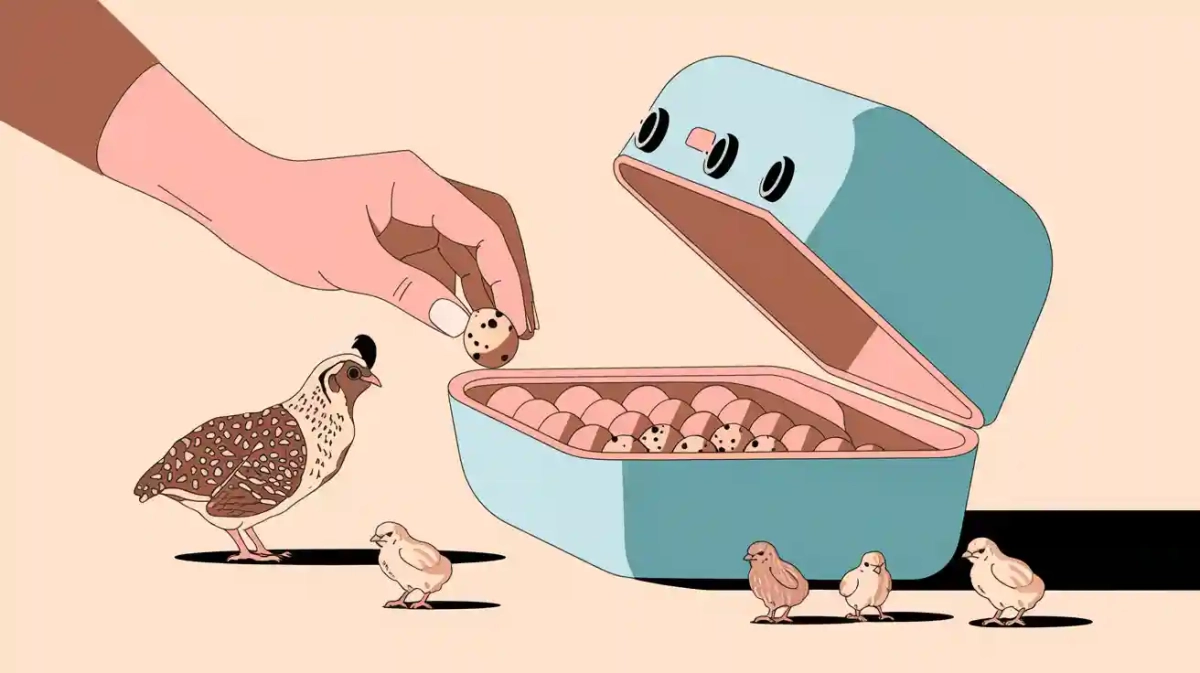
Are you searching for the best quail egg incubator for Coturnix quail? You need one that keeps the temperature steady. It should have a safe tray and turn eggs by itself. These things are important because Coturnix quail eggs are very small. They weigh about 10–15 grams (0.35–0.53 ounces). Small eggs can change fast if things are not right. Experts say to use a forced air incubator and an egg turner. This helps you get good results. If you are new, choose an incubator with easy controls. It should also have clear displays. This will help keep your quail eggs safe. It also makes hatching much easier.
Key Takeaways
-
Pick an incubator that turns eggs by itself. Keep the temperature at 99.5°F (37.5°C). Keep humidity at 45% for days 1–14, then raise to 65–70% for the last 3 days (lockdown). Use automatic turning every 2 hours (≈12 turns/day) until day 15, then stop turning. Put eggs apart in the incubator so air can move and heat spread. Check and clean your incubator often.
Who Needs This
Coturnix Quail Projects
Are you planning to raise coturnix quail for eggs or meat? You might want to start a small flock for your family or a bigger group for your farm. Many people choose coturnix quail because they grow fast and lay eggs almost every day. Here are some common goals when you start a coturnix quail project:
-
Raising quail for eggs
-
Raising quail for meat
-
Breeding quail for sustainability
You can maximize egg production with the right incubator. If you want to raise coturnix quail, you need to focus on breeding and keeping your birds healthy. A good incubator helps you hatch strong chicks and keep your project going.
Classroom & Home Use
Teachers and families love using quail egg incubators for learning and fun. You can watch the whole process, from egg to chick, right in your classroom or home. Check out how a specialized incubator helps you:
| Benefit |
Description |
|---|---|
| Efficient Incubation |
You can hatch a new batch of coturnix quail eggs in about 17–18 days, so you always have chicks. |
| High Egg Production |
Quail lay eggs almost daily, giving you a steady supply for eating or sharing. |
| Quick Maturity |
Coturnix quail often start laying around 6 weeks (about 42 days), much faster than chickens. |
| Educational Value |
Watching eggs hatch teaches kids about science and responsibility. |
You get to see how breeding works and learn about quail egg production. Kids can track growth and learn about caring for animals.
Breeding & Expansion
If you want to expand your coturnix quail flock, you need to pay attention to breeding. Keep the incubator at 99.5–100.5°F (37.5–38°C) and 45% humidity for the first 14 days. Use automatic turning every 2 hours (≈12 turns/day) or, if manual, at least every 8 hours. From day 15, stop turning and raise humidity to 65–70% for the last 3 days.
-
You need proper incubation conditions for healthy chicks.
-
Select breeding stock carefully to keep quality high.
-
Manage breeding ratios to get more fertile eggs.
-
Prevent inbreeding by tracking lineage or trading birds with other breeders.
When you raise coturnix quail, a reliable incubator makes it easier to grow your flock and keep your birds healthy.
Best Quail Egg Incubator Picks
Picking the right incubator is important for hatching coturnix quail eggs. There are many choices, and each one works for different needs. Let’s check out the best incubators for classrooms, homes, breeders, and big cabinet models.
Classroom Model
If you teach or want kids to see coturnix quail hatch, you need an incubator that is simple and safe. The best classroom incubators have clear lids so you can watch the eggs. They also turn eggs by themselves and have easy controls for temperature and humidity. Here’s what you should look for:
| Feature |
Description |
|---|---|
| Automatic Turner |
Turns eggs for you, so you do not need to open the incubator and cool the eggs. |
| Temperature Control |
Built-in thermometer helps you keep the temperature steady at 99.5–100.5°F (37.5–38°C). |
| Humidity Control |
Hygrometer lets you check moisture levels: 45% for days 1–14, then 65–70% during lockdown. |
| Forced Air System |
Moves air so every coturnix quail egg gets the same warmth. |
| Design Considerations |
Clear lid lets you see eggs and chicks. Different turning styles help protect small eggs. |
Great classroom choices include our Eggbloom 360-Visible Design Incubator and the compact Eggbloom 6-Egg Auto-Turn Incubator. Both offer simple controls, clear viewing, and safe trays for small eggs.
Home Batch Model
You might want to hatch coturnix quail eggs at home for your family or a small group. Home batch incubators can hold 12–48 eggs at once. Two good options are the Eggbloom Digital Automatic 22-Egg Incubator and the Eggbloom 360-Visible Design Incubator. They keep the temperature steady and turn eggs automatically.
-
Eggbloom Digital Automatic 22-Egg: Gentle fan and easy-to-read controls.
-
Eggbloom 360-Visible Design: Clear dome for viewing with automatic turning.
Both models help you space out the eggs. You can change the water tray to control humidity. These incubators are good for beginners and families who want to try hatching at home.
Breeder Model
If you want to breed coturnix quail and grow your flock, consider the Eggbloom Automatic Egg Incubator (3 Trays) and the Eggbloom Dual-Motor Auto-Turn Incubator. They offer more space and robust automatic features for reliable batch hatching.
-
Eggbloom 3-Trays: Expanded capacity with stable airflow and automatic turning.
-
Eggbloom Dual-Motor: Strong circulation and built-in turner for consistent results.
Tip: For frequent hatches, our 3-tray model offers flexible layouts for quail trays and simple cleaning between batches.
Cabinet Incubator
If you want to hatch a lot of eggs, you need a cabinet incubator. These models hold large numbers of coturnix quail eggs and use smart features. You get digital controls, trays that turn eggs, and baskets that are easy to clean. Here’s a chart of example cabinet layouts (quail capacity varies by tray type and spacing):
| Model |
Trays |
Baskets |
Egg Capacity (Quail) |
|---|---|---|---|
| Eggbloom Cabinet 60 |
2 |
2 |
~108–156 |
| Eggbloom Cabinet 120 |
4 |
4 |
~216–312 |
| Eggbloom Cabinet 180 |
4 |
6 |
~324–468 |
Eggbloom cabinet-style layouts let you control temperature and humidity precisely. Trays turn eggs automatically, and removable baskets make cleaning easy. This helps you get good hatches, even with rare color types.
-
Digital controls let you set the temperature and humidity.
-
Trays turn eggs without opening the incubator.
-
Removable baskets help you clean up quickly.
-
Easy-to-clean interiors reduce germ build-up.
You get strong chicks and steady results with a cabinet incubator for coturnix quail.
Criteria
Capacity
When you pick an incubator for coturnix quail, you want to match the size to your project. If you only plan to hatch a few eggs, a small model works best. For bigger flocks, you need more space. Coturnix quail eggs are tiny, usually about 10–15 grams (0.35–0.53 ounces). You should never crowd the eggs. Give each one enough room so air can move around them. This helps every chick get the care it needs.
Tray Layout
Tray layout matters a lot for coturnix quail. Stable trays keep the eggs from rolling or bumping into each other. You want trays that hold the eggs steady, but also let air flow between them. If you block airflow, the eggs may not get the right heat or moisture. Always leave a little space between eggs and make sure trays do not sit right in front of the fan. This keeps the care even for every egg.
Automatic Turning
Turning is a big part of egg care. Use automatic turning every 2 hours (≈12 turns/day) until day 15. If you do it by hand, turn eggs at least every 8 hours. Automatic turners mean you don’t have to open the incubator and risk losing heat or humidity.
Temperature & Humidity
Coturnix quail eggs need a steady temperature of 99.5–100.5°F (37.5–38°C) and humidity around 45% for the first 14 days. A good incubator uses a thermostat, a fan, and a humidity control system. Humidity control depends on water surface area, not just how much water you add. Use shallow trays, sponges, or cloth strips to adjust moisture. For more humidity, add a bigger water surface; for less, reduce the surface area or open a vent slightly.
Key Points for Choosing an Incubator:
Pick a tray that holds eggs steady and allows airflow.
Make sure the incubator has a fan and thermostat for even care.
Look for digital controls and alarms for easy monitoring.
Choose a hatching box that is easy to clean and keeps chicks safe.
Here’s a quick look at the most important features:
| Feature |
Importance |
|---|---|
| Thermostat-controlled heat source |
Keeps temperature steady for hatching |
| Humidity control system |
Maintains the right moisture for eggs |
| Fan for air circulation |
Spreads heat evenly for all coturnix quail |
| Automatic egg turner |
Turns eggs for you, giving steady care |
| Digital display |
Lets you check conditions at a glance |
| Avoid temperature fluctuations |
Protects small, sensitive quail eggs |
Cleaning
You want to keep your incubator clean for every batch of coturnix quail eggs. Pick a model with trays and baskets that come out easily. This makes it simple to wash and dry all the parts. Clean gear helps you give the best care to your quail and keeps germs away. Always dry everything before you store it for next time.
Settings
Temperature & Humidity
Getting the right settings in your incubator makes hatching coturnix quail eggs much easier. Keep the temperature at 99.5°F (37.5°C) if you use a fan; still-air units may need around 100°F (37.8°C). Humidity should stay near 45% for the first 14 days. For the last three days (lockdown), raise humidity to 65–70% and stop all turning from day 15.
Before you start, always preheat your incubator for at least 2 hours. This lets the temperature and humidity stabilize. Check the readings with a separate thermometer and hygrometer. Calibrate your sensors if they show different numbers. Store coturnix quail eggs at 55–65°F (13–18°C) and 70–80% humidity before you put them in the incubator. Keep the eggs pointed end down and turn them once a day if you store them for more than 3 days.
Tip: If you lose power, wrap the incubator in towels and add a warm water bottle inside (not touching the eggs). This keeps the temperature steady until the power comes back. When power returns, slowly adjust humidity back to normal.
Sensor Placement
You want your sensors to give you the most accurate readings. Place the thermometer and hygrometer at the same height as the eggs, not on the lid or floor. This helps you see the real conditions around your coturnix quail eggs. If you use a digital sensor, check it every day and move it if you see big changes in temperature or humidity.
Here’s a quick table for reference:
| Setting |
Value (Imperial) |
Value (Metric) |
|---|---|---|
| Incubation Temp |
99.5°F (fan) |
37.5°C |
| Incubation Temp |
100°F (no fan) |
37.8°C |
| Humidity (Days 1–14) |
45% |
45% |
| Humidity (Lockdown) |
65–70% |
65–70% |
| Egg Storage Temp |
55–65°F |
13–18°C |
| Egg Storage Humidity |
70–80% |
70–80% |
You can get better hatch rates when you keep these settings steady. Your coturnix quail eggs will thank you!
Tray Layout
Loading Density
You want every Coturnix quail egg to have its own space in the incubator tray. If you crowd the eggs, they can bump into each other and block airflow. That makes it harder for heat and humidity to reach every egg. Place each egg so it does not touch the next one. Leave a small gap between eggs—about the width of a pencil. This helps air move around each egg and keeps the temperature steady.
If you fill the tray, make sure you do not stack eggs or squeeze them into corners. Overloading can cause uneven heating. You get better hatch rates when you keep the eggs spaced out. Try to keep the tray less than full if you want the best results. You can use a simple chart to check your loading:
| Tray Size (Eggs) |
Recommended Max Load |
Spacing Tip |
|---|---|---|
| 12 |
10 |
Leave 1/4 inch (6 mm) |
| 24 |
20 |
Leave 1/4 inch (6 mm) |
| 48 |
40 |
Leave 1/4 inch (6 mm) |
Tip: Always check that eggs sit upright with the pointed end down. This helps the embryo develop in the right position.
Airflow
Airflow is key for keeping your Coturnix quail eggs warm and healthy. You want air to move gently around the eggs, not blast them directly. If the fan blows straight onto the tray, some eggs may get too hot or too cold. Try to place trays away from the main air vent. Leave small channels between rows of eggs to help air move evenly.
Here’s what you should remember about airflow and temperature:
-
Air needs to flow between eggs for steady warmth.
-
Open the incubator as little as possible; automatic turning helps you keep the lid closed.
-
If you see eggs near the fan getting warmer, reduce the heat slightly rather than moving eggs into the airflow.
You get better results when you manage airflow and keep eggs spaced out. Your Coturnix quail chicks will hatch stronger and healthier. ��
Operation
Turning Eggs
Turning your Coturnix quail eggs is one of the most important steps in the incubation process. Use automatic turning every 2 hours (≈12 turns/day) at about a 45° tilt. If you turn eggs by hand, rotate them at least every 8 hours. Mark one side of each egg with a pencil so you can keep track. Always wash your hands before touching the eggs. Stop turning the eggs on day 15 (last 3 days are lockdown).
Tip: Keep a simple notebook or chart to record each time you turn the eggs. This helps you stay on schedule and catch any missed turns.
Candling Schedule
Candling lets you check if your Coturnix quail eggs are developing as they should. You only need to candle a few times during the incubation period. The best days to candle are:
-
Day 7: Look for signs of growth, like veins or a dark spot.
-
Day 14: Check again to see if the embryo fills most of the egg.
Hold the egg gently and shine a small flashlight or candling lamp through it. If you see clear signs of life, you know things are on track. Remove any eggs that look clear or have stopped developing.
Daily Checks
You want to keep your incubator running smoothly every day. Here’s a quick checklist to follow:
-
Keep the temperature steady at 99.5°F (37.5°C).
-
Maintain humidity at 45% for the first 14 days.
-
From day 15, stop turning; raise humidity to 65–70% for the last three days before hatching.
-
If you turn by hand, rotate eggs at least every 8 hours. Automatic turners handle this for you.
-
Try not to open the incubator unless you need to add water or check settings. This keeps the temperature and humidity stable.
-
After all chicks hatch, clean the incubator with a 1:10 bleach to water solution.
Sticking to these steps helps you get strong, healthy Coturnix quail chicks every time. ��
Hatching Quail Eggs
Lockdown (Last 3 Days)
You have reached the most exciting part of hatching quail eggs—the final three days, known as lockdown. At this stage, stop turning your coturnix quail eggs and lay each egg flat on the tray. Keep the temperature steady at 99.5°F (37.5°C). You will notice the eggs start to wobble as baby quail get ready to hatch.
Humidity Boost
During lockdown, raise the humidity to 65–70% RH. This higher humidity keeps the membranes inside the quail eggs soft so chicks can break through the shell more easily. Add a shallow tray of water or use a damp sponge to help boost humidity. Make sure the water surface is large enough to keep moisture levels high.
Tip: If humidity drops, add more water or a wet cloth. Do not open the lid unless you must.
Lid Management
Keep the incubator lid closed during lockdown. Opening the lid lets humidity escape and can make it harder for baby quail to hatch. Chicks can stay inside the incubator for up to 36 hours after hatching to dry and gain strength. When most baby quail have hatched, move them to a brooder.
Here is a quick checklist for hatching quail eggs:
-
Stop turning eggs at day 15 (last 3 days are lockdown).
-
Lay eggs flat.
-
Raise humidity to 65–70%.
-
Keep the lid closed.
-
Wait for baby quail to hatch and dry.
You will see tiny baby quail pecking out of their shells. Watching hatching baby quail is a special moment. Your coturnix quail project is about to get a lot more lively!
Troubleshooting
Temperature Issues
Temperature swings can cause problems for your chicks. If the incubator drops below 99.5°F (37.5°C), chicks may develop slowly. If the temperature goes above 100.5°F (38°C), chicks can hatch too early or have trouble growing. Check your incubator’s thermometer every day at egg height and adjust the thermostat right away if needed. During power outages, wrap the incubator with towels and add a warm water bottle to buffer the drop; restore settings slowly when power returns.
Humidity Problems
Humidity matters a lot for your chicks. If humidity drops below 45% during days 1–14, chicks can stick to their shells. If humidity goes far above 70% during lockdown, chicks may drown inside the eggs. Use a shallow water tray or a damp sponge to control humidity and check the hygrometer daily.
Chicks Sticking
Sometimes, chicks stick to their shells during hatching when humidity is too low. Increase water surface area and avoid opening the lid during lockdown. Most chicks will hatch on their own if you keep humidity steady.
Early Deaths
Early deaths can happen for many reasons: wrong temperature or humidity, poor ventilation, or weak breeder stock. Keep gentle airflow, set eggs small-end down, turn on schedule through day 14, and clean/disinfect between batches. Balanced breeder nutrition also matters for strong chicks.
Cleaning & Storage
Post-Hatch Cleaning
After your quail chicks hatch, clean the incubator before you use it again. Unplug and cool down, then remove trays, water pans, and other parts. Discard shells and unhatched eggs. Wash parts with warm, soapy water; use a soft brush for sticky spots. Rinse well and air dry completely. To disinfect, mix one part bleach with nine parts water, wipe, rinse again, and dry before reassembly.
Tip: Always wear gloves when cleaning. This keeps your hands safe from germs and cleaning products.
Maintenance
For many hatches, regular maintenance helps a lot. After each use, check the fan, heater, and sensors; wipe dust; inspect trays and pans for cracks and replace if needed. Store the incubator in a dry, cool place, covered to keep out dust. If storing eggs, keep them at 55–65°F (13–18°C) and 70–80% humidity, pointed end down, turning once daily.
Here’s a quick checklist for storage:
| Step |
What to Do |
|---|---|
| Dry all parts |
Prevents mold and rust |
| Check for damage |
Replace broken trays or pans |
| Store in cool place |
Keeps incubator safe until next use |
| Cover incubator |
Stops dust and dirt from getting inside |
Taking care of your incubator means you get better results every time you hatch quail eggs. Clean gear helps you raise strong, healthy chicks!
You want hatching Coturnix quail eggs to be simple and work well. The best incubator helps you get good chicks every time. Look for these things:
-
Thermostat-controlled heat source
-
Humidity control system
-
Fan for air circulation
-
Automatic egg turner for small eggs
-
Digital display for temperature, humidity, and timer
Set your incubator to 99.5°F (37.5°C). Keep the humidity at 45% (days 1–14) and 65–70% during lockdown. If you follow these steps, your chicks will grow strong. Are you ready to begin? Your quail hatching journey starts now! ��
FAQ
How long does it take to hatch Coturnix quail eggs?
You can expect Coturnix quail eggs to hatch in about 17–18 days. Most chicks start to pip on day 16 or 17. Keep the temperature steady at 99.5°F (37.5°C) for best results.
What is the ideal humidity for Coturnix quail egg incubation?
Keep humidity at 45% for the first 14 days. Raise it to 65–70% during the last three days (lockdown). This helps chicks hatch easily and prevents them from sticking to the shell.
How often should I turn Coturnix quail eggs?
Use automatic turning every 2 hours (≈12 turns/day) until day 15; if by hand, at least every 8 hours.
Where should I place the thermometer and hygrometer in my incubator?
Put both sensors at the same height as your eggs. This gives you the most accurate reading of temperature and humidity around your Coturnix quail eggs.
What should I do if there is a power outage during incubation?
Wrap your incubator with towels and add a warm water bottle (not touching eggs). This helps keep the temperature steady. When power returns, slowly bring humidity and temperature back to normal.
0 Comments