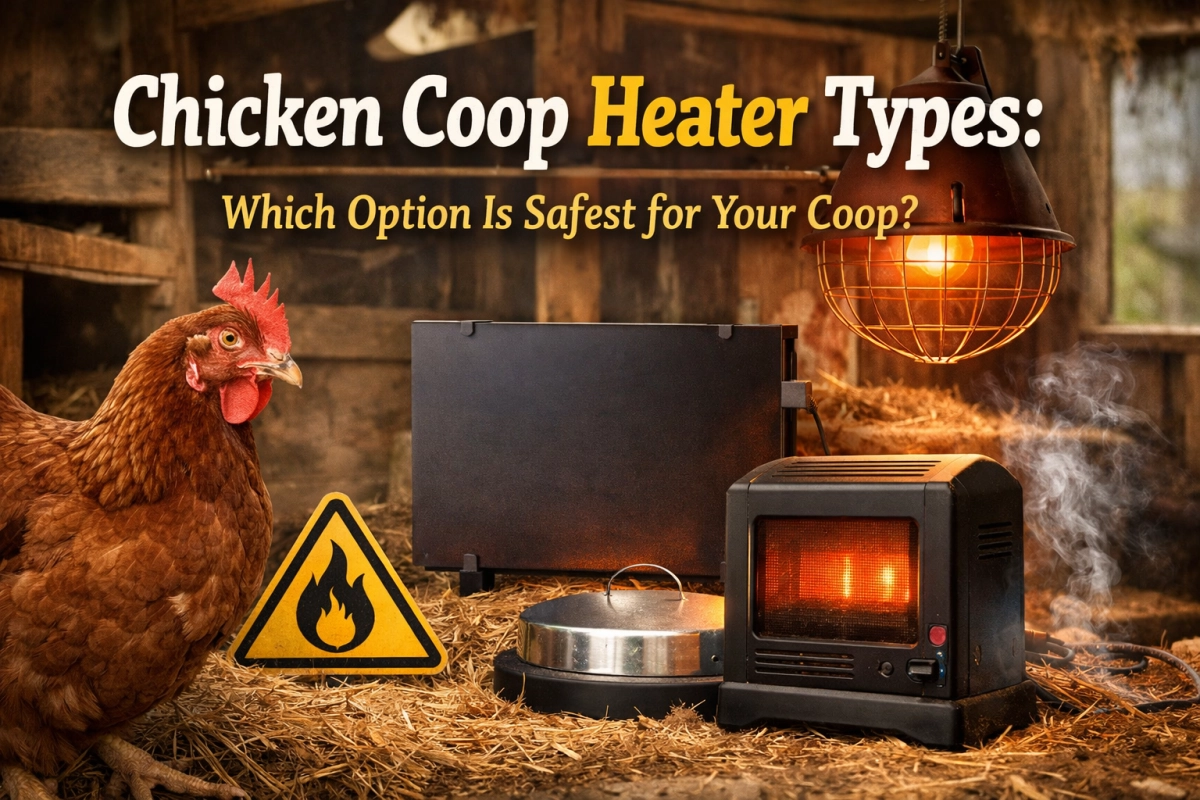
Chicken Coop Heater Types and Which One Is Safest for Your Coop
If you raise chickens long enough, you learn one thing fast. Winter always brings the same worries. People worry about cold nights. People worry about frozen water. People worry about fire.
A heater can help, but only if you pick the right type and you set it up the right way. A coop does not need to feel warm like a living room. A coop needs to stay dry. A coop needs to block drafts. Then a gentle heater can take the edge off.
If you want to see all your options in one place, start with the full collection of chicken coop heaters. I treat that page like a toolbox. This article helps you choose the safest tool for your coop.
Cold snaps and long stretches of rough weather can change what your flock needs. Fast drops can stress birds, especially if the coop is damp. Long cold spells can push birds to burn more energy, even when they look fine. Regional weather also matters because wind and humidity change how cold a coop feels.
Keep your chickens safe and keep your coop safe. Do not add heat first and ask questions later. Start with the heater type and the setup.
Key Takeaways
-
Flat panel and radiant-style heaters are often considered a safer choice because they avoid exposed hot bulbs.
-
Most adult chickens do not need extra heat if the coop stays dry and draft-free.
-
Heat lamps bring higher fire risk, so many keepers avoid them unless they have no other choice.
-
Deep bedding, good ventilation, and fewer drafts can do more than extra heat.
-
A safe setup matters as much as the heater itself, so check cords, mounts, and bedding distance.
Do Chickens Need a Chicken Coop Heater?
Cold Tolerance in Chickens
You might be surprised, but most adult chickens handle cold better than people think. Feathers work like a good jacket. Birds also warm up when they roost close together. If the coop stays dry and calm inside, many flocks do fine without added heat.
The real trouble often comes from moisture and drafts. Wet air steals heat fast. A draft hitting the roost can chill birds all night. If you fix moisture and drafts, you solve most winter problems.
Some breeds also do better in cold weather. These breeds often have thicker feathering and smaller combs. Some also have feathered legs. Those traits can help with cold stress and can lower frostbite risk.
-
Australorp
-
Brahma
-
Buckeye
-
Cochin
-
Delaware
-
Dominique
-
Easter Egger
-
Jersey Giant
-
Naked Neck
-
New Hampshire Red
-
Orpington
-
Plymouth Rock
-
Rhode Island Red
-
Salmon Faverolles
-
Sex Link
-
Sussex
-
Welsummer
-
Wyandotte
Tip: Start with a dry coop and less draft. That step helps more than most people expect.
When Extra Heat Is Needed
Extra heat can make sense in a few situations. Chicks need steady warmth. Sick or injured birds can struggle in cold weather. Some regions also get extreme cold that can push a flock too hard.
When you do add heat, keep it gentle. Do not swing the coop from cold to hot. Big temperature swings can stress birds. A steady, mild setup is easier on the flock.
-
Healthy adult chickens often do fine in freezing weather if the coop is dry and draft-free.
-
Young chicks and weak birds usually need extra help.
-
In extreme conditions, a safer heater type can reduce risk while giving mild support.
If you must use a heater, pick the safest chicken coop heater type you can. Then set it up so it cannot fall. Then keep bedding away from it. Safety comes first every time.
Best Chicken Coop Heater Types
Picking the best heater starts with understanding the main chicken coop heater types. You are not just buying warmth. You are managing risk in a wooden box full of dry bedding. That is why the heater type matters.
Panel Heaters
Panel heaters and flat panel radiant heaters are a popular choice for one simple reason. They avoid a bare, blazing bulb. They also give steady heat without a harsh hot spot. Many models mount on a wall, which helps keep them away from bedding and curious birds.
Tip: Look for a heater built for coops and use the mounting hardware the right way. A good mount lowers risk more than any fancy feature.
Panel heaters are also easy to live with day to day. They do not shine bright light. They do not swing and wobble. They just sit there and do their job.
Why many keepers like panel heaters:
-
They are easier to mount securely.
-
They avoid exposed hot bulbs.
-
They give gentle heat instead of blasting heat.
-
They fit small backyard coops well.
Infrared Heaters
Infrared heaters warm objects and nearby surfaces more than the air. That can work well near the roost. It can also feel more comfortable to birds when the coop is drafty.
The key is a solid mount. The heater must not wobble. The heater must not tip. Cords must stay out of reach.
Some people mix up infrared heaters and heat lamps because both use infrared energy. The difference is the build. Heat lamps usually use very hot bulbs. That design brings more fire risk in a coop.
Heat Pads
Heat pads are for small spaces. They can help in a nesting area. They can help in a brooding setup. They do not heat the whole coop.
If you use a heat pad, treat it like a spot tool. Keep it where it belongs. Keep cords protected. Check it often.
What to look for with a heat pad:
-
Controls that keep heat steady and mild.
-
Protection that shuts it down if it overheats.
-
A cord that can handle coop life and curious beaks.
Alternatives to Electric Heaters
I always tell people this first. You do not have to heat the whole coop to help your flock. Often you can solve the problem with bedding, draft control, and simple steps.
Deep bedding can help birds stay warm. Insulation can keep wind out. Extra dry litter in nesting areas can help eggs too. These steps are simple and they lower risk.
Low-risk winter steps that many keepers use:
-
Deep, dry bedding on the coop floor.
-
Blocked drafts, especially near the roost.
-
Good ventilation that does not blast the birds.
Note: These steps work best when the coop stays dry. Moisture is what turns cold into trouble.
When you compare chicken coop heater types, panel-style heaters usually come out ahead for safety. That does not mean every panel heater is perfect. It means the design often reduces common coop risks.
Chicken Coop Heater Safety Comparison
Preventing Fire Risks
A coop is full of things that can burn. Bedding burns. Dust burns. Feathers burn. That is why fire risk must lead the decision.
Many poultry extension services and fire safety warnings focus on the same risks. Those risks include exposed hot bulbs, unstable mounting, and heaters placed too close to bedding. This is why experienced keepers take a conservative approach with heat sources in coops.
Here is the simple way I look at it. Safer heaters avoid exposed hot parts. Safer heaters mount securely. Safer heaters keep space between heat and bedding.
-
Panel heaters usually have lower fire risk because they avoid a bare hot bulb and they can mount to a wall.
-
Infrared heaters can be a reasonable choice when mounted securely and kept clear of bedding.
-
Heat lamps bring the highest risk in most coops because bulbs run very hot and lamps can fall or swing.
Tip: Clearance distance, surface temperature, and power draw vary by heater design. This is why you should follow the manufacturer’s installation guide for the specific heater you use.
Surface Temperature and Tip-Over Hazards
Surface heat matters because it can burn birds and it can light up dust or bedding. Tip-over risk matters because most fires start when something shifts at night. A wall mount solves a lot of problems. A flimsy clamp solves none.
| Heater Type |
Surface Temperature |
Tip-Over Hazard |
Fire Risk |
|---|---|---|---|
| Panel Heater |
Lower |
Very Low |
Lower |
| Infrared Heater |
Moderate |
Low |
Moderate |
| Heat Lamp |
Very High |
High |
High |
You can lower risk with any heater type if you mount it well and keep bedding away. You can also raise risk with any heater type if you get sloppy with setup. Fire safety advice around coop heaters is conservative for a reason. Enclosed wooden spaces with dry bedding do not leave much margin for error.
Choosing the Right Chicken Coop Heater for Your Setup
Small Chicken Coops
Small coops hold heat better than big spaces. That is good news. It means you usually need gentle support, not strong heat.
Look for a heater you can mount securely. Look for a heater that gives mild warmth. Look for a heater you do not have to babysit all night.
If your biggest pain point is keeping conditions steady without fuss, a heater with a thermostat can help. This is where a single, purpose-built option can make life easier. You can see that kind of setup here: safe chicken coop heater with thermostat.
Features that matter in a small coop:
-
Secure mounting so it cannot tip.
-
Gentle heat that does not create hot spots.
-
Protection that reduces overheat risk.
-
A cord path that birds cannot peck.
Tip: In a small coop, the safer move is usually less heat and better setup.
Large or Drafty Chicken Coops
A drafty coop will eat your heat all night. You will spend money and still have cold birds. Fix the structure first.
Seal obvious gaps. Block wind near the roost. Keep ventilation, but move it above the birds. Then decide if you still need heat.
What matters most in big or drafty coops:
-
Draft control and dry air.
-
Safe mounting and clear space around the heater.
-
A plan for power cords and wet weather.
If you want a deeper walkthrough of heater choices and winter setup, you can read the Chicken Coop Heater Ultimate Guide.
Heat Lamps and Fire Risks in Chicken Coops
Common Problems
Heat lamps fail in plain, predictable ways. They get bumped. They swing. They fall. A hot bulb hits bedding. Then you have a fire.
Most coop fires people talk about start the same way. A lamp shifts overnight. Bedding gets close. Heat builds fast before anyone notices. This pattern is why many keepers move away from lamps over time.
People also forget dust. Dust collects on fixtures. Dust can ignite when heat stays high. This is another reason the setup has to be checked often.
Using Heat Lamps Safely
If you must use a heat lamp, treat it like a short-term tool. Use a strong mount. Use a guard. Keep clear space around it. Check it often.
Do not hang a lamp by the cord. Do not rely on a weak clamp. Do not place it near bedding. Do not assume it is safe because it worked yesterday.
If you can switch to a safer heater type, do it. Your coop will be calmer and your risk will drop.
Safety Checklist for Chicken Coop Heaters
Installation Tips
Mount the heater securely. Keep it away from bedding. Keep cords out of reach. Follow the manual. Do not improvise the mount.
Test the setup before you leave it alone. Watch it for a while. Smell for anything odd. Listen for anything strange. Then check it again the next day.
Tip: A heater that is safe in the daytime must also be safe when you are asleep.
Monitoring and Maintenance
Check the heater often. Do it on a schedule. Dust builds up. Wires wear. Mounts loosen.
Clean the heater surface. Look at the plug. Look at the cord. If something looks wrong, stop and fix it.
A coop thermometer can help you avoid overdoing it. If birds are comfortable, do not chase extra heat. Comfort and safety go together.
Final Thoughts on Chicken Coop Heater Safety
Winter care is not about making a coop hot. Winter care is about keeping birds dry, calm, and protected from wind. That is the foundation.
If you still need heat after you fix the coop basics, a panel-style heater is often a safer direction because of how it is built and how it mounts. Setup still matters, so follow the manufacturer’s guidance for clearance and installation for your specific heater.
Your flock depends on you. Pick the safer design. Set it up right. Then keep an eye on it all winter.
When you choose a chicken coop heater, put safety first. Keep it away from bedding. Secure it so it cannot fall. Check it often.
-
Pick a heater design that avoids exposed hot bulbs.
-
Place the heater where birds cannot knock it over.
-
Check cords and mounts often, especially during long cold spells.
Your flock depends on you. Keep the setup simple. Keep it safe.
FAQ
Is a heat lamp safe for a chicken coop?
A heat lamp brings higher fire risk in most coops. It can fall or swing. A hot bulb can reach bedding fast. Many keepers avoid lamps unless they have no other choice.
What type of heater is safest for chickens?
Panel-style heaters are often considered safer because they avoid exposed hot bulbs and they can mount securely. Setup still matters, so keep bedding away and protect cords.
Do chickens really need a heater in winter?
Many adult chickens do not need added heat if the coop stays dry and draft-free. Fix moisture and drafts first. Add gentle heat only when it truly helps.
Can a chicken coop heater cause a fire?
Yes, any heater can cause a fire if it is installed poorly or placed too close to bedding. A safer heater type can lower risk, but the mount and the spacing matter every time.
What heater works best for a small coop?
A small coop often does best with gentle heat and a secure mount. Many keepers start with a panel-style heater and focus on bedding and draft control at the same time.
0 Comments