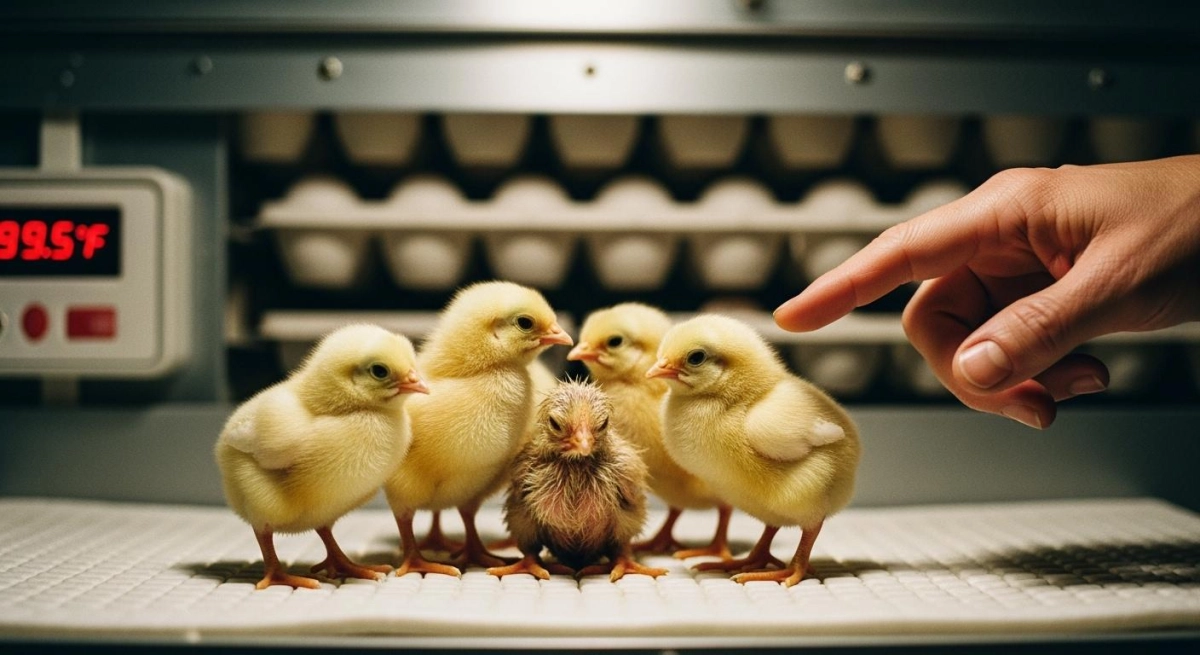
If you’re a backyard chicken keeper or running a school hatching project, seeing chicks dying in the incubator is heartbreaking. You set everything up, watched the calendar carefully, and still ended up with clear eggs, blood rings, fully formed chicks that never hatch, or tiny chicks that die soon after hatching. It can make you wonder if you should give up on incubating altogether.
The good news: some losses are sadly normal, but many are preventable. Instead of guessing, this guide helps you figure out when your chicks are dying, what that usually means, and how to adjust your settings, handling, and equipment so your next hatch is much more successful.
Understanding Chicks Dying in the Incubator (Without Blaming Yourself)
What a “normal” hatch looks like at home and in classrooms
Even experienced hatchers rarely see a perfect 100% hatch rate. In real backyard and classroom conditions, hatch rates often look more like this:
- Backyard and small homestead flocks: With good eggs and a reasonably stable incubator, many people see around 60–80% of fertile eggs hatch. That means losing a few chicks, even when you’re doing most things right.
- School hatching projects: Classrooms often use shipped eggs, borrowed incubators, and rooms where the heat turns off at night. It’s common for hatch rates to be lower than at home, simply because there are more variables you can’t control.
Those numbers are rough ranges, not promises. Every flock, incubator, and room is different. The goal of this article is not to chase perfection, but to help you prevent avoidable losses and feel more confident running your next hatch.
Big picture: the main reasons chicks die in the incubator
Most cases of chicks dying in incubators fall into a few big buckets:
- Incorrect or unstable temperature
- Incorrect or poorly managed humidity
- Problems with turning, ventilation, or opening the incubator too often
- Egg quality issues: poor parental nutrition, disease, rough handling, or old eggs
- Post-hatch care problems in the brooder: temperature, feed, water, and crowding
Instead of attacking them all at once, we’ll walk through a simple first step: figure out when your chicks are dying. Once you know the stage, you can focus on the most likely causes.
Step 1: Figure Out When Your Chicks Are Dying
The four main stages where chicks usually die
Most chick losses in an incubator happen at one of these stages:
- Stage 1 – Early death (Days 0–7): Eggs look clear or show a blood ring when candled. Embryos are very small or never really start.
- Stage 2 – Mid-term death (Days 8–17): Development starts, then stops partway through. You see a partly formed chick that never reaches full size.
- Stage 3 – Late death (Days 18–21+): Chicks are fully formed but dead in the shell, or they pip but never manage to zip all the way around the shell.
- Stage 4 – Post-hatch death (first 72 hours): Chicks hatch, then crash in the incubator or brooder within a few hours or days.
When you open unhatched eggs after the hatch is done, try to note which stage most of the losses fall into. That one observation will guide almost everything else you do to improve your hatch.
Use symptoms you can see to narrow down likely causes
You don’t need lab tests to start troubleshooting. Your eyes will tell you a lot. For example:
- Mostly clear eggs or blood rings: Usually points to egg quality, storage conditions, or very poor early temperature.
- Many fully formed chicks dead in shell: Often linked to humidity, ventilation, or late temperature problems.
- Chicks hatch but seem weak and fail fast: Often related to brooder temperature, dehydration, or inability to find feed and water.
If you’re still unsure what’s happening inside the shell, it can help to understand the basic incubation process. This explainer on how chicken egg incubators work gives you a clear picture of what the chick needs at each stage.
Stage 1: Early Embryo Death (Days 0–7) – Clear Eggs and Blood Rings
What early death looks like when you candle eggs
Early embryo death is usually the easiest to miss, because candling in the first week is subtle. Here’s what you might see:
- Completely clear eggs: Either the egg was never fertile, or the embryo died very early.
- Blood rings: When candling, you see a red ring or circle inside the egg instead of normal veins. This usually means the embryo started and then died very early.
- Very tiny embryos that stop growing: You see a small dark spot and faint veins that never really develop further.
Finding a few clear eggs or blood rings is normal, especially with farm eggs. But if most of your fertile eggs look like this, something is going wrong in the early days.
Quick checks and fixes for early losses
Use this simple checklist when early losses are high:
- Egg quality and storage: Were the eggs clean, from healthy hens, and less than 7 days old? Were they stored pointy end down in a cool room (not in the fridge, not in direct heat)? Rough handling or long storage can kill embryos before you even set them.
- Initial incubator warm-up: Did you let the incubator run empty for several hours to stabilize temperature before adding eggs? Large early temperature swings in the first 24 hours are very hard on embryos.
- Actual vs. displayed temperature: Small incubators can read 99.5°F but actually be several degrees off. Use a separate digital thermometer to check what the temperature really is where the eggs sit.
- Room conditions: Is the incubator sitting in a spot with drafts, direct sun, or near a heater? Constant changes in room temperature make it much harder to keep a stable environment for the eggs.
For your next hatch, focus on starting with the best eggs you can get, storing them correctly, and making sure the incubator is completely stable before you ever set the clutch. These simple steps alone can dramatically reduce early embryo deaths.
Stage 2–3: Fully Formed but Dead in the Shell – Late Death in the Incubator
Common late-stage symptoms: pipped eggs, shrink-wrapped chicks, fully formed but dead
Late-stage losses are especially discouraging because the chicks made it almost all the way to the finish line. You might see:
- Fully formed chicks dead in the shell: When you open the egg, the chick looks complete but never pipped or only made a small hole.
- Pipped but never zipped: The chick made a small external pip but never rotated around the shell to zip. It may be stuck in one position.
- Shrink-wrapped chicks: The inner membrane is dry and tight around the chick, often stuck to its head or wings. This is very common with low humidity or too many long openings during hatch.
- “Drowned” chicks: The chick is sitting in excess fluid and the air cell looks small. This can happen when humidity is too high for too long.
When most of your losses are fully formed chicks in the shell, it almost always points to issues with humidity, ventilation, or temperature in the final week.
Temperature, humidity, and turning tweaks to stop late deaths
To cut down on late-stage losses, work through these areas:
- Check overall temperature: Slightly high temperatures can cause chicks to develop too fast and die before hatching. Slightly low temperatures can delay hatch and leave chicks too weak. Verify the actual temperature at egg level with a trusted thermometer.
- Dial in humidity over time: Many backyard hatchers aim for moderate humidity during most of incubation, then raise humidity for the last 3 days. The exact numbers depend on your climate and incubator, but the goal is steady weight loss during incubation and a larger air cell by hatch day.
- Resist the urge to keep opening the incubator: Especially during lockdown, frequent opening dumps warm, moist air and leads to shrink-wrapping. If you must open it, do it quickly and only when necessary.
- Turn eggs regularly until lockdown: In the main incubation period, eggs that aren’t turned enough can develop poorly and be more likely to die late. Automatic turners help, but manual turning can work well if you’re consistent.
- Ensure good ventilation: As chicks grow, they need more oxygen. Make sure air vents are open as recommended for your incubator, especially near hatch.
If your incubator struggles to hold a steady temperature, or if you see big swings every time the heat cycles, you may be dealing with equipment limitations as well as settings. For detailed help stabilizing temperature, this guide on troubleshooting temperature fluctuations walks through step-by-step checks you can do at home.
Stage 4: Chicks Dying After Hatching – Brooder and Classroom Mistakes
Why apparently healthy chicks crash in the first 72 hours
Sometimes the hatch itself goes well, but chicks begin to die within a day or two. This is often a brooder or classroom setup problem rather than an incubation problem. Common issues include:
- Too hot or too cold in the brooder: Chicks pile under the heat source when they’re cold and crowd the edges when they’re hot. Either extreme can kill fragile chicks quickly.
- Not finding feed or water: If the brooder is dark or the feeders and drinkers are hard to reach, weaker chicks may never learn where to eat and drink.
- Crowding and piling: Too many chicks in a small space leads to trampling, smothering, and stress.
- Poor hygiene: Wet bedding, spilled water, or dirty brooders quickly lead to chilling and disease pressure.
Simple brooder setups for small homes and classrooms
Whether your brooder is a plastic tote at home or a box in a classroom, a few basics will keep more chicks alive:
- Stable heat source: Use a reliable heat lamp or brooder plate and monitor temperature at chick level. Start around the recommended temperature for chicks and adjust based on their behavior.
- Visible feed and water: Place chick starter feed and clean water where chicks can easily see and reach them. On the first day, gently dip a few beaks in the waterer to show them where to drink.
- Enough space: Give chicks room to move toward and away from the heat source. They should be able to spread out comfortably, not pile up in corners.
- Dry, clean bedding: Change wet or soiled bedding promptly. In classrooms, assign students to help check the brooder twice a day so problems are caught early.
For school projects, it also helps to plan your hatch so chicks don’t hatch right before a weekend or holiday. That way someone is always around to monitor them in those critical first days.
Is It Me or My Incubator? Simple Tests for Small Flocks and Classrooms
How to test your incubator’s temperature, humidity, and hot spots at home
Backyard keepers and teachers often ask, “Are my chicks dying because I’m doing it wrong, or because my incubator just isn’t very good?” The truth is usually a mix of both, but you can run a few simple tests to see how much your equipment is holding you back.
Here’s an easy way to check your incubator at home:
- Get independent tools: Use at least one separate digital thermometer and, ideally, a small digital hygrometer. Don’t rely only on the built-in display.
- Map the incubator: Place the thermometer in one corner of the egg area, let the incubator run for 30–60 minutes, and record the temperature. Repeat for several positions (front, back, middle, both sides).
- Run a 24-hour test: With the incubator empty, record the temperature at egg height every few hours. Check how wide the swing is between the lowest and highest reading.
- Watch humidity behavior: Note how quickly humidity changes when you add water or open the lid. If it swings wildly or never reaches the range you’re aiming for, that’s useful information.
If you find that temperatures at egg level stay within a narrow band and humidity responds predictably, your incubator is probably capable of decent results as long as your technique is good. If readings are all over the place, the equipment itself is a big part of the problem.
When it’s probably your technique – and when it might be time to upgrade
Use these guidelines to decide where to focus your energy:
- It’s mostly technique if… early deaths are high, you’re using questionable eggs, you forget to turn eggs, or you open the incubator constantly. In this case, work on your process first.
- It’s partly or mostly the incubator if… you see big temperature swings during your 24-hour test, different corners of the incubator are several degrees apart, or humidity is very hard to control even when you follow instructions.
If you’re running school hatches or small home flocks and you’ve already tightened up your technique, but your incubator still can’t hold a stable environment, upgrading may save you a lot of frustration (and chick losses). For example, a model like the 3-Tray Automatic Egg Incubator offers stable digital temperature control, built-in fan circulation, and organized trays that make it easier for beginners and teachers to keep conditions consistent.
No incubator can guarantee a perfect hatch every time. But a stable, well-designed machine plus careful handling dramatically reduces preventable losses, especially for new hatchers and classrooms.
Plan Your Next Hatch: Simple Notes, Better Settings, and Safer Gear
What to write down from this hatch so you don’t repeat the same losses
Instead of viewing this hatch as a failure, treat it as a set of clues. Grab a notebook or spreadsheet and record:
- Dates and times: When you set the eggs, candled, stopped turning, and saw the first pips and hatches.
- Temperature and humidity notes: Any readings you remember, especially unusual spikes, dips, or power outages.
- Where losses clustered: Early, mid, late, or post-hatch. Note what you saw inside a few unhatched eggs.
- Egg source: Which hens or supplier the eggs came from and how long they were stored.
Next, write 3–5 specific changes you’ll make before your next hatch. For example: “Set eggs within 5 days of collection,” “Run a 24-hour incubator test before setting,” or “Move brooder away from drafty window.” Concrete plans turn a frustrating experience into real progress.
Incubator features that really help keep chicks alive (and where to find them)
When you’re ready to look at incubators again, focus less on fancy extras and more on features that directly protect chicks:
- Reliable digital temperature control and fan circulation to minimize hot and cold spots.
- Easy-to-manage humidity with clear water channels or reservoirs you can adjust without huge swings.
- Clear viewing windows so kids and families can watch without opening the lid constantly.
- Capacity that matches your flock or classroom size so eggs aren’t overcrowded.
If you’d like to compare options that are designed specifically for small flocks and school hatching projects, you can explore our range of chicken egg incubators and choose a model that matches your class size or backyard goals.
Remember: some loss is normal in every hatch, even for professionals. But by understanding when your chicks are dying, checking your incubator’s behavior, and making a few focused changes, you can turn a painful first experience into a much smoother, more successful hatch the next time you incubate.
0 Comments