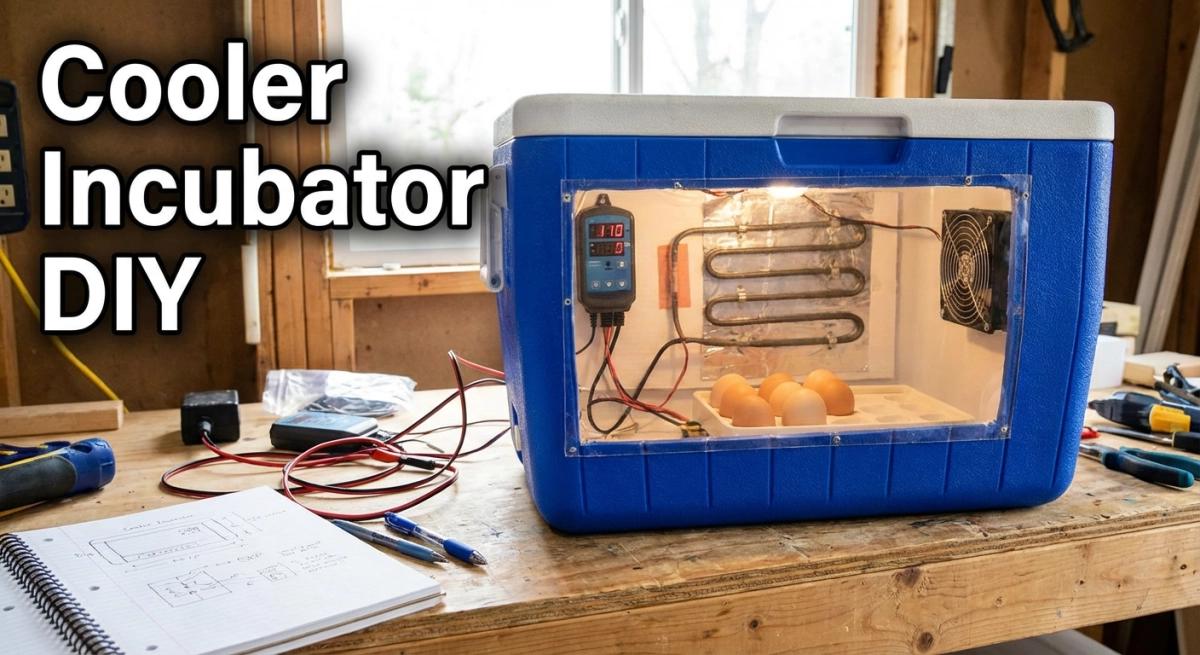
Yes, you can turn a cooler into a small incubator for bird eggs, including pigeon eggs and many parrot eggs. A cooler holds heat the way a thermos holds coffee, so the air inside does not swing as fast when your room cools down. You still need careful testing, because eggs do not forgive guesswork. If you want to compare ready setups later, you can use our resource library for bird egg incubators.
| Build option |
Budget reality |
|---|---|
| DIY cooler incubator |
Often lower cost, but parts and tools vary |
| Purpose-built incubator |
Often higher cost, but less DIY tuning and risk |
You can save money with a cooler build. You pay for that savings with time, attention, and steady note-taking.
Key Takeaways
-
You can build a cooler incubator with a small budget, but the cost depends on the parts you choose. You should expect the real “price” to be your daily attention and your testing time.
-
You should place the thermostat probe at egg height. You should also confirm temperature where the embryo sits, which is around the top of the eggs. [2][3]
-
You can raise or lower humidity by changing water surface area with a shallow tray or a damp sponge. Many guides raise humidity closer to hatch, but you should follow your bird species target. [1][2]
Why a Cooler Incubator Holds Steady Heat
What Steady Means for Eggs
You can think of temperature as the heartbeat of the egg. You can think of humidity as the “summer air” feeling that keeps the shell membranes from drying out too hard. Most incubation guides agree on the same basics: steady heat, usable humidity, fresh air, and regular turning support healthy embryos. [1][2]
| What you control |
Where you measure |
Common starting point |
What you adjust |
|---|---|---|---|
| Temperature |
You should measure at egg height, near the top of the eggs. [2][3] |
Many forced-air guides use about 99.5°F / 37.5°C. [1][2] |
You should adjust in small steps, and you should re-check after the system settles. |
| Humidity |
You should measure near egg level and away from splashes. |
Many guides start around 50–60% RH. [1][2] |
You should change water surface area, and you should watch egg progress, not the meter alone. |
| Airflow and turning |
You should aim for gentle mixing, and you should avoid a direct blast on eggs. [1] |
You should turn eggs on a steady routine, and you should keep fresh air moving. [1][2] |
You should stop turning at the correct time for your species, and you should keep lid openings short. [4][6] |
Cooler Insulation and Airflow
A cooler incubator often holds conditions better than a thin cardboard box, because the walls slow down heat loss. That insulation also helps you avoid sudden dips when a door opens or a heater in your house cycles off.
Reality Check Before You Build
You can build this setup in an afternoon, but you should plan to babysit the numbers before you trust it with eggs. You should keep a digital thermometer and a hygrometer at egg height, because the top and bottom of a small cooler can read differently. [2][3]
-
A DIY heat source can start a fire if it touches foam, plastic, or loose bedding.
-
A cold room can pull heat out of a small incubator fast, even when the thermostat looks fine.
-
A blanket wrap can trap heat around the heat source and create a dangerous hot spot.
-
You must monitor and adjust your setup if you want steady conditions.
You can keep the build simple. You still need a dry run and small tweaks before you set eggs, because most problems show up when the incubator is empty, not when it is full of life. [4][5]
DIY Egg Incubator Supplies and Build Steps
Essential Supplies and Their Roles
You need only a few core parts for a cooler incubator that can hold steady heat and humidity. Each part has one job, and every job matters.
| Core part |
What it does for heat |
What it does for humidity |
|---|---|---|
| Heat source (bulb, heat cable, or pad) |
It adds warmth for the whole box. |
It can dry air if it runs hard, so you balance it with a water tray. |
| Thermostat and probe |
It turns heat on and off to hold a steady target. |
The probe at egg height keeps your reading tied to the egg zone. |
| Water tray or sponge |
It does not heat the box, but it supports stable conditions by preventing over-dry air. |
It adds moisture, and surface area controls how fast water evaporates. |
| Cooler insulation (the walls) |
It slows heat loss and reduces room-to-box swings. |
It slows moisture loss and helps your humidity stay steadier. |
| Small fan (optional but helpful) |
It mixes warm air so you avoid hot corners. |
It helps humidity spread evenly, but direct airflow can dry shells. |
| Thermometer |
It confirms the real temperature where the eggs sit. |
It does not control humidity, but it helps you catch heat swings fast. |
| Hygrometer |
It does not control heat, but it helps you see if vents and water changes shift the air. |
It shows relative humidity, but you should calibrate it for trust. [7] |
| Egg tray or rack |
It keeps eggs in the stable air zone, not on the cold floor. |
It keeps eggs above standing water and reduces splash risk. |
Barn note: You should build around four basics: a heat source, a thermostat with a probe, a humidity source, and airflow. Those basics decide the outcome.
Step-by-Step Build Guide
You can build with basic tools. You should move slowly. You should check each part as you go.
-
Choose the cooler
You should start with a clean cooler that closes tight. You can use foam because it is easy to cut, and you can use hard plastic because it lasts longer. -
Add a small viewing window
You can cut a window in the lid and cover it with clear plastic. You should seal the edges so warm air does not leak out. -
Add small vent holes
You should start with a few small holes near the top and a few near the bottom. Fresh air comes in and used air goes out. You can enlarge holes later if condensation builds. -
Mount the heat source safely
You should fix the heat source so it cannot touch foam or plastic. You should keep a clear air gap, and you should keep the heat away from the eggs. -
Connect thermostat and probe
You should connect the thermostat and place the probe at egg height. You should keep the probe away from direct heat and away from the cooler wall. -
Set a gentle fan
You can use a small computer fan to mix air. You should aim the fan at a wall or a simple baffle, not straight at the eggs. -
Add a water tray
You should place a shallow tray of water inside. You can add a clean sponge to increase surface area when you need more humidity. -
Set the egg tray
You should lift eggs off the cooler floor so air can move under them. You should keep eggs spaced so they do not touch. -
Place your meters
You should place a thermometer and a hygrometer at egg height. You should read them fast and close the lid again. -
Run the dry test
You should run the incubator empty for at least 24 hours. You should adjust slowly until the numbers stay steady hour after hour.
Note: A cooler incubator works when heat, probe placement, humidity, and airflow all work together. Extra gadgets help, but they do not fix the basics.
Safety Checklist for Cooler Incubators
You should treat safety as part of the build, not as an extra. You are mixing heat, plastic, and electricity in a small box.
-
You must keep the heat source from touching foam or plastic.
-
You should use a socket, wire, and thermostat that are rated for heat.
-
You should route wires neatly and secure them so nothing can snag.
-
You should seal cut openings so air does not leak and wires do not rub on sharp edges.
-
You should use safe power. You should avoid overloaded outlets and loose extension cords.
-
You should unplug the incubator before you reach inside.
-
You should keep water trays away from electrical parts and from any drip path.
-
You should check daily for soft plastic, scorch marks, or a burning smell.
-
You should keep fans and vents clear of dust and fluff.
-
Everyone in your home should know where the plug is, so anyone can shut it off fast.
Alert: If you see smoke, smell burning, or notice soft plastic, you should unplug the incubator right away.
You now have a working plan for a cooler incubator. You should stay calm if a hatch does not go perfectly, because some embryos fail for reasons you cannot control. [6] You can still learn a lot from your notes, even on a rough batch.
Probe Placement and Calibration for Steady Results
Where to Place the Thermostat Probe
You should place the thermostat probe at egg height. You should place it in the “egg zone,” not on the lid and not on the floor. Extension guides also recommend measuring at the level where the embryo develops, which is around the top of the eggs. [2][3]
-
You should place the probe at egg height, near the middle of the egg tray.
-
You should keep the probe away from the heat source and away from the cooler wall.
-
You can rest the probe next to a dummy egg so it reads the same air that your eggs will feel.
Good probe placement gives you honest numbers. Honest numbers help you avoid slow overheating or slow chilling, which can hurt development.
Multi-Point Temperature Checks
You should not trust only one thermometer. You can place two or three cheap thermometers at different corners during testing. That simple check shows you hot corners and cool corners before eggs are inside.
Tip: You should keep your main thermometer at egg height and away from the heat source for the most reliable reading.
24-Hour Empty Run Test
You should run the cooler incubator empty for at least 24 hours before you add eggs. That warm-up time lets the temperature and humidity settle, so you can spot drifts and fix them early. [4][5]
Barn note: A full-day dry run lets you find hot corners and slow leaks before eggs are inside. That testing time helps you avoid steady over-heating or steady under-heating. [4][5]
You should take your time with this step. A steady incubator means less stress for you, because you are not chasing the dial all day. If you want a steadier workflow with auto turning and built-in temperature and humidity control, you can use the Automatic Egg Incubator 3 Trays for Birds and Quail as a specific fix.
Humidity Control in a Cooler Incubator
Measuring and Adjusting Humidity
You should keep humidity steady in your cooler incubator. Humidity keeps moisture in the egg, and it also keeps the inner membranes from drying out like stiff paper. Many incubation guides use a moderate humidity during most of incubation and a higher humidity closer to hatch, but your bird species can differ. [1][2]
Tip: Humidity can change fast when room temperature changes. You should check your readings a few times a day, and you should change water surface area in small steps.
Water Surface Area and Materials
You should focus on water surface area, not just water depth. A wide, shallow tray evaporates more water than a tall cup, even if the cup holds more water.
-
A wide, shallow tray gives more humidity because more water surface can evaporate.
-
A small cup gives less humidity because the surface is small.
-
A damp sponge gives a fast humidity boost because it adds surface area.
Calibrating Your Hygrometer
A hygrometer helps you watch humidity, but you should check its accuracy. You can use the simple salt test, because a wet salt mix creates a stable humidity close to 75% in a sealed space at normal room temperatures. [7]
-
You should mix table salt and a few drops of water until it looks like wet sand.
-
You should put the salt cup and your hygrometer into a sealed bag or jar.
-
You should leave it closed overnight at room temperature, so the humidity can settle. [7]
-
You should read the hygrometer without opening the bag. A wet salt mix sits near 75% RH, so the difference shows your offset. [7]
Many DIY hatches fail for simple reasons. People place the probe too high. People forget turning. People open the lid too often during pipping. You should also avoid copying generic poultry settings for parrot or pigeon eggs, because the targets can differ by species and by breeder line.
You can build it, tune it, and then set eggs. You should assemble the parts. You should run a full-day test. You should lock in temperature first. You should dial in humidity after that. You should place eggs only when the box behaves the same way hour after hour.
If you set it up right and you watch it closely, you can hatch bird eggs in a cooler incubator. You should keep your batch small while you learn the feel of your box. If you want a deeper DIY manual that focuses on bird eggs, you can read our Homemade Bird Egg Incubator guide.
Need help fixing a problem? You can tell us what you see and what you measured, and we can troubleshoot it with you.
FAQ
How do you keep the temperature steady in a cooler incubator?
You should place the thermostat probe at egg height and keep it away from the heat source. You should check the reading at the same times each day, because a routine helps you spot a drift before it becomes a disaster.
What is the safest way to add humidity?
You can use a shallow water tray or a damp sponge for humidity. You should keep water away from wires and plugs. You should choose a tray that will not tip when you bump the cooler lid.
Tip: You should check your hygrometer daily, because a small drift can fool you.
Where should you put the fan inside the cooler?
You should mount the fan high and aim for gentle mixing. You should avoid a direct blast on the eggs, because moving air can dry shells and create a cold spot on one side.
Alert: You should never aim the fan straight at the eggs. References: [1] North Carolina Cooperative Extension, “Setting Up an Incubator.” [2] Mississippi State University Extension, “Important incubation factors.” [3] Mississippi State University Extension, “Incubation temperature requirements.” [4] University of Maryland Extension, “Hatching Eggs at Home.” [5] University of Nebraska–Lincoln Extension, “Guidelines for Successfully Incubating Chickens.” [6] Penn State Extension, “Setting Up the Incubator” (school enrichment). [7] University of Kentucky Cooperative Extension, “Measuring Relative Humidity in Agricultural Environments” (AEN-87).
0 Comments