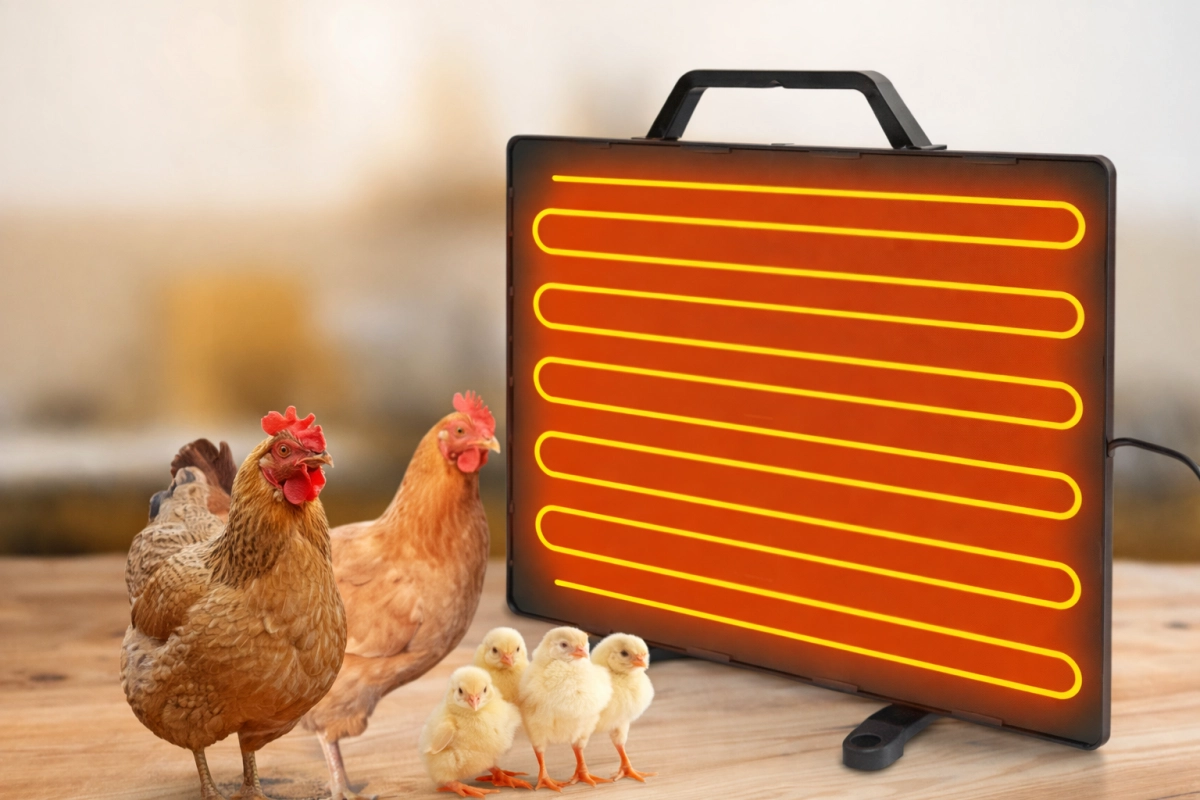
The Touch Test We Use to Check a Coop Heater Safely
You can run a coop heater test any time you feel unsure about your heater on a cold night. We wrote this as a neighbor-to-neighbor check, not a tech manual. If you want the bigger picture on safe winter heat, we keep our best resources in our hub. Now let’s make sure your heater is making real heat, and doing it without scary surprises.
You watch heat, smell, and sound. You act fast when something feels off.
Key Takeaways
-
You test your coop heater so you know it is working before you trust it overnight.
-
You do the touch test by feeling for warmth near the heater, not by touching hot parts.
-
You stop right away if you smell plastic, hear odd sounds, see flicker, or feel a hot plug.
-
You check the cord and plug for damage, and you replace them when they look unsafe.
-
You check more often when the weather turns nasty, and you watch your birds for cold stress.
Why Do a Coop Heater Test in Winter
Risks of Not Testing
When you skip a coop heater test, you gamble with two things: cold stress and fire risk. You might not notice a dead heater until you see frozen water or tight huddling on the roost. You might also miss a failing cord or a loose plug until you smell hot plastic. We have all seen coops full of dry bedding and dust. That is why we check before we walk away.
Tip: You do a quick check before bed. That is when problems like to show up.
Benefits for Safety and Comfort
You sleep better when you know your heater is doing what you think it is doing. A quick test helps you catch small issues early, like a cord getting pinched or a heater getting blocked by bedding. You also keep conditions steadier for your flock. That means fewer cold toes, less stress, and fewer surprises in the morning.
We use this simple winter check in the coop:
-
You look at the cord and plug.
-
You listen for odd sounds.
-
You sniff the air for hot plastic.
-
You feel for safe warmth near the heater.
-
You watch for freezing water or huddling.
| Risk |
What you check |
What you do |
|---|---|---|
| Fire risk |
Smell, plug, cord |
Unplug and fix |
| Cold risk |
Heater output |
Adjust or repair |
| Injury risk |
Placement |
Move and secure |
Safety First: Pre-Test Checklist
Before we do any touch test, we do a fast safety sweep. We treat the coop like a wooden shed with dry bedding and dust. We check power, placement, and airflow so we do not create a fire problem while trying to solve a cold problem.
Inspect Power Cords and Plugs
We start at the outlet and work our way to the heater. You look for cuts, cracks, loose blades, and any spot where the cord has been pinched. You keep connections off wet floors and away from bedding. You avoid extension cords when you can, and you only use one that is built for the load and the location. If you smell hot plastic, or if the plug feels warm, you stop and unplug.
Tip: You unplug before you move anything. You do not argue with electricity.
Check for Fire Hazards and Placement
Now you look at where the heater sits or mounts. You clear bedding, feed bags, and anything else that can burn. You keep the heater’s vents open and you keep air moving around it. You follow the clearance notes in your heater manual, because every unit is a little different. You also make sure the heater cannot tip, slide, or get pecked loose.
| Safety check |
What to Do |
Why it matters |
|---|---|---|
| Cord Damage |
Inspect, replace |
Stops a hazard |
| Plug Heat |
Touch, unplug |
Cuts fire risk |
| Placement |
Clear space |
Helps airflow |
| Flammable Items |
Remove |
Safety for chickens |
Note: Dry air and steady airflow help a heater stay safer and work better.
How to Do the Touch Test Safely
Where and How to Place Your Hand
You do not need to touch the heater to learn a lot. You stand near it and you move slow. You hold the back of your hand in the warm zone and you pay attention to what you feel. You start well back, and you only move closer if the heat feels gentle and steady.
You do not press your palm on the heater. Some panels and housings get hot enough to burn skin. You can also check a nearby perch or wall surface for a mild change, because radiant heat shows up on surfaces first.
Tip: You unplug before you handle the heater. You let it cool before you inspect it up close.
Touch Test Checklist:
-
You use the back of your hand.
-
You start farther away and move in slow.
-
You look for steady, gentle warmth.
-
You avoid touching hot surfaces.
-
You check a nearby perch or wall for mild warmth.
| Step |
What to Do |
Why |
|---|---|---|
| 1 |
Approach slowly |
Prevents burns |
| 2 |
Use back of hand |
Senses heat safely |
| 3 |
Check nearby items |
Confirms heat spread |
| 4 |
Stop if uncomfortable |
Avoids injury |
What to Feel and When to Stop
You want steady warmth. You do not want sharp heat. You do not want heat that jumps around. You also listen. A new buzz, a pop, or a click that will not stop can be a warning. You also smell the air. Hot plastic is a big deal in a coop.
You stop the test when anything feels wrong. You unplug if you smell burning, see flicker, or feel a hot plug or cord. You do not keep testing to “be sure.” You already have your answer.
Warning: If you see smoke, melted plastic, or scorch marks, you unplug right now. You do not use that heater again until the problem is fixed.
Red Flags During Touch Test:
-
The touch test gives you a quick read, and it keeps your hands safe. But it is still a quick read. If you use radiant heat, an air thermometer can make a working heater look “weak.” That is why we also use simple tools, and we explain the trick here: .
-
Lights that flicker
-
Heat that suddenly spikes
-
Buzzing, popping, or odd sounds
-
A plug or cord that feels hot
-
Ice or frozen water even with the heater on
-
Freezing air in the coop
Quick Stop Signs Table:
| Red Flag |
What you do |
|---|---|
| Burning smell |
Unplug heater |
| Flickering lights |
Stop test |
| Sudden heat spike |
Pull hand away |
| Hot plug/cord |
Inspect, unplug |
| Strange sounds |
Turn off heater |
| Freezing air |
Repair or replace |
The touch test gives you a first look at your heater’s performance in winter. You use your senses to spot problems, but you do not diagnose every issue. You need tools for a full check. The touch test helps you safely operate your heater and protect your flock from cold temperatures and freezing. You keep warmth in your coop and avoid danger.
Note: The touch test is step one. A tool check is how you stop guessing.
Using Tools for a Complete Coop Heater Test
When you want real proof, tools help. They help because they give you numbers, not vibes. You do not need fancy gear. A simple IR thermometer or a plug-in power meter is enough for most backyard coops.
IR Thermometer for Surface Heat
An IR thermometer lets you check surface warmth without touching anything. You point it at the heater face and then at a nearby perch or wall. You compare “before” and “after” with the heater running. You do not chase one perfect number. You look for a clear change in the warm zone.
Tip: You scan a few spots. A hot corner or a cold corner tells you more than one reading.
Power Meter for Real Output
A plug-in power meter tells you if the heater is actually pulling power. You plug the meter into the outlet, and you plug the heater into the meter. If the heater is “on” but the meter shows almost nothing, something is off. You can also compare the reading to the watt number on the heater label.
If you want a safer place to start, we keep all coop heat options here: . If your bigger problem is heat that feels random, a thermostat setup can make life easier. You can see one option here: . We also keep a simple safety guide for winter use here: .
| Tool |
What It Checks |
Why Use It in Winter |
|---|---|---|
| IR Thermometer |
Surface temperature |
Finds cold spots, checks heat |
| Power Meter |
Power draw, output |
Confirms heater works |
When to Stop: Safety Red Flags
Signs to Unplug Immediately
Some signs mean you shut it down, no debate. You unplug if you smell burning, see smoke, or feel a hot plug or cord. You also stop if you hear new buzzing or popping. A coop is not the place to “see if it clears up.”
Warning: You unplug when something looks, smells, or sounds wrong. You do not leave it running.
Immediate Stop Checklist:
-
Burning smell or smoke
-
Sudden heat spikes
-
Flickering lights
-
Hot plug or cord
-
Buzzing or popping
-
Frozen water or ice in the coop
Common Issues and Quick Fixes
Most “not heating” problems are simple. Dust can block vents. Bedding can drift against the heater. A plug can get loose. You clear the area, you check the outlet with another tool, and you look for cord damage. If the heater still fails your test, you replace it instead of trying to patch it in a dusty coop.
| Issue |
Quick Fix |
|---|---|
| Low temperature |
Clean heater, improve airflow |
| Uneven heat |
Move heater, check placement |
| Hot cord |
Replace cord, check connections |
| Heater not working |
Test outlet, reset heater |
Tip: A clean, dry coop makes every heater safer. A heater cannot fix damp air.
A quick note about chicks and extra cold
Adjusting for Chicks vs. Adult Birds
This post is about coop heaters for adult birds. If you are raising chicks, you usually do not heat the whole coop. You use a brooder setup so chicks can step closer or farther from the heat. You still use the same safety mindset: dry bedding, protected cords, and no hot bulbs near dust.
Adult chickens handle cold better than chicks. You watch for wet air, drafts at the roost, and frozen water. You use gentle heat as support, not as a way to make the coop feel like a house.
Tip: If chicks are involved, you check more often because small bodies cool down fast.
Monitoring Coop Conditions in Winter
You keep an eye on the coop like you would keep an eye on a wood stove. You do not stare at it all night, but you do quick checks. You look for damp bedding, strong ammonia smell, and drafts across the roost.
We like a simple routine. You check the heater area. You check the plug. You look at the birds. If the flock looks calm and spread out, you are usually in a better place than when they huddle tight.
-
Here is a simple winter routine we use:
-
Monitor baby chicks for frostbite
-
Inspect bedding for moisture
-
Keep brooder dry and clean
-
Watch for freezing and cold temperatures
| Brooder Care Step |
What to Do |
Why it matters |
|---|---|---|
| Monitor temperature |
Use thermometer |
Prevent frostbite |
| Check heating plate |
Inspect for steady heat |
Keep chickens warm |
| Inspect baby chicks |
Look for frostbite signs |
Protect from freezing |
| Clean brooder |
Remove damp bedding |
Maintain warmth |
Note: Dry bedding and fresh air do more for comfort than chasing a high air temperature.
FAQs About Coop Heater Test and Safety
Is the heater working if the light is on?
A light usually means the unit has power. It does not always mean the unit is making useful heat. You do the touch test near the warm zone, and you confirm with an IR thermometer or a power meter when you want real proof.
Tip: You trust heat you can confirm, not just a light you can see.
Why does the coop feel cold even if the heater is warm?
A radiant heater can warm birds and surfaces while the air still feels chilly. Drafts can also make a coop feel colder than it is. You check for wind at roost height, and you measure surfaces near the heater, not just the air.
| Reason |
What you check |
|---|---|
| Radiant heat only |
Surface temperature |
| Drafts |
Seal gaps |
| Poor insulation |
Add bedding |
How often should I test my coop heater?
You test before the cold season starts. During winter, you do quick checks on the nights you rely on the heater most. If the weather swings hard, you check more often. You also check any time you move the heater or change the setup.
Safety: A two-minute check beats a long night of worry.
Are these steps safe for chicks?
Yes, the mindset is safe. You keep chicks away from hot surfaces, and you avoid risky heat sources near dust. But chicks usually belong in a brooder, not out in the coop, because they need a controlled warm zone.
Checklist for Chicks:
-
You check the heater area for bedding drift.
-
You look at the plug and cord for heat or damage.
-
You check for damp spots under waterers.
-
You listen for new noises from the heater.
-
You look at the flock for huddling or stress.
Note: You keep chicks safe by giving them a warm zone and a cool zone, and by keeping cords protected.
A coop heater test is not about making the coop feel like a living room. It is about safe, steady support on the rough nights. You use your senses. You confirm with one simple tool when you need proof. If anything feels wrong, you unplug and you fix the setup before you trust it again.
More quick answers
How do you know if your coop heater is working?
You feel gentle warmth in the warm zone. You also see a clear change on a surface reading or a power meter reading. That is the simple proof.
What should you do if you smell burning near the heater?
You unplug right away. You look for a hot plug, a damaged cord, or bedding too close to the heater. You do not run it again until the cause is gone.
Is the touch test safe for chicks?
You can use it to check a heat source, but chicks should still live in a brooder setup with a safe warm zone and a cool zone.
Why does the coop feel cold even when the heater is on?
Drafts and damp air steal heat fast. Radiant heat also works on birds and surfaces more than the air, so you check surfaces near the heater.
How often should you check your coop heater in winter?
You check any time you plan to leave it running. You also check after storms, power flickers, or when you move the unit.
0 Comments