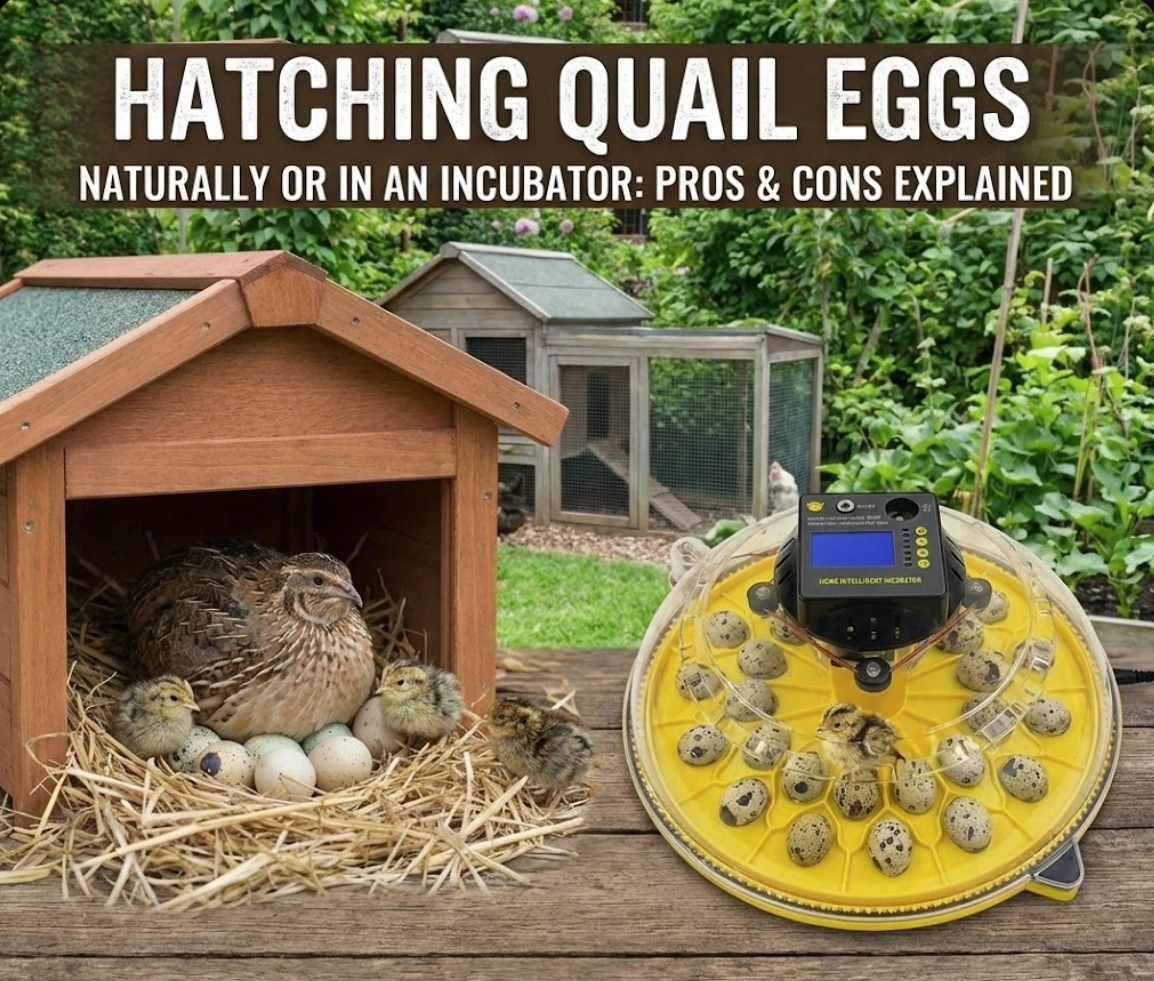
You can hatch quail eggs two main ways: let a broody hen (or gentle surrogate) hatch them, or use an incubator. Each method has clear trade-offs. With a hen, roughly 40% to 80% of eggs may hatch depending on safety, weather, and how steady the hen is. With an incubator, you control temperature and humidity more closely, so well-managed setups often land around 70% to 85%. The best choice comes down to your flock goals, budget, and how consistently you can check eggs and chicks.
Key Takeaways
-
You can hatch quail eggs naturally or with an incubator. Natural hatching can feel rewarding, but results vary more (often 40%–80%) because predators, weather, and hen behavior are hard to control. Incubators offer steadier conditions and often higher hatch rates (about 70%–85%) when you monitor temperature and humidity daily. Quail usually hatch in 17–18 days (sometimes day 16–19), so have your brooder ready a little earlier than you might for chickens. Pick the method that fits your space, flock size, and how hands-on you want to be—and prioritize chick safety and cleanliness either way.
Quail Hatching Basics
Egg Development Timeline
You want to know how long it takes for quail eggs to hatch. Coturnix quail eggs usually hatch in about 17 to 18 days if you keep the right conditions. Some chicks may hatch a little earlier or later, between day 16 and day 19. The development inside the egg follows a clear pattern. For example, feather germs appear at 6.5 days, and claw primordia show up at 9 days for Japanese quail. If you compare this to chickens, their eggs take about 21 days to hatch. Here is a table that shows the timeline for different species:
| Species |
Incubation Period |
Claw Primordia Appearance |
Feather Germs Appearance |
|---|---|---|---|
| Blue-breasted Quail |
17 days |
8.5 days |
6 days |
| Japanese Quail |
17 days |
9 days |
6.5 days |
| Chickens |
21 days |
N/A |
N/A |
You can see that quail eggs develop faster than chicken eggs. This means you need to check your eggs often and be ready for chicks to hatch a few days earlier than you might expect with chickens.
Quail vs Chicken Hatching
You might wonder how hatching quail eggs compares to chicken eggs. Quail eggs have higher hatch rates in many backyard setups, often around 70% to 85% when managed well. Chickens usually have lower hatch rates, around 60%. Quail chicks mature quickly and cost less to raise. However, they need more care right after hatching. You must provide ground feed and watch them closely. Chickens take longer to mature and are often easier to care for in the first weeks. Here is a table to help you compare:
| Aspect |
Quail Eggs |
Chicken Eggs |
|---|---|---|
| Hatchability |
Higher hatch rates (around 70–85%) |
Lower hatch rates (about 60%) |
| Early Care Difficulty |
More demanding, need ground feed |
Less demanding |
| Maturity Speed |
Mature quickly |
Take longer to mature |
| Cost to Raise |
Cheaper to raise |
More expensive to raise |
| Overall Care |
More care needed initially |
Easier to care for initially |
You should know that quail require more attention in the first weeks. If you want a flock that grows fast and costs less, quail may be a good choice. If you want easier care at the start, chickens might suit you better.
Why Use a Quail Egg Incubator
You may ask why many keepers use a quail egg incubator. Incubators give you precise control over temperature and humidity. You can set the temperature to 99.5°F and keep humidity at 45–50% for most of the incubation, then raise it to 65–75% for the last three days. This control helps you reach higher hatch rates, usually between 70% and 85%. Incubators also reduce risk from predators and weather, and they make timing easier to plan. To lower disease risk, keep the incubator clean, wash hands before handling eggs, and disinfect surfaces between hatches.
Tip: Always check your incubator settings daily. Good management and steady conditions improve your chances of healthy chicks.
Hatch Quail Eggs Naturally
Broody Hen Method
You might want to hatch quail eggs naturally because it feels rewarding to watch a mother hen care for her chicks. However, Coturnix quail hens rarely go broody in backyard settings. Most commercial breeds have been selected to lay eggs, not to sit on them. You will see broody behavior more often in large, calm aviaries with minimal disturbance. If you want to try hatching quail eggs naturally, you need to understand what triggers broodiness. The table below shows the main factors:
| Factor |
Description |
|---|---|
| Hormonal Influence |
Hormones like prolactin and estrogen control broody behavior in hens. |
| Environmental Conditions |
Quiet, safe, and dim environments can encourage broodiness in quail hens. |
| Genetic Selection |
Most Coturnix quail have been bred not to go broody, so it is rare. |
If you do find a broody Coturnix hen, you can let her sit on a small clutch of eggs. Make sure her nest stays dry, safe, and free from predators. You should check the nest daily to remove broken eggs and keep the area clean. This method lets you hatch quail eggs without incubator equipment, but you must accept that natural hatching is unpredictable.
Using Surrogate Hens
Many backyard keepers use a small broody chicken as a surrogate to hatch quail eggs naturally. This method works best if you do not have a broody quail. You can place quail eggs under a gentle bantam hen. She will keep the eggs warm and turn them as needed. However, you must watch her closely. Chicken hens are much larger than quail. They can accidentally crush eggs or harm tiny chicks. In one example, a keeper placed 13 quail eggs under a broody hen. Only 5 eggs hatched, and just 2 chicks survived past 10 days. This shows that natural hatching with surrogates can have low survival rates if you do not manage the process carefully.
If you want to hatch quail eggs without incubator help, always use a calm, experienced hen. Give her a quiet, secure nest. Check on her and the eggs every day. Remove any eggs that look cracked or dirty. This hands-on approach helps you improve the chances of successful hatching.
Natural Pros and Cons
You may choose natural quail egg hatching for several reasons. You do not need to buy an incubator or special equipment. You can watch natural behaviors and see the bond between hen and chicks. Chicks raised by a hen often learn to eat and drink faster. However, natural hatching comes with risks. Hatch rates can range from 40% to 80% under good conditions, but they may drop lower if the weather changes or predators disturb the nest. You cannot control temperature or humidity as closely as you can with an incubator. If you want to hatch quail eggs without incubator tools, you must accept that natural hatching is less predictable.
Here are some pros and cons of natural hatching:
-
Pros:
-
No need for extra equipment.
-
Chicks learn from the hen.
-
You see natural behaviors.
-
-
Cons:
-
Broody hens are rare.
-
Survival rates can be low.
-
You have less control over the hatching process.
-
Note: Good management and daily checks can improve your chances of successful hatching. Natural hatching works best if you have a secure pen, a calm broody hen, and time to monitor the nest.
Natural hatching can be a great learning experience, but it rewards patience and a safe environment. If you choose this path, focus on predator-proof housing, clean nesting material, and frequent checks so eggs and chicks stay warm, dry, and protected.
Risks of Natural Hatching
If you pick natural hatching for your quail flock, you face some risks. These risks can hurt chick survival and health. You should know about these risks before you choose what works for your backyard.
Main Risks You Should Watch For:
-
Predators and Nest Safety
Animals like raccoons, snakes, and rats can find nests fast. If you do not keep the nest safe, eggs and chicks can vanish at night. You need strong pens and must check for holes or weak spots every day. -
Weather and Environmental Conditions
Sudden weather changes can hurt eggs. Heavy rain, cold, or heat can lower hatch rates. You cannot control these things like you can with an incubator. Put nests in safe spots and watch the weather. -
Broody Hen Reliability
Coturnix quail hens do not often go broody. Some hens may leave the nest or stop caring for eggs. If you use a chicken, she might break eggs or step on chicks. Watch the hen closely and be ready to help if she leaves. -
Egg and Chick Health
Eggs can crack or get dirty in a nest. Chicks may have trouble finding food and water. Take away broken eggs and give chicks easy food and clean water. -
Variable Survival Rates
Natural hatching does not always give the same results. Survival rates can be from 40% to 80% for Coturnix quail. You may lose more chicks than you expect, especially if you are new to quail.
Tip: Check nests every morning and night. Fast action can save eggs and chicks from danger.
Comparison Table: Natural vs Incubator Risks
| Risk Factor |
Natural Hatching |
Quail Eggs Incubator |
|---|---|---|
| Predator Threat |
High |
Low |
| Weather Impact |
High |
Controlled |
| Hen Reliability |
Variable |
Not needed |
| Survival Rate |
40–80% |
70–85% |
| Equipment Needed |
Minimal |
Incubator required |
No method gives perfect hatches every time. Good care and daily checks help your chances. If you want more control, an incubator lets you set temperature and humidity. If you like seeing natural behaviors and have a safe area, natural hatching can be fun. Always care for chick safety first and pick the way that fits your skills and setup.
Incubator Method for Quail Eggs
Incubation Steps and Timeline
If you use an incubator, you follow simple steps. First, collect fresh and clean quail eggs. Place them in the incubator as soon as possible after collection. Set the temperature to 99.5°F. Keep the humidity at 45–50% for the first 14 days. Turn the eggs at least three times each day (or use an automatic turner). Stop turning the eggs on day 14 or 15. Raise the humidity to 65–75% for the last three days. Most Coturnix quail eggs hatch in 17–18 days. Some chicks might hatch on day 16 or as late as day 19. If you keep the temperature and humidity right, about 70–85% of eggs may hatch.
Temperature, Humidity, Turning
You need to watch temperature and humidity very closely. The table below shows the recommended settings for hatching with an incubator:
| Parameter |
Recommendation |
|---|---|
| Temperature |
99.5°F (forced-air incubator) |
| Humidity |
45–50% (days 1–14), 65–75% (last 3 days) |
| Egg Turning |
At least 3 times daily; stop at day 14–15 |
If you use a DIY incubator, verify temperature and humidity with reliable tools and re-check readings daily. Even small changes can hurt your hatch. Turning keeps embryos developing evenly. Stop turning three days before hatch so chicks can position to pip and zip. Clean equipment and fresh air also matter—stale air and dirty surfaces can reduce hatch success.
Tip: Put a thermometer and hygrometer inside your incubator. This helps you check temperature and humidity without opening the lid a lot.
Incubator Pros and Cons
The incubator method gives you more control than natural hatching. You can set the temperature and humidity and avoid problems from sudden weather or unreliable hens. You can plan when your eggs will hatch. This method is friendly for beginners and works well if you want multiple hatches per year. You can build a DIY incubator to learn and save money, or choose a ready-made model that fits your space and goals.
Pros of hatching with an incubator:
-
High hatch rates (around 70–85%) if you manage conditions well
-
You control temperature and humidity
-
You get more consistent timing
-
You can hatch more eggs for bigger flocks
-
Less danger from predators or weather
Cons of hatching with an incubator:
-
You need equipment (store-bought or DIY)
-
You must check temperature, humidity, and turning every day
-
Chicks do not learn from a mother hen
No way is perfect for hatching every time. If you manage temperature, humidity, ventilation, and turning well, you will have better luck. The incubator method gives you steady results and is a good choice for most backyard keepers.
Survival Rates and Welfare
Incubator Survival Range
When you use an incubator, you control the environment for your eggs. You set the temperature to 99.5°F and keep humidity between 45–50% for most of the process. You turn the eggs regularly and stop turning them before hatching. These steps help you reach a success rate between about 70% and 85% for Coturnix quail eggs. Many beginners see lower rates at first, but you can improve your results with practice and careful monitoring.
Some keepers report excellent success with incubators. One person hatched 16 out of 16 chicks and raised them all in a brooder. This shows that you can get high success if you manage the conditions well. You avoid risks from predators and weather and protect the chicks from sudden changes. The incubator method gives you repeatable success and helps you plan your flock size.
Tip: Check your incubator every day. Small changes in temperature or humidity can affect your hatch results.
Natural Hatch Survival Range
Natural hatching lets you watch hens care for their eggs and chicks. You may see a strong bond form between the mother and her chicks. Survival rates for natural hatching range from about 40% to 80%. These numbers depend on your setup, the reliability of your broody hen, and how safe your pen is. Some keepers report very high success, such as 17 out of 19 chicks surviving when hatched by hens. Others see lower numbers if predators or weather cause problems.
You must check nests often and protect them from animals. You also need to watch the hen to make sure she stays with the eggs. Natural hatching can be rewarding, but you must accept that results change with conditions. You may lose more chicks if you do not manage risks well.
| Method |
Survival Rate (%) |
Main Risks |
Success Factors |
|---|---|---|---|
| Incubator |
70–85 |
Equipment failure |
Careful monitoring |
| Natural |
40–80 |
Predators, weather |
Secure pen, daily checks |
Welfare and Chick Health
You want your chicks to grow strong and healthy. Welfare matters for both methods. Chicks from an incubator need you to teach them how to eat and drink. You must keep their brooder clean and warm. You control their food and water, which helps you spot problems early and support steady growth.
Chicks hatched by hens learn from their mother. They often find food and water faster. The hen keeps them warm and safe. However, natural hatching can be risky if the hen leaves the nest or if predators get in. You must protect the nest and help chicks if needed.
Neither method guarantees perfect success. You improve your results by checking eggs and chicks every day. Good management leads to better welfare and higher success. Choose the method that fits your setup and comfort level. Both methods can give you healthy quail chicks if you focus on safety and care.
Note: Success depends on your attention to detail and your willingness to learn from each hatch. Stay patient and keep improving your process.
Pros and Cons Comparison
Choosing between natural hatching and an incubator means looking at the pros and cons of each method. You want to know which option is better for your backyard flock. This section helps you compare time, cost, control, handling, tameness, space, and noise. You can use these facts to decide which option is better for your needs.
Time, Cost, and Control
You need to think about how much time you want to spend, how much money you want to use, and how much control you want over the process. Each method has its own advantages and disadvantages.
-
Natural Hatching
You do not need to buy an incubator, so you save money on equipment. You spend more time checking nests and watching the hen. You cannot control the temperature or humidity as precisely. The hatch date can change if the hen leaves the nest or if the weather changes. Feed costs stay about the same for both methods. For a covey of 10 quail, you spend about $9–$12 per month on feed. Home-raised quail eggs cost about $5–$6 per dozen, which is close to many store prices. -
Incubator Method
You buy an incubator, which costs more at the start. You save time because you do not need to watch a hen all day. You control the temperature (99.5°F) and humidity (45–50% for most days, 65–75% for the last three days). You can plan the hatch date and coordinate with your schedule. You get more reliable results, with hatch rates of about 70–85% under good management. You can hatch more eggs at once if you want a bigger flock.
Tip: If you want more control and steady results, the incubator method gives you a strong chance for success.
Pros-and-Cons Table
| Method |
Main Benefits |
Main Risks |
Best For |
|---|---|---|---|
| Natural |
No equipment cost, natural behaviors, bonding |
Low control, predators, weather |
Small flocks, learning, pets |
| Incubator |
High control, reliable timing, higher survival |
Equipment cost, daily checks |
Larger flocks, repeat hatching |
Handling and Tameness
How you handle chicks affects how tame they become. You want friendly quail that are easy to care for.
-
Natural Hatching
Chicks learn from the hen. They may be more nervous around people because they follow the mother. You handle them less at first. If you want to watch natural behaviors, this method works well. -
Incubator Method
You handle chicks from the start. You teach them to eat and drink. Chicks often become tamer and easier to manage. This helps if you want friendly birds or if you plan to keep quail as pets.
Note: Handling chicks gently every day helps them trust you, no matter which method you use.
Space and Noise
You need to think about where you will hatch your eggs and how much noise the process makes.
-
Natural Hatching
You need a safe, quiet pen for the hen and her eggs. The hen and chicks make soft sounds. You do not need extra space for equipment. -
Incubator Method
You need a clean, dry spot for the incubator and a brooder for the chicks. The incubator makes a low hum. Chicks in a brooder can be noisy, especially when hungry.
Survival and Reliability Table
| Method |
Survival Rate (%) |
Reliability |
Main Conditions Needed |
|---|---|---|---|
| Natural |
40–80 |
Variable |
Secure pen, calm hen, daily checks |
| Incubator |
70–85 |
High |
Correct temp/humidity, monitoring |
Good management improves your results. No method gives perfect hatches every time. You can raise healthy chicks with both methods if you focus on safety and welfare.
You now know the pros and cons of each method. Think about your space, your goals, and your comfort with equipment. Both methods work if you match them to your needs and conditions.
Which Method Is Best for You
Choosing Based on Flock Size
You should match your hatching method to your flock size and your setup. If you want a small group of quail, natural hatching can work if you have a secure pen and a calm broody hen. For larger flocks, an incubator gives you more control and higher survival rates. You can hatch more eggs at once and plan your flock size. If you want to replace 8–12 layers each year, you can set 20–30 eggs in an incubator and expect many of them to hatch if conditions are steady. Natural methods may give you fewer chicks, especially if you face predator pressure or weather changes.
Checklist: Which Method Is Best for Your Situation?
Do you have strong predator-proof housing?
Is your climate mild and steady?
Do you have a broody hen or a gentle surrogate?
Do you want to hatch many eggs at once?
Do you have indoor space for an incubator and brooder?
Is your budget flexible for equipment?
Can you check eggs and chicks daily?
If you answer yes to most questions about safety, space, and equipment, an auto-turn dual-motor egg incubator may fit you best. If you have a safe outdoor pen and a broody hen, natural hatching can be rewarding.
Goals: Eggs, Meat, or Pets
Your goals shape which method is best. If you want steady egg production, you should incubate eggs regularly and keep groups of babies, layers, and grow outs. For meat, you need a cycle of hatching and processing. If you want pets, you may prefer natural hatching to see mother-chick bonding, but you can also use an incubator for tame chicks.
| Goal |
Hatching Method Description |
|---|---|
| Egg Production |
Incubate regularly; keep quail in groups: babies, layers, and grow outs. Incubate fertilized eggs every 3 weeks. |
| Meat Production |
Process the first group after 5 weeks outdoors; maintain a steady cycle of hatching and processing for fresh meat. |
| Keeping as Pets |
Not specifically mentioned, but care tips for baby quail suggest they can be kept indoors for a short period. |
Good-Fit / Poor-Fit Table
| Profile |
Good Fit Method |
Poor Fit Method |
|---|---|---|
| Urban Balcony |
Incubator |
Natural |
| Homestead |
Either |
— |
| Classroom |
Incubator |
Natural |
| Micro-Farm |
Incubator |
Natural |
You should pick the method that matches your space, goals, and comfort with equipment.
Beginner Tips
You can improve your success with a few simple steps. Here are helpful tips for both methods:
-
Preheat your incubator to 99.5–100°F and check with a second thermometer.
-
Keep humidity at about 45–50% for the first 15 days. Adjust for your climate.
-
Let shipped eggs rest for 24 hours before starting incubation.
-
Watch humidity closely and add water as needed.
-
For lockdown on day 16, raise humidity to around 70% (about 65–75%) and do not open the incubator until hatching is done.
You should remember that no method gives perfect results every time. Good management and daily checks help you get better outcomes. Focus on safety, welfare, and the needs of your quail. If you want to know which method is best, think about your goals, your space, and your ability to manage risks. Both methods can work well if you match them to your conditions and care for your birds.
Step-by-Step: Broody Hen Method
If you want to try the broody hen method for hatching, you need to follow careful steps. This method lets you see natural behaviors, but it also brings risks. Good management and safety checks help you get better results.
Setting Up a Nest
Start by preparing the nesting area before you move the hen. This reduces stress and helps her settle in. You should:
-
Choose a quiet, dim spot away from the rest of the flock.
-
Fill the nest with familiar nesting material, like straw or soft hay.
-
Make sure the nest is soft to protect the eggs from cracking.
-
Place food and water close to the nest so the hen does not need to leave for long.
-
Move the hen at night when she feels sleepy. Use gloves to protect yourself and keep her calm.
A calm environment helps the hen accept her new nest. You want her to feel safe so she will stay on the eggs.
Protecting Eggs and Chicks
Once the hen sits on the eggs, you must keep the area safe and clean. Here are important actions:
-
Keep the nest dry and clean to prevent bacteria from harming the eggs.
-
Give the broody hen a suitable diet, such as chick starter ration, to support her health and the chicks’ needs after hatching.
-
Watch for other birds that may disturb the nest. Separate the hen and her chicks if you see any hostility.
-
Check the nest daily for broken or dirty eggs and remove them right away.
You protect the eggs and chicks by checking the nest every morning and evening. This helps you catch problems early.
When to Intervene
You need to know when to step in. Sometimes, the broody hen method does not go as planned. Watch for these signs:
-
The hen leaves the nest for long periods and the eggs cool down.
-
The hen shows signs of illness or stops eating and drinking.
-
Chicks hatch but the hen ignores or harms them.
-
Other flock members attack the hen or chicks.
If you see any of these problems, you should move the eggs to an incubator or place the chicks in a brooder. Quick action can save lives. Not every hatch will be perfect, but careful attention improves your chances.
Tip: Always put chick safety first. Good conditions and daily checks help you get the best results from natural hatching.
The broody hen method gives you a chance to see natural parenting, but it needs close supervision. You balance the benefits of natural behaviors with the risks of unpredictable outcomes. With patience and care, you can raise healthy quail chicks using this method.
Step-by-Step: Using an Incubator
Preparing the Incubator
Start by choosing a clean, reliable incubator designed for small eggs. Place the incubator in a room with stable temperature and away from direct sunlight or drafts. Before you add any eggs, plug in the incubator and let it run for several hours. Set the temperature to 99.5°F. Adjust the humidity to 45–50%. Use a thermometer and hygrometer inside the incubator to double-check the readings. Make sure the automatic egg turner works, or plan to turn the eggs by hand at least three times a day. Wash your hands before handling eggs to help prevent germs from entering the incubator. Select only clean, uncracked quail eggs for hatching. Place the eggs with the pointed end down or on their sides, spaced evenly apart.
Tip: Let shipped eggs rest for 24 hours at room temperature before setting them in the incubator. This helps the air cell settle and can improve hatch rates.
Daily Monitoring
You need to check the incubator every day to keep the conditions safe for your quail eggs. Daily monitoring helps you catch problems early and protect your hatch. Here are the main tasks:
-
Check the temperature and humidity each morning and evening. Adjust water trays or vents as needed to keep the environment steady.
-
Turn the eggs three to five times a day for the first 14 days. This keeps the embryos from sticking to the shell and helps them develop evenly.
-
Watch for any signs of mold, cracked eggs, or odd smells. Remove any problem eggs right away.
-
On day 14 or 15, stop turning the eggs. Raise the humidity to 65–75% for the last three days. This helps the chicks hatch without getting stuck in the shell.
Note: Consistent monitoring gives you the best chance for a healthy hatch. Small changes in temperature or humidity can affect your results.
Hatch Day and Brooding
Most Coturnix quail eggs hatch between day 17 and 18. Some may hatch as early as day 16 or as late as day 19. When you see the first signs of hatching, do not open the incubator unless you must remove broken shells or sick chicks. High humidity during hatch day prevents chicks from drying out or getting stuck.
After the chicks hatch, let them dry off and fluff up inside the incubator for several hours. Move them to a warm brooder set to about 95°F. Give them clean water and a shallow dish of chick starter feed. Watch the chicks closely for the first few days. Make sure they find food and water and stay warm.
Safety First: Never leave chicks in a cold room or without food and water. Good brooder care helps your chicks grow strong and healthy.
You can expect a hatch rate of about 70–85% if you follow these steps and keep the incubator conditions steady. Remember, no method guarantees perfect results every time. Careful management and daily checks improve your chances for a successful hatch.
Cost and Egg Value
Feed Costs for Quail
You need to plan for feed costs before you start hatching. Feed is the biggest ongoing expense for backyard flocks. If you keep a small group of laying quail, you can expect to spend about $1 per bird each month. For a covey of 10 quail, your monthly feed cost will be around $9–$12. This covers some waste and spillage. If you raise a larger group, like 22 quail for a year, your total feed cost will be about $280. Growing out 14 males for 6–8 weeks costs about $25. The total feed cost for a flock of 22 quail is around $305 for the year.
-
Monthly feed cost for 1 laying quail: about $1
-
Monthly feed cost for 10 quail: about $9–$12
-
Yearly feed cost for 22 quail: about $280
-
Grow-out cost for 14 males (6–8 weeks): about $25
You can see that feed costs stay steady whether you use an incubator or natural methods. Good management helps you avoid waste and keep costs low.
Home vs Retail Egg Prices
You might wonder if raising your own quail eggs saves money. Home-produced quail eggs usually cost between $1.35 and $4.66 per dozen, with an average price of about $2.45 per dozen in many online markets. Retail prices for quail eggs at stores or farmers’ markets often range from $5 to $6 per dozen. These prices do not differ much from farm gate prices, so you can often stay profitable even if you sell at the lower end.
Here is a simple comparison:
| Source |
Price per Dozen (USD) |
|---|---|
| Home-produced (avg) |
$2.45 |
| Home-produced (range) |
$1.35–$4.66 |
| Retail/Farmers’ Market |
$5–$6 |
If you keep 10 laying quail, you spend about $10 on feed each month. If each bird lays 20 eggs per month, you get about 200 eggs, or 16–17 dozen. Your feed cost per dozen eggs is about $0.60. This is much lower than the typical retail price.
Note: Home production gives you fresh eggs and control over conditions. You also know how your birds live.
When Hatching Makes Sense
Improving hatch rates with proper quail egg incubator temperatures makes sense in several situations. You control the process and can choose humane practices. You get the reward of watching chicks hatch and grow. You can also select for special traits or breeding goals.
-
You want to ensure organic or humane conditions for your birds.
-
You enjoy the experience of hatching and raising chicks.
-
You have specific breeding goals for your flock.
Using an incubator gives you more control and higher survival rates. Natural hatching lets you see mother-chick bonding but brings more risk. Neither method guarantees perfect results, but good care improves your outcomes. Always focus on safety and welfare for your quail.
Tip: Plan your flock size and budget before you start. Good planning helps you enjoy the rewards of backyard quail keeping.
FAQs and Next Steps
Is Natural Hatching Better?
You may wonder if natural hatching is better for your quail flock. The answer depends on your goals, setup, and comfort with risk. Natural hatching lets you see mother hens care for their chicks. You do not need to buy extra equipment. Chicks often learn quickly from the hen. However, natural methods bring more risk. Broody hens are rare in Coturnix quail. Survival rates can range from 40% to 80%, depending on your conditions. Predators, weather, and unreliable hens can lower your success. You have less control over timing and safety. If you want more predictable results, an incubator gives you steady hatch rates and more control over the environment. Neither method guarantees perfect hatches every time. Good management and daily checks help you improve outcomes.
How Many Quail to Start?
Choosing the right number of quail helps you manage your flock and meet your needs. Many backyard keepers start with a covey of 6 to 12 adult quail. This size works well for eggs, meat, or pets. If you want to hatch your own chicks, plan to set about 14 to 18 eggs in your first batch. This number matches the expected hatch rate of about 70% to 85% in a well-managed incubator. You can adjust the number of eggs based on your goals and available space. Always prepare a safe brooder for the chicks. Make sure you have enough feed and clean water. Start small, learn the basics, and grow your flock as you gain experience.
Tip: Keep your first flock manageable. You can always expand after you learn what works best in your setup.
More on Incubator Help
You may have more questions about using an incubator or troubleshooting incubator problems. Many beginners ask about the hatching timeline, late eggs, and how to help struggling chicks. Here are some common questions:
-
How long does it take to hatch Coturnix quail eggs?
-
What should I do if my quail eggs haven’t hatched by day 18?
-
How do I safely remove chicks from the incubator without disrupting the hatch?
-
How can I tell if an egg is a quitter or just late to hatch?
-
When should I assist a chick that’s struggling to hatch?
You can use related guides to learn more about incubator care, hatching methods, and chick welfare. Some helpful resources include:
-
Troubleshooting Common Quail Egg Incubator Problems for Beginners
-
Improving Hatch Rates
-
DIY Incubation
-
Equipment Use & Maintenance
-
Breeding & Brooding
-
Industry News & Fun Facts
You can use these guides to learn more about incubator care, hatching methods, and chick welfare. Always focus on safety and good conditions for your birds. Wash your hands before and after handling eggs or chicks, and keep pens and brooders clean. With practice, you will improve your hatch rates and enjoy raising healthy quail.
You can tell there are big differences between hatching quail eggs with a hen and using an incubator.
-
Incubators help more chicks survive and let you control conditions better. You pay more up front and you still need daily checks.
-
Natural hatching costs less and lets you observe hen behavior with chicks. Results vary more and depend on weather, predators, and hen reliability.
-
No method produces perfect results every time.
Pick the way that fits your flock size, goals, and routine. If you take good care of your birds and keep them safe, you can raise strong chicks with either method.
Data authenticity note: Temperatures, humidity ranges, hatch-rate ranges, and cost examples here reflect common incubator manuals, standard poultry practice, and small-flock record-keeping. Results vary by breed, incubator model, room conditions, and flock health. Always follow your incubator’s manual and seek qualified help if you see signs of illness.
FAQ
What is the best way to start hatching quail eggs at home?
You can start with either a broody hen or an incubator. Many beginners choose an incubator for more control and higher hatch rates. Always use clean eggs and follow the recommended temperature and humidity for your incubator model.
How do I know if my incubator is working correctly?
Check the temperature daily. It should stay at about 99.5°F. Keep humidity between 45–50% for most days and higher during the last three days. Use a thermometer and hygrometer inside the incubator. Watch for steady readings and adjust water trays as needed.
Can I mix different hatching methods in one season?
Yes, you can try both methods in the same year. Some keepers use a broody hen for one batch and an incubator for another. This helps you learn what works best for your setup and goals.
What should I do if my quail eggs do not hatch on time?
Wait until day 19 before giving up. Some chicks hatch late. Check the incubator conditions and avoid opening the lid too often. If you see no progress after day 19, remove the eggs and clean the incubator.
How can I keep my chicks safe after hatching?
Move chicks to a warm brooder right after they dry. Keep the brooder at about 95°F. Give them clean water and chick starter feed. Check on them often to make sure they stay warm, find food and water, and look active and healthy.
Why do survival rates change with different conditions?
Survival rates depend on temperature, humidity, predator safety, and how you manage the eggs. Good conditions help more chicks survive. Poor conditions can lower hatch rates and chick health. Careful record-keeping helps you see which changes improve your results.
Is it normal for some eggs not to hatch?
Yes, not every egg will hatch. Even with good care, some eggs are not fertile or have weak embryos. Focus on consistent management to improve your results over time. Use each hatch as a chance to learn and adjust.
Tip: Keep records of your hatching attempts. This helps you spot patterns, adjust your setup, and improve your methods each season.
0 Comments