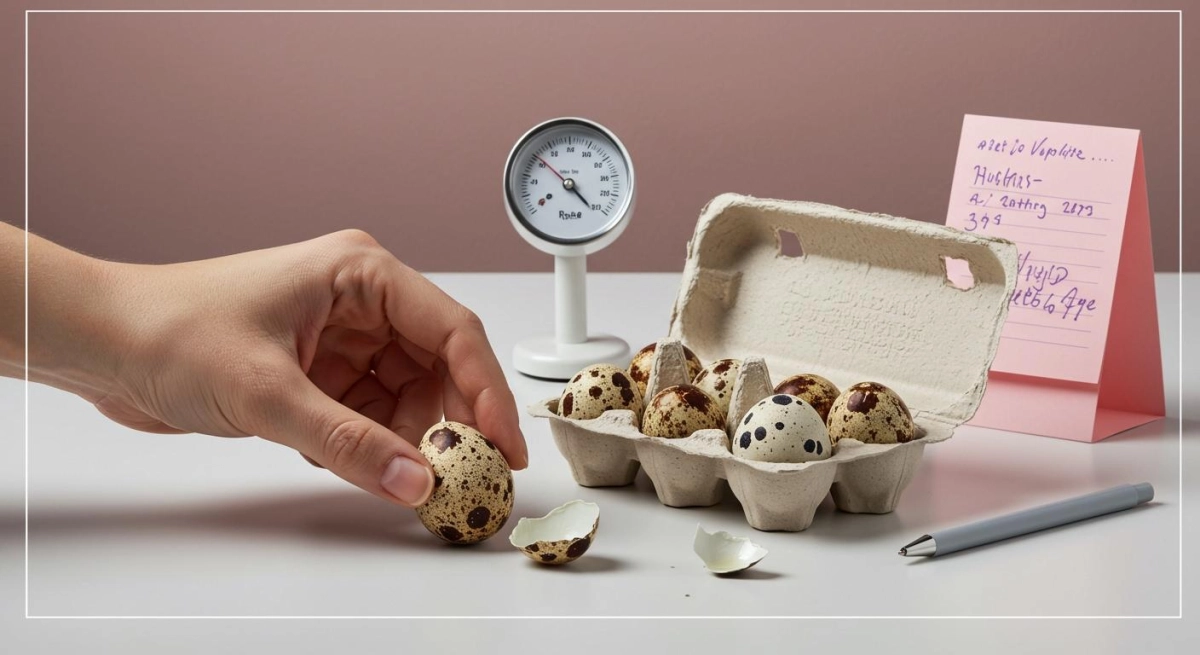
To achieve the best hatch rate, you need to know how to store quail hatching eggs with care. Keep coturnix quail eggs at a steady temperature between 13–16°C (55–60°F) and maintain humidity at 70–80% RH (aim about 75%). Store coturnix quail eggs for no longer than 7–10 days. Place eggs with the pointed end down (large end up) or on their sides and handle gently. These steps help slow embryo development and prevent moisture loss. Hatchability declines progressively with storage time, especially beyond 14 days, so set eggs as soon as practicable.When you're ready to set by machine, pick a quail egg incubator designed for small eggs.
Key Takeaways
-
Keep quail eggs at 55–60°F (13–16°C). Make sure humidity stays between 70–80% RH. This supports higher hatch rates.
-
Gather eggs two or three times each day. Pick eggs that are clean and not broken. This makes hatching better.
-
Turn eggs once daily (about 90°) if you store them for more than 7 days. This stops the yolk from sticking and supports embryo health.
-
Do not wash eggs before you store them. This keeps their natural cover safe and lowers the chance of germs.
-
Put eggs in the incubator within 7–10 days. After 14 days, fewer eggs will hatch.
Pre-Storage Checks for Quail Eggs
Select Only Clean, Intact Eggs
When selecting and preparing the eggs for hatching, you need to follow a clear checklist. This helps you get the best results with your quail.
Checklist for Selecting and Preparing the Eggs:
-
Collect eggs 2–3 times daily to keep them fresh.
-
Choose only eggs that are clean, dry, and free from visible dirt.
-
Keep eggs with strong shells. Avoid any with cracks or thin spots.
-
Select eggs from healthy, active quail breeders.
-
Transfer eggs quickly to a controlled environment. Avoid high temperatures, direct sunlight, and drafts.
Tip: Clean eggs hatch more healthy chicks. Dirty eggs often lead to poor hatch rates.
You can see the key points for selecting and preparing the eggs in the table below:
| Key Point |
Why It Matters |
|---|---|
| Egg Cleanliness |
Clean eggs reduce bacterial load and improve hatchability. |
| Egg Integrity |
Strong shells protect embryos during storage and incubation. |
| Frequent Collection |
Collecting several times a day helps maintain internal quality, especially in warm weather. |
Avoid Washing Hatching Eggs
You should never wash quail eggs before storage. Washing removes the natural protective layer on the shell. This layer helps block bacteria and keeps the eggs safe.
-
Washing can let bacteria enter through the shell pores.
-
Water on the shell makes it easier for germs to get inside.
-
Treatments with vinegar or acid may improve hatch rates but make shells thinner and weaker.
Note: Always keep eggs dry and unwashed. If an egg is very dirty, it is better to discard it.
By following these steps, you protect the eggs and give your quail chicks the best chance to hatch strong and healthy.
Storage Conditions for Best Hatch Rates
Temperature and Humidity for Quail Eggs
You must watch temperature and humidity to keep quail eggs safe. This helps more chicks hatch. Try these steps for the best results:
-
Keep temperature between 55–60°F (13–16°C).
Avoid temperatures below 50°F (10°C) or above 69°F (21°C).
A steady temperature slows premature development and maintains egg quality. -
Keep humidity at 70–80% RH (aim about 75%).
Humidity limits moisture loss and supports embryo viability.
Use a small water tray or a wet cloth in the box to raise humidity if needed. -
Use a digital thermometer and hygrometer in the storage area.
Verify calibration before use.
Check readings twice daily for changes. -
Do not let temperature or humidity swing widely.
Store eggs in a small, closed box or cabinet.
Keep the box away from heaters, windows, and air conditioners.
Tip: Quail eggs stored around ~75% RH perform well; very high humidity can cause condensation if eggs are moved abruptly.
Checklist for Managing Temperature and Humidity:
-
Temperature: 55–60°F (13–16°C)
-
Humidity: 70–80% RH (target ~75%)
-
Use extra thermometers and hygrometers
-
Change water tray or cloth to control humidity
-
Keep eggs out of sunlight and away from drafts
Egg Position and Turning
How you place and turn eggs helps embryos grow right. Follow these steps:
-
Put eggs in trays or cartons with the large end up (pointed end down) or on their sides.
This protects the air cell and supports embryo orientation.Staggering sets? A 3‑tray incubator keeps batches organized and automates turning. -
If you keep eggs for more than a week, tilt or turn them once daily about 90°.
Turning prevents yolk adhesion and reduces late storage losses. -
Be gentle when turning eggs.
Never shake or drop them.
Table: Egg Orientation and Hatchability
| Orientation |
Hatchability Impact |
Embryonic Mortality |
|---|---|---|
| Pointed end down (large end up) |
More consistent |
Lower late mortality |
| Pointed end up |
Decreased |
Higher late mortality |
Note: For the best hatch rates, store quail eggs with the small end down (large end up) or on their sides.
Turning Frequency Table
| Turning Frequency |
Hatchability Effect |
Significance |
|---|---|---|
| Once daily (if stored >7 days) |
Maintains viability during extended storage |
Prevents yolk sticking |
| No turning during >7 day storage |
Decreased hatchability |
Higher late embryo mortality |
Light and Airflow
Light and airflow can change how good quail eggs are during storage. Try these steps:
-
Keep eggs in a cool, dark place.
Do not let sunlight or bright lights touch them.
Use blackout curtains or covers if you need to. -
Make sure air moves well in the storage area.
Open vents to let in fresh air and get rid of carbon dioxide.
Do not keep eggs in a closed, stuffy box. -
Keep the room temperature between 65–75°F.
Do not let drafts or sudden changes happen.
Clarification: The 55–60°F range refers to the actual egg storage micro-environment (e.g., a dedicated cabinet, wine cooler, or insulated box). The room at 65–75°F simply provides a stable ambient backdrop so the storage container can hold steady at 55–60°F with minimal swings.
Table: Light Exposure and Embryo Development
| Light Exposure Type |
Developed to Live Embryos (%) |
Tissue Stress |
Developmental Setback Rate (%) |
|---|---|---|---|
| Cool Fluorescent (15 min) |
No consensus %; avoid prolonged exposure |
May increase with long exposure |
No consensus % |
| Warm Fluorescent (15 min) |
No consensus %; brief exposure acceptable |
Not significant with brief exposure |
No consensus % |
| Sunlight (1 min) |
No consensus %; avoid direct sunlight |
Likely increased due to heat/UV |
No consensus % |
| Control (No exposure) |
Reference condition |
N/A |
N/A |
Tip: Keep the incubator and eggs away from sunlight. Good airflow and darkness help embryos grow and make hatching better.
Checklist for Light and Airflow:
-
Store eggs in a dark, cool room
-
Block sunlight and bright lights
-
Open air vents for airflow
-
Keep temperature steady
If you follow these steps, you make the best place for quail eggs. Controlling temperature, humidity, turning eggs, and blocking light and drafts all help you get more chicks to hatch.
How to Store Quail Hatching Eggs (Duration and Handling)
Best Storage Time for Hatching Quail Eggs
You need to store hatching quail eggs for the shortest time possible. The best hatch rates come from eggs stored ≤7 days. You can keep eggs for 7–10 days with acceptable results, but hatch rates start to drop. If you store eggs for >10 days, hatchability falls quickly. Eggs stored longer than 14 days show a sharp decline in chick numbers and quality.Getting ready to set? Compare poultry egg incubator options with precise humidity control.
Checklist for Storing Eggs Before Incubation:
-
Collect eggs daily.
-
Store eggs at 13–16°C (55–60°F).
-
Keep humidity at 70–80% RH (target ~75%).
-
Incubate eggs within 7–10 days for best results.
-
Mark the date on each egg carton.
Table: Hatchability by Storage Duration
| Storage Duration (days) |
Hatchability (%) |
|---|---|
| ≤7 |
Highest |
| 7–10 |
Acceptable |
| >14 |
Sharp decline |
Tip: For hatching recommendation, always set eggs in the incubator as soon as possible. Egg quality matters most within the first week.
Only setting a few eggs soon? A 6 egg incubator keeps conditions stable with minimal setup.
Effects of Long Storage on Incubation
If you keep hatching quail eggs for more than 14 days, you risk losing many chicks. Long storage causes changes inside the eggs. Albumen quality drops, and embryos lose strength. You may see more weak chicks and higher embryo deaths.
-
Extended storage leads to more embryo deaths.
-
Hatchability drops after two weeks.
-
Chick quality suffers because albumen changes.
-
Albumen viscosity and pH shift, hurting embryo growth.
Note: Egg quality matters. Always candle quail eggs before incubating to confirm viability. Use the egg incubation guide to track storage time.
Table: Hatchability with Warming Intervals
| Group |
Storage Duration |
Hatchability (%) |
|---|---|---|
| 1 |
Control (no special warming) |
Baseline for comparison |
| 4 |
Warming on day 7 (short, controlled) |
Often improves relative to baseline for >7 day storage |
| 5 |
Double warming on days 7 and 14 (short, controlled) |
May further improve vs. baseline in extended storage |
Safe Handling and Storage Tips
You must handle hatching quail eggs gently. Rough handling lowers hatch rates and damages embryos. If storage exceeds 7 days, turn the eggs gently once daily. Turning the eggs keeps the yolk from sticking and helps embryos grow.
Checklist for Safe Handling:
-
Turn the eggs once daily if stored over 7 days.
-
Use clean hands and trays.
-
Never shake or drop eggs.
-
Avoid household refrigerators or garages for storage.
Why Avoid Fridge or Garage Storage?
-
Temperatures <50°F (10°C) can injure embryos or cause deformities.
-
Uncontrolled environments increase temperature and humidity swings.
Alert: Always store eggs in a stable room with controlled temperature and humidity. Gentle daily turning during extended storage helps keep embryos healthy.
Turning the Eggs Table
| Turning Frequency |
Hatchability Effect |
|---|---|
| Once daily (if stored >7 days) |
Prevents yolk sticking, supports embryo growth |
| No turning during >7 day storage |
Higher risk of embryo death |
Note: Not turning eggs during extended storage is a common reason for poor hatch rates.
Common Mistakes to Avoid:
-
Do not use home refrigerators for storing eggs.
-
Do not keep eggs in warm kitchens or near windows.
-
Avoid low humidity and strong air drafts.
-
Turn eggs daily if storage exceeds one week.
-
Do not put cold eggs straight into a humid incubator.
If you avoid these mistakes, your quail eggs will hatch better and chicks will be healthier.
You can get more chicks to hatch if you follow these steps. Pick eggs that are clean and not broken. Keep the storage temperature at 55–60°F (13–16°C). Make sure the humidity stays at 70–80% RH (target ~75%). Store eggs for ≤7 days for the best hatch rates, and no longer than 7–10 days. Place eggs with the large end up (pointed end down) or on their sides. If storage exceeds one week, turn the eggs daily. Be gentle when you handle the eggs. Keep eggs in a cool, dark room with no drafts. Doing these things helps embryos grow slowly and consistently and lowers the number of weak chicks when hatching.
Use this quick reference card for every hatching project:
| Parameter |
Thresholds |
|---|---|
| Temperature |
55–60°F (13–16°C) (avoid <50°F / >69°F) |
| Humidity |
70–80% RH (target ~75%) |
| Orientation |
Large end up (pointed end down) or side |
| Turning |
Once daily if stored >1 week |
| Storage Duration |
≤7 days best; 7–10 days acceptable; >14 days decline |
| Environment |
Cool, dark, draft-free, stable (room 65–75°F; storage box 55–60°F) |
FAQ
How long can you store quail hatching eggs before incubating?
You should store quail eggs for no more than 7–10 days. Hatch rates drop sharply after 14 days. Mark the date when you collect each egg.
Do you need to turn quail eggs during storage?
If storage exceeds 7 days, turn eggs once daily (about 90°). For eggs set within a week, turning during storage is optional.
Can you keep hatching eggs in the refrigerator?
Avoid household refrigerators. Temperatures below 10°C (50°F) are too cold for holding hatching eggs.
Should you wash dirty quail eggs before storage?
Do not wash hatching eggs. Washing removes the protective layer and lets bacteria enter. Discard eggs with heavy dirt or stains.
What is the best temperature and humidity for storing quail eggs?
Keep temperature at 13–16°C (55–60°F) and humidity at 70–80% RH (≈75%). Use a thermometer and hygrometer to check these numbers every day.
Tip: Follow these steps for every batch to get strong, healthy chicks! ��
0 Comments