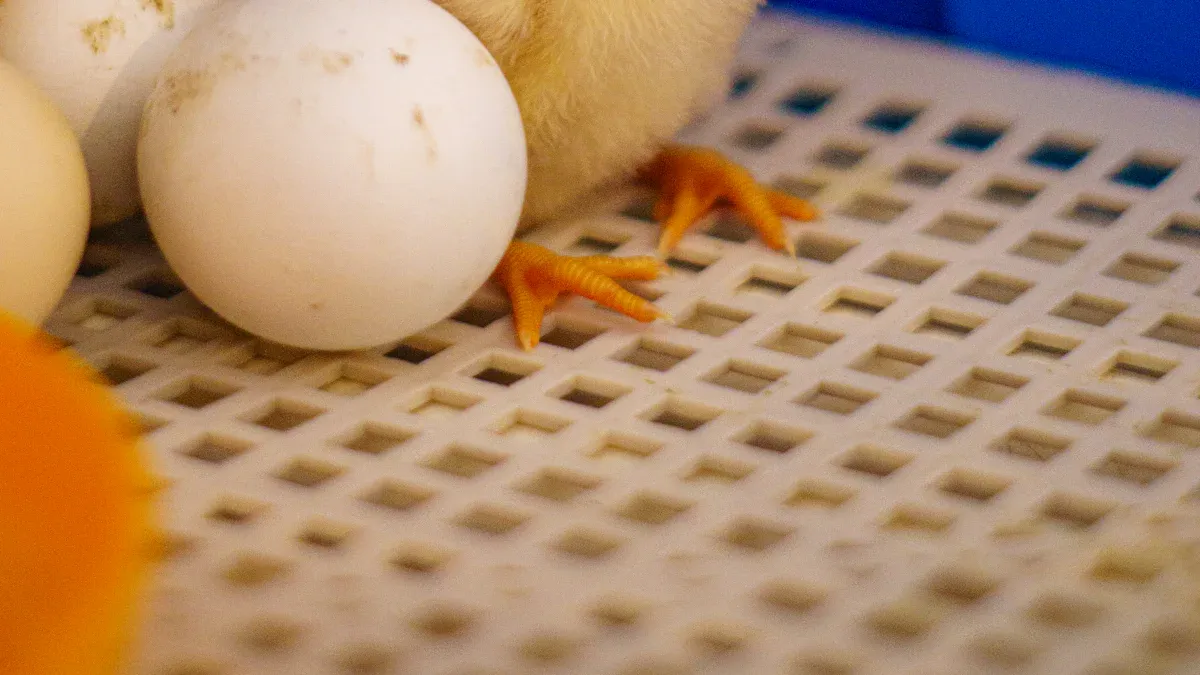
You need to confirm your incubator model and inner chamber size before choosing an egg turner. When the turner fits your incubator and matches your egg sizes, you reduce handling mistakes and keep conditions steadier for embryos.
Who this guide is for: You want to buy or upgrade an egg turner and you want it to fit your incubator, turn smoothly, and avoid unnecessary lid opening.
- If you want fewer failures: confirm fit, clearance, and cable routing before you buy.
- If you want steadier conditions: choose a turning method that reduces lid opening and keeps airflow clear.
- If you want repeatable results: test the setup empty and keep a simple hatch log.
Key Takeaways
- Confirm your incubator model and inner chamber size before selecting an egg turner. Fit problems cause jams, blocked airflow, and unstable readings.
- Choose a turning system that reduces lid opening. Fewer openings helps temperature and humidity stay steadier.
- Look for adjustable trays or correct roller support so eggs do not collide or slip during turning.
- Check power and backup options so turning can continue during outages.
- Run your incubator empty for 12 to 24 hours to confirm turning motion, clearance, and stable conditions.
Last updated: Dec 26, 2025
Quick Take on Egg Turner for Incubator
Start with fit, then turning style, then power
Many egg turner problems are not “bad products.” They are fit issues. If the turner is too tall, too wide, or routed poorly, it can jam, press on the lid, block airflow, or disturb sensors. Start with measurements, then choose the turning style and power plan that match your incubator use.
Conclusion: A turner is “compatible” only when it turns freely without touching walls, blocking airflow, or forcing extra lid opening.
- Fit: inner length, width, and height at the turning point, plus clearance for airflow.
- Tray type: adjustable tray for mixed sizes or rollers for small eggs.
- Power: confirm outlet type and any backup option you will actually test.
Tip: Choose an automatic egg turner that can stop turning before lockdown. This protects hatch positioning during the final days.
Compatibility Checklist for Egg Turner
Use this checklist before you buy and again before you load eggs. It prevents the most common “it fit online but not in my incubator” mistakes.
1) Match incubator model, chamber clearance, and airflow space
Conclusion: If the turner reduces airflow or hits the lid, you will chase settings and still get uneven development.
- Clearance: confirm the turner does not touch the lid, sides, or sensor area while moving.
- Airflow: leave space above and around eggs so air can circulate evenly.
- Placement: keep the incubator away from drafts and direct sun so room swings do not override your settings.
2) Check tray fit, egg diameter, and tray occupancy
Tray design should match your egg size. If eggs bump, roll, or slide, you can crack shells or create poor positioning. Start with the largest egg, set spacing, then add smaller eggs and re-check spacing.
Conclusion: Proper spacing prevents collisions and slipping because eggs stay stable through the full turning range.
- Set for the largest egg: establish the widest spacing first.
- Add smaller eggs next: confirm they do not roll into gaps.
- Test movement: run one full turning cycle and confirm nothing shifts.
3) Confirm cable routing and power supply
If your turner uses a power cable, route it so it cannot snag the tray or pull on the motor. Keep cables away from sensor probes so readings stay stable.
Conclusion: Clean cable routing prevents jams and false readings because nothing drags, snags, or presses on the lid.
- Routing: keep the cable path clear of moving parts.
- Power match: confirm your outlet type and adapter requirements before you connect.
- Backup plan: if you rely on backup power, test it during the empty run.
Callout: Run an empty test before you start hatching. Check movement, tray fit, and temperature stability. This step catches problems early.
Why Turning Matters
Turning supports positioning and reduces sticking
Turning helps embryos stay positioned and reduces the chance of sticking. This matters most when turning is consistent and the incubator environment stays stable. The goal is reliable movement without frequent lid opening.
Conclusion: Consistent turning helps development because eggs experience steady movement without repeated heat and humidity loss.
- Consistency: a steady routine is safer than missed turns and catch-up turns.
- Even exposure: regular motion helps avoid “one side warmer” patterns.
- Less disturbance: automatic turning reduces the need to open the incubator.
Reduce lid opening to protect stability
Opening the lid can drop heat and humidity. When you reduce lid opening, you reduce swings. Fewer swings supports steadier development and a cleaner troubleshooting picture.
Tip: Bundle tasks. Candle quickly. Refill water fast. Close the lid. The goal is fewer, shorter openings.
Turning Cycle and When to Stop
Choose a turning routine that matches your method
Turning frequency depends on whether you use automatic or manual turning. Many automatic systems move on a timed cycle. Manual turning is less frequent, but it must be consistent every day.
Conclusion: Your best turning plan is the one you can follow consistently without extra lid opening.
- Automatic systems: follow the built-in cycle and confirm it moves smoothly during the empty test.
- Manual turning: turn multiple times per day on a consistent schedule and avoid skipping days.
- Lockdown: stop turning during the final days before hatch so chicks can position for hatching.
Manual stop before lockdown period
Stop turning when you enter lockdown. Move eggs carefully into a hatching position. Work quickly so eggs do not cool, and avoid repeated checks after lockdown starts.
Conclusion: Lockdown works best when you stop turning, raise hatch humidity as needed, and stop unnecessary lid opening.
- Move eggs once: set them into hatch position and leave them.
- Stability first: avoid repeated “quick looks” that crash humidity.
- Safety: keep tools and hands clean if you must handle eggs.
Capacity and Trays in Egg Turner for Incubator
Adjustable trays for large and small eggs
Adjustable trays help you set spacing for each batch. This matters when egg sizes differ. A stable tray reduces slipping and prevents collisions during turning. Cleanable tray materials also make sanitation easier between hatches.
Conclusion: Choose trays that hold eggs firmly because stable eggs turn more safely and with fewer cracks.
- Adjustability: spacing changes for different egg sizes.
- Support shape: cups or dividers that reduce rolling.
- Cleaning: durable parts that dry fully between hatches.
Mixing egg types without collisions or slipping
You can hatch mixed sizes when spacing is correct. Set the tray for the largest egg first, then add smaller eggs. Confirm eggs do not drift into each other during the turning motion.
- Set tray spacing for the largest eggs first.
- Add smaller eggs and re-check spacing.
- Run a short test cycle and watch for shifting.
- Use viewing windows when available so you do not open the lid.
Testing and Care for Egg Turner and Incubator
Run empty for 12 to 24 hours before loading eggs
Run the incubator empty before you set eggs. This test helps you catch jams, unstable readings, and fit problems. It also helps you confirm that the turner does not block airflow or bump the lid.
Conclusion: An empty run is the fastest way to prevent a batch failure because you can fix issues before embryos depend on stability.
- Stability checks: record temperature and humidity at intervals to confirm they hold steady.
- Motion checks: confirm smooth turning with no rubbing, snagging, or stalling.
- Noise checks: unusual noise often signals a misfit or a loose part.
Clean and dry before use
Clean your incubator and egg turner before every hatch. Dry all parts completely to prevent mold. Inspect wires and connectors and make sure nothing is cracked or loose.
Note: Clean equipment supports healthier hatching because bacteria and mold have fewer chances to grow.
Decision Flow for Choosing an Egg Turner
Step 1: Species and egg size to tray type
Start with the eggs you hatch most. Larger eggs need wider spacing and strong support. Small eggs often do better with rollers or properly sized cups. The correct tray type reduces rolling and improves stable turning.
Step 2: Chamber fit and clearance
Measure your incubator interior. Confirm the turning mechanism clears the lid and walls. Confirm airflow remains open around the tray. Plan cable routing before you connect power.
Step 3: Turning plan and lid-opening habits
Choose automatic turning if you want fewer lid openings. Choose manual turning only if you can turn consistently every day. Consistency reduces “unknowns” when you troubleshoot results.
“Turning hatching eggs is vital to their survival. Turning keeps the yolk centered within the egg white so it doesn’t stick to the shell membrane and cause the death of the developing embryo. Do you want an automatic turner or will someone be present to turn eggs at least three times a day, every day, until the last 72 hours before hatching? Some incubators come with rotating devices or tilting trays.”
Simple Hatch Log That Makes Troubleshooting Easier
Records improve hatch results because they show patterns. You can stop guessing and change one variable at a time.
Conclusion: A small log is more useful than perfect numbers because it shows what changed and what improved.
- Daily checks: temperature at egg height, humidity, and vent position.
- Disturbance: lid opening count and how long the lid stayed open.
- Outcome: clears, early loss, late loss, and pipped-not-hatched count.
Mini log template you can copy:
Set date:
Egg type:
Turning method: automatic or manual
Daily temp and humidity notes:
Lid openings today:
Notes about changes made:
Related guides on EggBloom
- Common mistakes to avoid before hatching
- Small egg incubators: selection and setup
- How automatic egg turning works
Recommended option for consistent turning
If you want fewer missed turns and fewer lid openings, choose a setup designed for consistent automatic turning. For a stable turning approach with a reliable routine, consider an auto-turn dual-motor incubator that keeps eggs turning consistently.
FAQ
How do I know if an egg turner will fit my incubator?
Measure the incubator inner length, width, and height. Confirm the turner clears the lid during movement and does not block airflow. Plan cable routing before you connect power.
How often should eggs be turned?
Automatic systems follow the built-in turning cycle. Manual turning should be done multiple times per day on a consistent schedule. Stop turning during lockdown in the final days before hatch.
Can I hatch different egg sizes in one turner?
Yes, when the tray spacing is adjustable or when you use proper rollers for small eggs. Set spacing for the largest eggs first, then add smaller eggs and confirm nothing slips during turning.
How do I test an egg turner before setting eggs?
Run the incubator empty for 12 to 24 hours. Watch for smooth motion, no rubbing, stable readings, and no cable snags. Fix issues before you set eggs.
Data authenticity note: This guide reflects common at-home incubator and egg turner practices. Results vary by egg species, incubator airflow design, sensor placement, room stability, and how often the lid is opened.
0 Comments