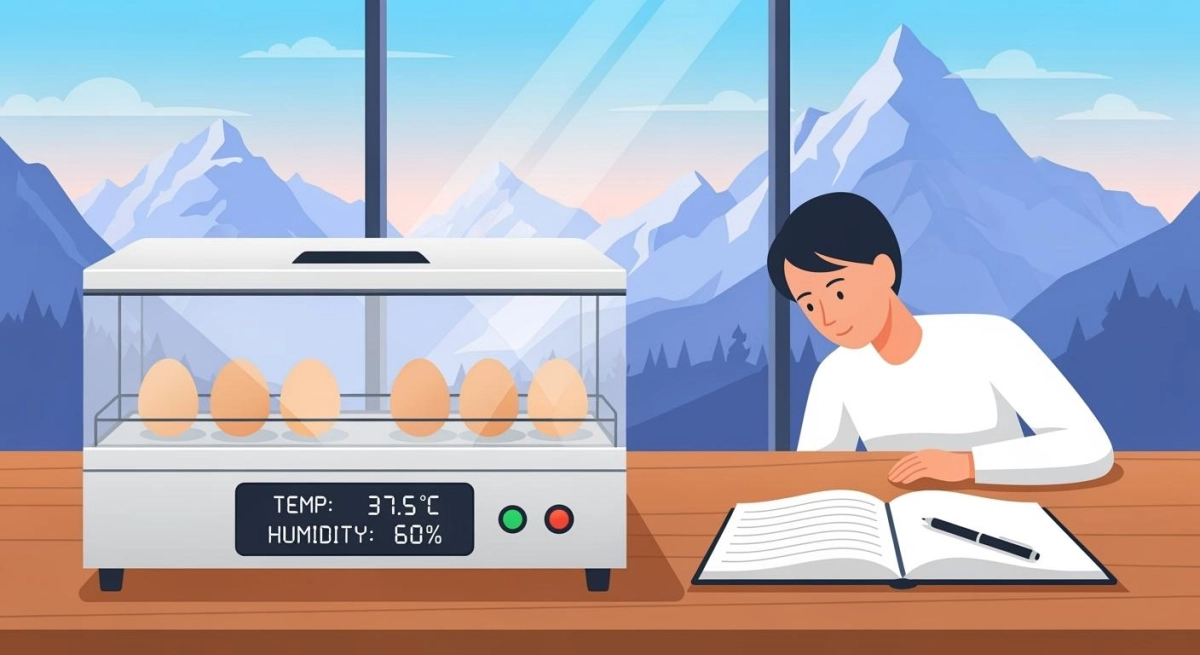
Incubating eggs at high altitude can be challenging. The lower air pressure causes eggs to lose water more quickly, which can lead to chicks drying out. Maintaining the right humidity is crucial, as low levels make it difficult to achieve optimal conditions. Additionally, controlling temperature becomes more complex because oxygen levels are lower. To successfully hatch eggs at high altitudes, it is essential to adjust humidity levels and ventilation. Keeping air circulation steady and frequently monitoring your settings is vital. With careful attention and regular checks, you can still achieve a strong hatch rate even in elevated locations.
Key Takeaways
-
Watch humidity carefully. At high altitudes, eggs lose water faster, so adjust humidity to keep chicks from drying out.
-
Weigh eggs every week. This shows how much water eggs lose and helps you fine-tune humidity for a better hatch.
-
Pick the best incubator. Forced-air designs move air more evenly, and good airflow keeps oxygen at the right level.
-
Write down all settings and changes. A detailed log helps you see patterns and improve your hatch results over time.
-
Give more fresh air as embryos grow. Embryos need more oxygen later in incubation, especially at high altitudes.
High Altitude Egg Incubation Challenges
Air Pressure and Oxygen Effects
When you incubate eggs at high altitude, air pressure is lower. This means there is less oxygen in the air. Embryos need more oxygen as they grow. If they do not get enough, they grow more slowly. Studies show less oxygen can slow chick embryo growth. Embryos need oxygen to use food and develop well.
Hatchability often goes down as altitude goes up. Embryos are more sensitive to low oxygen later in incubation. You need to make sure your incubator has enough fresh air. This keeps oxygen levels high and helps embryos grow.
Here is a table that shows what scientists found about oxygen and embryo growth:
| Study |
Key Findings |
Animal Models |
|---|---|---|
| Quinn et al. (1978) |
Growing embryos with 5% O2 helped more reach the blastocyst stage. |
Rodents (mice, rats, hamsters) |
| Later Study |
Oxygen levels change results during early growth; too much oxygen caused damage that did not get better when lowered. |
Different animal species |
These studies used early embryos from other animal species rather than full-term poultry eggs, but they highlight how sensitive embryos are to oxygen levels and why good ventilation matters during incubation.
Humidity and Heat Exchange Changes
Incubating eggs at high altitude brings another problem: water leaves eggs faster. Lower air pressure makes eggs lose water quickly. The air inside the incubator often feels drier. It is harder to keep the right humidity. If humidity is too low, eggs lose water too fast and chicks can dry out before hatching.
Watch humidity closely when incubating eggs at high altitude. If eggs lose weight too fast, raise humidity. If they lose weight too slowly, lower it. Hatchability depends on keeping the right balance. You also need to check that heat spreads evenly in the incubator. Uneven heat can make some eggs grow faster than others. This lowers hatchability.
Tip: Use a reliable hygrometer and thermometer near the eggs. Check them often to keep your settings on target.
Choosing and Calibrating Incubators
Pick the right incubator for high altitudes. Forced-air incubators are often best because they move air well. This helps keep oxygen levels steady for the eggs. Still-air incubators can work, but you must watch the temperature at the top of the eggs. Put your incubator in a quiet room. Keep it away from sunlight and drafts. This helps keep the temperature and humidity steady.
Clean and dry your incubator before you start. Set it up at least one day before adding eggs. Use a good thermometer and hygrometer. Make sure both tools are correct by calibrating them. Put the sensors close to the eggs, not just on the wall. Write down your starting temperature and humidity. Keep a notebook or use a computer to record each batch. This helps you see changes and find problems early.
Tip: Always check the incubator’s ventilation system. At high altitudes, embryos need more fresh air. Open the vents more as the embryos grow.
Here is a table that shows why forced-air incubators and careful humidity control are important at high altitudes:
| Evidence Description |
Recommendation |
|---|---|
| You need more ventilation because there is less oxygen. |
Increase ventilation more than at sea level. |
| Humidity should be higher to stop eggs from drying out. |
Use higher relative humidity (for example, around 50–55% during most of incubation and 65–70% during lockdown) while keeping incubation temperature near 37.5–38°C (about 100°F). |
| Eggs from sea level lose more water at high altitudes. |
Use higher humidity to help eggs hatch well. |
Baseline Temperature and Humidity Settings
Set the temperature and humidity before you put in eggs. For forced-air incubators, use 100°F. For still-air incubators, check the top of the eggs and set it to 102°F. Do not raise the temperature just because you are at high altitude. The right temperature helps the embryos grow at the right speed.
Start with humidity a little higher than you would at sea level, often around 50–55%. This helps keep eggs from losing water too fast. For the first 18 days, aim for about 45–55% relative humidity, adjusting within that range based on weekly weight loss. For the last three days, called lockdown, raise humidity to around 65–70% so chicks have enough moisture to hatch.
Here is a quick guide for temperature settings:
| Incubator Type |
Temperature Setting (°F) |
Temperature Setting (°C) |
|---|---|---|
| Forced-Air |
100 |
37.8 |
| Still-Air |
102 (egg top) |
38.9 |
Note: Always use another thermometer and hygrometer to check your incubator’s readings.
If you can, get the air and eggs ready before they go into the incubator. Store eggs at 55–60°F and 70–75% humidity before you start. Let eggs warm up to room temperature before putting them in the incubator. This stops water from forming on the shell and keeps it strong.
Write down all your settings and changes. Record the date, temperature, humidity, and any changes you make. This helps you see patterns and get better hatch rates.
-
Put the incubator in a quiet, steady place.
-
Calibrate all your tools before you use them.
-
Write down the starting temperature and humidity.
-
Set humidity a bit higher than at sea level.
-
Keep track of all changes in a notebook or on a computer.
If you follow these steps, your eggs have a better chance to hatch healthy chicks, even at high altitudes.
Humidity Control and Monitoring
Weekly Weighing and Air Cell Tracking
Check your eggs every week when incubating at high altitude. Weigh each egg before you start and then every seven days. Use a gram scale for this. Write down the weights in a notebook or on your computer. This helps you see if eggs lose water at the right speed.
Eggs should lose about 12–14% of their weight before lockdown. This helps the air cell grow and keeps embryos healthy. If eggs lose too much or too little, chicks may not hatch well. The air cell grows as water leaves the egg. It gives the chick space to breathe and move. Mark the air cell line with a pencil each week. Compare it to standard charts to check growth.
-
Weigh eggs weekly to adjust humidity.
-
Eggs should lose about 12–14% of their weight for best hatching.
-
The air cell shows moisture levels and helps prevent problems.
-
The air cell forms from water loss and is needed for hatching.
-
Good humidity keeps the air cell the right size.
-
Very small air cells can cause drowning; very large air cells can slow growth.
-
Home hatchers often watch air cell size.
-
Air cell size depends on humidity and moisture loss.
-
Watching the air cell helps you change humidity for proper weight loss.
-
Weighing eggs is one of the best ways to check humidity needs.
Tip: Use both weighing and air cell tracking. This helps you find problems early and fix them before hatching.
Adjusting Humidity and Ventilation
After weighing eggs and checking air cells, adjust humidity and ventilation. If eggs lose weight too fast, raise humidity. If they lose weight too slowly, lower humidity. Use a hygrometer to check humidity. At high altitude, keep humidity around 45–55% during most of incubation and raise it to about 65–70% during lockdown to help chicks hatch.
You also need to change ventilation. Embryos need more oxygen as they grow. Open vents a little more each week for fresh air. Do not open them too much at once. Avoid drafts, which can bring cold, dry air and hurt embryos. Slowly add fresh air to keep oxygen high and help embryos grow.
-
Use eggs from your flock or a trusted breeder at the same altitude.
-
Aim for about 45–50% humidity for days 1–10, 50–55% for days 10–18, and 65–70% during lockdown.
-
Do not over-ventilate to avoid cold, dry air hurting embryos.
-
Weigh eggs often to make sure they lose about 12–14% weight.
-
More ventilation gives embryos the oxygen they need.
-
Higher altitude means less oxygen, which affects embryos.
-
To fix low oxygen, open vents slowly and keep airflow even.
Note: Always check your incubator’s readings with another thermometer and hygrometer near the eggs. This helps you keep conditions steady for hatching.
By doing these steps, you can control humidity and ventilation at high altitude. Weekly weighing and air cell tracking give you the information you need. This helps you make good changes and hatch healthy chicks.
Hatching Eggs at Altitude: Lockdown and Support
Lockdown Humidity and Oxygen
When you reach day 18 of incubation, you enter the lockdown phase. At this point, you must stop turning the eggs. Turning is no longer needed because the chicks are getting ready to hatch. You should also raise the humidity in your incubator. High humidity helps chicks break through the shell without drying out. For hatching eggs at altitude, set the humidity to around 65–70% relative humidity (RH). Stay near the upper end of that range if weekly checks show that eggs are losing water quickly.
Here is a table to help you remember the recommended humidity levels:
| Stage of Incubation |
Recommended Humidity Level |
|---|---|
| First 18 Days |
45–55% |
| Lockdown (Final 3 Days) |
65–70% |
Keep the incubator closed as much as possible during lockdown. Opening the lid can cause humidity to drop quickly. This can make it harder for chicks to hatch. You also need to maintain proper oxygen levels. Open the air vents wider to let in more fresh air. This helps with oxygen availability, which is very important as chicks start to breathe on their own.
Tip: Watch for the first small crack in the shell, called an external pip. This means the chick is starting to hatch and needs plenty of oxygen.
Monitoring Hatch and Post-Hatch Care
During hatching, check the eggs through the incubator window. Avoid opening the lid unless you must. Chicks need a stable, warm, and humid environment to finish hatching. If you see chicks struggling, make sure the humidity and oxygen are at the right levels.
After hatching, leave the chicks in the incubator until they are dry and fluffy. This usually takes a few hours. Stable temperature and good ventilation help the chicks recover from hatching. Once dry, move them to a brooder with clean bedding, fresh water, and chick starter feed.
-
Keep the brooder at 95°F for the first week.
-
Make sure the brooder has good airflow but no drafts.
-
Watch the chicks for signs of stress or weakness.
By following these steps, you give your chicks the best chance for a healthy start. Hatching eggs at altitude takes careful planning, but you can succeed if you monitor conditions and support your chicks during this critical time.
Troubleshooting High Altitude Incubation
Diagnosing Weight Loss and Hatch Timing
You can find most problems early by weighing eggs each week. Write down each egg’s weight before you start and every seven days. Use a pencil to mark the air cell line and check it with charts. This lets you see if eggs lose water too fast or too slow. If eggs lose weight too fast, raise humidity. If they lose weight too slow, lower humidity.
Keep a notebook or computer file for each batch. Write down temperature, humidity, ventilation, egg weights, and air cell size. Change only one thing at a time. This helps you know what works best for your eggs. Good records help you fix problems and get more chicks to hatch.
Here are some common problems and ways to fix them:
| Issue |
Solution |
|---|---|
| Fast weight loss |
Raise humidity, check for drafts, reduce ventilation if safe |
| Slow weight loss |
Lower humidity, check for blocked vents |
| Delayed hatching |
Check temperature accuracy, review weight loss and air cell size |
| Conflicting readings |
Cross-check with backup sensors, recalibrate equipment |
| Improper ventilation |
Increase ventilation, avoid drafts, ensure fresh air |
Tip: Weigh trays of eggs before you start and again at transfer. Use air cell size to help guide you.
Cross-Checking Sensors and Adjustments
You need good sensors to watch your incubator. Put a thermometer and hygrometer close to the eggs. Capacitive sensors work for humidity but need to be checked often, especially when it is very humid. For oxygen, use sensors like GCA-S-O2-XX21 to check levels. Heated infrared sensors help measure CO₂ and stop condensation.
| Sensor Type |
Application |
Notes |
|---|---|---|
| Capacitive Sensors |
Humidity Measurement |
Calibrate often, sensitive to condensation |
| Infrared Absorption Sensors |
CO₂ Measurement |
Heated sensors avoid condensation |
| GCA-S-O2-XX21 Sensor |
Oxygen Monitoring |
Measures oxygen, adjust ventilation as needed |
If eggs lose weight too fast or too slow, change humidity first. If chicks hatch late or early, check your temperature and recalibrate if needed. Always check with a backup sensor. After each hatch, look at your notes, clean the incubator, and update your records. This helps you see patterns and do better next time.
Note: Clean your incubator after every hatch. Cleaning stops disease and keeps your tools working well.
Quick Reference Card for Incubation
Printable Guide: Baselines and Adjustments
Keep this card close when you incubate eggs at high altitude. You can print it or save it on your phone for easy use.
�� Baseline Settings Table
| Incubation Stage |
Temperature (°F) |
Relative Humidity (%) |
Turning Schedule |
|---|---|---|---|
| Days 1–18 (Main) |
100 (forced-air) / 102 (still-air, egg top) |
45–55 |
4–6 times per day |
| Last 3 Days (Lockdown) |
100 (forced-air) / 102 (still-air, egg top) |
65–70 |
Stop turning at day 18 |
Note: Always use a thermometer and hygrometer that are calibrated. Put them near the eggs.
�� Step-by-Step Process
-
Store eggs at 55–60°F and 70–75% humidity before you start.
-
Warm eggs to room temperature before putting them in.
-
Set the incubator’s temperature and humidity to the right levels.
-
Turn eggs 4–6 times each day from day 2 to day 18.
-
Weigh eggs every week. Aim for 12–14% weight loss by day 18.
-
Mark the air cell with a pencil and watch it grow.
-
Raise humidity to 65–70% for the last three days.
-
Open vents wider as embryos get bigger for more oxygen.
-
Do not open the incubator lid for more than one minute.
��️ Troubleshooting Quick Tips
-
If eggs lose weight too fast: Raise humidity and check for drafts.
-
If eggs lose weight too slow: Lower humidity and check for blocked vents.
-
If chicks hatch late: Check the temperature and look at air cell size.
-
If readings do not match: Use backup sensors and recalibrate them.
-
If oxygen is low: Open vents more and make sure air is fresh.
�� Helpful Resources
-
Hatching Eggs in the Classroom: Use this checklist for your project.
-
The Chicken: Learn about chicken biology and care.
-
The Egg: Find out about egg structure and how to care for eggs.
-
Incubation: Follow these steps for incubating eggs.
-
Trouble Shooting: Get tips to help more chicks hatch.
Tip: Print this card and keep it next to your incubator. It helps you check and change settings quickly.
You can get good hatch rates at high altitudes. Focus on humidity and ventilation. Watch your incubator closely every day. Use weekly weighing and air cell tracking. These methods help you change settings for healthy chicks. The table below explains why oxygen and gas exchange are important:
| Key Findings |
Description |
|---|---|
| Gas Exchanges |
Needed for chick health and hatching |
| Oxygen Levels |
Important for embryo growth |
| Hypoxia Effects |
Can cause problems if not controlled |
Many poultry keepers say trying different settings helps. Share your tips or questions about high altitude incubation in the comments!
FAQ
What is the best place to set up my incubator at high altitude?
Choose a quiet spot with stable temperature. Keep the incubator away from sunlight and drafts. This helps you maintain steady heat and humidity for your eggs.
How often should I weigh my eggs during incubation?
Weigh your eggs once every seven days. Record each weight and mark the air cell line. This helps you track water loss and adjust humidity as needed.
What should I do if my eggs lose weight too fast?
Increase humidity or reduce ventilation. Check if the room feels dry. Use a hygrometer near the eggs to confirm your settings.
How do I make sure my eggs get enough oxygen?
Open the vents wider as embryos grow. Avoid blowing air directly onto the eggs. Keep the incubator closed except when needed.
What steps should I follow after chicks hatch?
Let chicks dry inside the incubator. Move them to a warm brooder with clean bedding and fresh water. Keep the brooder at 95°F for the first week.
Data authenticity note: This guide reflects high-altitude incubation practice drawn from industry experience, hatchery field logs, equipment manuals, and selected research on embryo development. Individual incubators and room conditions vary, so treat all temperature, humidity, and weight-loss ranges as starting points and fine-tune based on your own results.
References :
1. Industry practice and high-altitude hatchery field logs.
2. Equipment manuals for forced-air and still-air incubators (various models).
3. Poultry incubation texts and training materials on temperature, humidity, and gas exchange.
4. Hatchery standard operating procedures (SOPs) for monitoring weight loss and air cell growth.
5. Comparative embryo development studies on oxygen tension, hypoxia, and ventilation effects.
0 Comments