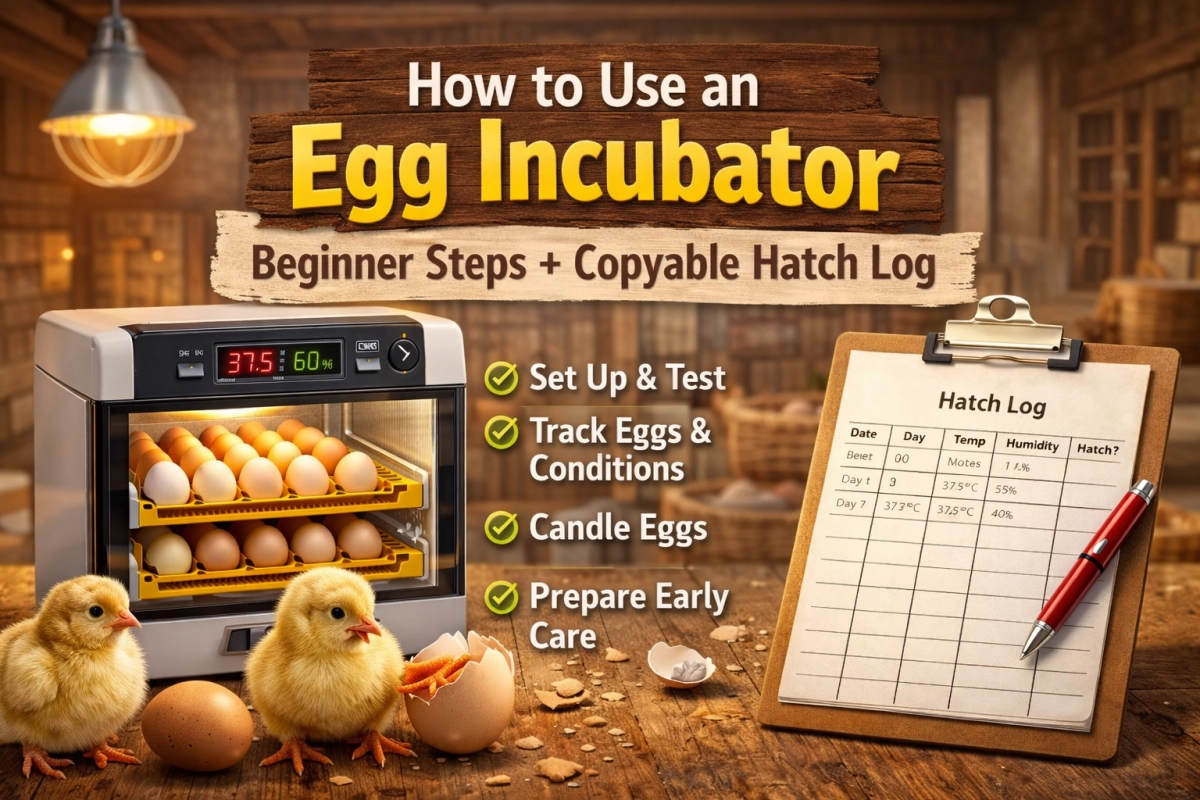
Using an egg incubator is easier when you follow a simple routine and track your readings. This beginner guide helps you set up safely, keep temperature and humidity steadier, and avoid common mistakes—plus a copyable hatch log you can use for every batch.
Key Takeaways
-
Start clean. Washing and drying removable parts helps reduce odors, mess, and contamination risk.
-
Measure at egg height. A steady reading matters more than chasing every small number change.
-
Turn eggs on a consistent schedule until lockdown (day 18 for chicken eggs). Consistency helps embryos develop normally.
-
Keep lid openings short. Plan water refills and candling so the incubator recovers faster.
-
Use a simple incubation log. Notes help you spot patterns and repeat what worked next time.
-
Candle quickly at a few checkpoints (often around days 7, 10, and 14). Remove clear, non-developing eggs to keep the space clean.
-
For hatch day, stop turning, raise humidity as needed, and keep the lid closed as much as possible so membranes don’t dry out.
-
Choose a model you can manage. Many beginners find forced-air (fan) incubators easier because heat is more even and recovery is quicker.
How to use an egg incubator: The basics
What an incubator does
An egg incubator holds warm, humid air around the eggs so chicks can develop and hatch. Your job is to keep conditions stable—steady temperature, reasonable humidity, and minimal disruptions—so the incubator can do its work.
When you use an egg incubator, you want stable readings and a calm routine. Small, planned checks are usually better than frequent opening and constant adjustments.
Key controls: temperature, humidity, turning
Temperature drives development speed. Humidity affects moisture loss and how easily chicks hatch. Turning helps prevent the embryo from sticking and supports healthy positioning. If you’re brand new, start with the Egg Incubator instructions for your model, then keep your checks short and consistent.
| Incubator Type |
Temperature Target |
Humidity Target (Days 1–18) |
Humidity Target (Lockdown) |
|---|---|---|---|
| Forced-air (Fan) |
99.5°F at egg height |
45–55% RH (common starting range) |
65–75% RH (common hatch range) |
| Still-air (No fan) |
Follow manual at egg height |
Depends on model and room |
Depends on model and room |
Do this:
-
Calibrate the incubator before you set eggs.
-
Let it run empty for a few hours so readings stabilize.
-
Check temperature and humidity at egg height.
-
Turn eggs on a steady schedule until lockdown.
-
Keep the lid closed as much as possible during hatch.
Why it matters:
-
Stable temperature supports steady development.
-
Humidity helps eggs lose moisture at the right pace.
-
Turning helps prevent embryos from sticking and supports positioning.
-
Frequent opening can cause fast drops that take time to recover.
If you see X, do Y:
-
If temperature is high or low, adjust in small steps and wait for the incubator to stabilize before changing again.
-
If humidity swings, reduce lid openings and change water amounts gradually.
-
If readings seem wrong, confirm sensor placement at egg height and check for drafts before you change settings.
Choose your EggBloom incubator type
Do this: Check if your EggBloom incubator has a fan inside. Forced-air incubators have a fan. Still-air incubators do not have a fan.
Forced-air vs still-air
Forced-air incubators use a fan to move warm air. This usually makes temperature more even and helps the incubator recover faster after quick checks. Still-air models can work, but they often require more careful measuring at egg height and a steadier room.
How to identify your model
If you see a fan, you have a forced-air incubator. If you do not see a fan, you likely have a still-air model. Always double-check your manual so you use the right target temperature for your design.
Why forced-air is easier for beginners
Many beginners prefer forced-air incubators because they are simpler to manage. Heat tends to be more even across the tray, and recovery after a brief opening is often faster.
Prep before you use the incubator
Do this: Pick a stable room, clean the incubator, and run a dry test before loading eggs. Gather your supplies first so you can keep openings brief.
Room setup and stability
Place the incubator away from windows, direct sunlight, drafts, and vents. Set it on a level surface where pets and kids cannot bump it. A stable room helps your incubator stay steadier with less effort.
Clean start: why and how
Clean and fully dry the incubator before each hatch and after chicks move out. Unplug the unit first, keep water away from sensors and electrical areas, and let parts air-dry completely before you power it back on. This helps protect both your chicks and your equipment.
Egg selection and handling
Choose eggs with clean, intact shells. Avoid cracked eggs and eggs with heavy dirt. Handle eggs gently and wash hands after contact—especially when kids are helping. For shipped eggs, allow a rest period before incubation so the contents can settle.
For a deeper guide on selecting eggs, see best eggs for hatching.
What to record in your hatch log
Your hatch log helps you stay consistent. Record temperature at egg height, humidity, water refills, turning notes, and any events like power flickers or big room temperature changes. This makes troubleshooting much easier.
Step-by-step: Incubating the eggs
Do this: Run a dry test, load eggs carefully, turn consistently, and keep your daily checks short. Stability matters more than perfection.
Dry run and stable readings
Run the incubator empty before you add eggs. This helps you learn how your incubator behaves and gives readings time to stabilize. It also helps you catch drafts or placement problems early.
Setting up: temperature and humidity
Follow your incubator’s manual for target settings. Many forced-air chicken egg setups run close to 99.5°F at egg height. Humidity targets vary by incubator design and room dryness. Aim for steady conditions and make small changes only when needed.
Loading eggs and starting turning
Load eggs as your tray requires, often pointy end down for chicken eggs. Start turning right away if you use an auto-turner, or set a consistent manual turning schedule. If you want fewer missed turns and fewer lid openings, an Automatic Egg Incubator can simplify the routine.
Table A: Daily Check Table
| Day |
Temp (°F) |
Humidity (RH%) |
Water Added? |
Turning Notes |
Notes (candling, issues) |
|---|---|---|---|---|---|
| 1 |
|||||
| 2 |
|||||
| 3 |
|||||
| … |
|||||
| 18 |
Stop turning |
Lockdown begins |
|||
| 19–21 |
Top off as needed |
No turning |
Hands-off hatch window |
Table B: Do / Don’t During Lockdown
| Lockdown Rule |
Do |
Don’t |
Why it matters |
Quick reminder |
|---|---|---|---|---|
| Lid openings |
Keep closed |
Open often |
Humidity drops fast |
Watch through window |
| Turning |
Stop at day 18 |
Keep turning |
Chicks need position |
Mark your calendar |
| Humidity |
Maintain higher |
Let it crash |
Protect membranes |
Add water carefully |
Worked Example: Beginner Schedule (Quick Reference Card Timing)
Simple routine: Check readings once or twice daily. Add water when needed. Turn eggs consistently until day 18. Candle quickly at a few checkpoints. Then start lockdown and keep the lid closed.
How auto-turn vs manual turning changes your routine
Auto turning reduces missed turns and helps you open the lid less. Manual turning can work well for small batches, but you need a consistent schedule and clean hands each time. Either way, stop turning at day 18 for chicken eggs.
Daily checks and adjustments
Check readings at egg height, refill water as needed, and record notes in your hatch log. If something looks off, first confirm sensor placement and room stability. Make small changes, then wait for the incubator to stabilize before adjusting again.
Candling and monitoring progress
Do this: Candle quickly in a dark room and keep the incubator open for the shortest time possible.
When to candle eggs
Many keepers candle around days 7, 10, and 14. Prepare your flashlight and a towel first so you can work quickly and gently.
What to look for: healthy vs problem signs
Healthy eggs often show visible veins and a darkening embryo over time. Clear eggs often show no vein growth. Remove leaking eggs and clean carefully if you notice odor or mess.
If you want a deeper timeline of what to expect, use signs of growth as a reference.
Lockdown and hatch eggs
Do this: Stop turning on day 18 (for chicken eggs), raise humidity for hatch, and keep the lid closed as much as possible.
When to stop turning
Stop turning at day 18 for chicken eggs so chicks can move into hatching position. Remove the turner if your model requires it and set eggs for hatch as your incubator design allows.
Raising humidity for hatch
Increase humidity for lockdown so membranes don’t dry out during pipping and zipping. Add water as needed and avoid big swings. If humidity rises too high, make small adjustments and give it time to stabilize.
Hands-off rule during hatch
During hatch, opening the incubator can drop humidity quickly. Watch through the window if you can. Only open if you must, and keep it brief.
Lockdown summary table
| Day |
Turning |
Humidity Focus |
Best Practice |
|---|---|---|---|
| 18 |
Stop |
Increase |
Start lockdown |
| 19–21 |
None |
Maintain |
Hands-off as much as possible |
After hatching: care and cleanup
Do this: Let chicks dry and fluff up, then move them to a pre-warmed brooder with clean bedding, fresh water, and starter feed.
When to move chicks
Chicks often rest after hatching and may not need to be moved right away. Wait until they are dry and active. Prepare the brooder ahead of time so you don’t rush during hatch.
Cleaning and resetting the incubator
Unplug the incubator. Remove trays and washable parts, clean with a mild cleaner, and dry everything fully before reassembling. Keep water away from sensors and electrical areas.
Common mistakes to avoid
Do this: Measure at egg height, keep openings short, and avoid frequent setting changes. Use a log to reduce missed steps and spot patterns.
Wrong thermometer placement
If your thermometer is too high or too low, you may trust the wrong reading. Place tools at egg height, where embryos are developing.
Chasing humidity by opening too often
Opening the lid drops humidity quickly. Plan refills and checks, then work fast and close the lid tightly.
Turning inconsistently
Missing turns can reduce hatch success. If you turn by hand, set reminders and keep your schedule consistent.
Starting with dirty equipment
Dirty trays and residue can raise contamination risk. Clean and dry fully between hatches.
Changing settings too frequently
Many incubators need time to stabilize after adjustments. Make small changes, then wait and observe before changing again.
Not recording daily readings
A simple log helps you catch patterns early and improve your next hatch.
Overfilling water trays
Too much water can push humidity too high. Add small amounts and wait for stability.
Not checking for power outages
Have a basic plan for outages. If power drops, keep the lid closed to hold heat.
Using cracked or dirty eggs
Cracked eggs can leak and contaminate the incubator. Heavily soiled eggs can bring bacteria into a warm, humid environment.
Not letting eggs settle
Let eggs rest after shipping or moving. This reduces condensation and supports a steadier start.
Forgetting to stop turning
Stop turning at day 18 for chicken eggs so chicks can position for hatch.
Opening during hatch
Opening during hatch can dry membranes. Watch through the lid if possible and give chicks time.
Not cleaning after hatch
Clean and dry fully so your next hatch starts fresh and safer.
Ignoring room temperature swings
Big room changes can cause incubator swings. Choose a stable location away from drafts and sunlight.
Not reading the manual
Every model is a little different. Your manual is the best source for your incubator’s design and settings.
Using unreliable thermometers
If readings look odd, confirm with a trusted tool at egg height before you make big changes.
A steady routine is the best “beginner hack” for incubation. Start clean, measure at egg height, turn consistently until day 18, and keep the lid closed during lockdown. Use your hatch log to learn what works in your room, then repeat your best setup for the next batch.
FAQ
How long does it take to hatch chicken eggs?
Chicken eggs usually hatch in about 21 days. Some chicks may pip a little earlier or later depending on conditions. Keep the incubator closed as much as possible during the hatch window.
What should I do if the temperature drops for a few hours?
Do this: Return the incubator to the correct temperature and keep the lid closed. Why it matters: Short drops can happen, and many eggs recover when conditions return to normal. If you see X, do Y: Record the event in your log and watch for stable readings before you make more changes.
Can I open the incubator during hatching?
Try not to. Opening the incubator can drop humidity and dry membranes. If you must open, do it quickly and only when necessary.
How often should I turn the eggs?
Many beginners turn chicken eggs about 3–5 times per day until day 18. Keep your schedule consistent and stop turning for lockdown.
What if I see condensation inside the incubator?
Do this: Reduce water slightly and give the incubator time to stabilize. Why it matters: Heavy condensation can be a sign humidity is too high. If you see X, do Y: Make small changes, then wait and recheck rather than making repeated adjustments.
Can I reuse eggs that did not hatch?
No. Do not reuse unhatched eggs. Dispose of them safely and wash your hands afterward. Clean and fully dry the incubator before your next batch.
Why do I need to let eggs settle before incubation?
Resting eggs for about 8–12 hours helps reduce condensation and lets the contents settle after movement, especially for shipped eggs. A steadier start is easier to manage.
What should I do if my humidity is always too low?
Do this: Add water as your incubator design allows and increase evaporation surface carefully. Why it matters: Low humidity can dry membranes, especially during lockdown. If you see X, do Y: Check the lid seal and room dryness, reduce drafts, and adjust gradually while you log results.
Data authenticity note: The temperature targets, humidity ranges, hatch timing tips, and troubleshooting steps in this article are based on typical incubator manuals, standard poultry and aviculture practice, non-branded extension or training materials, and aggregated small-flock logs. Actual results vary with egg fertility and handling, incubator model, sensor placement, room conditions, and flock health. Always follow your incubator’s manual and consult local experts or an avian veterinarian for bird health concerns.
0 Comments