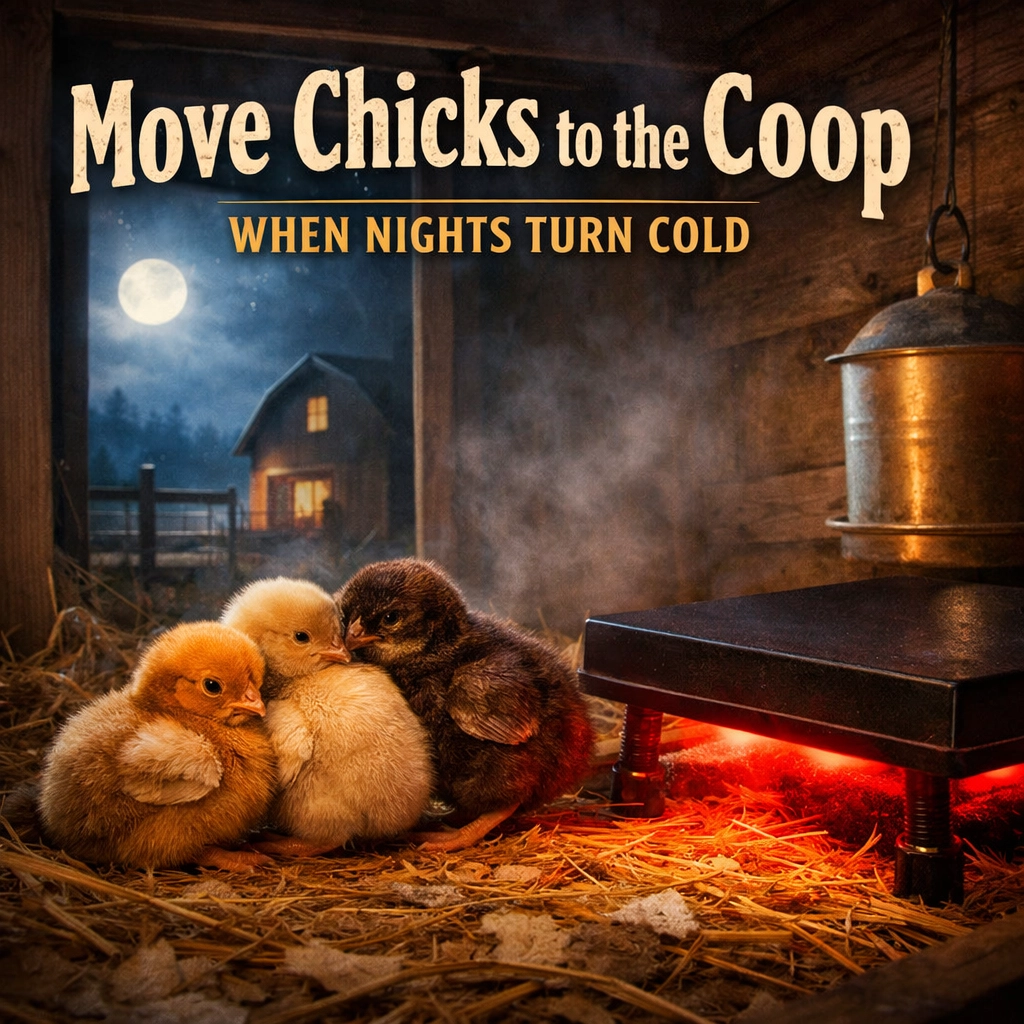
You are about to move chicks to the coop, and the night drop can surprise you. We keep a full resource page here: coop heating and adult care hub. You can start there, and then come back for the step-by-step plan below.
Key Takeaways
- You can check the weather report before you move chicks to the coop. If the report calls for a cold night, you can wait or add gentle, safe warmth.
- You can watch for huddling and sharp peeping. These signs often mean they feel cold, so you should add warmth or bring them back inside.
- You can move them when they look well feathered and steady on their feet. Age helps, but feathers and behavior matter more in spring weather.
Night Drop Risks When You Move Chicks Coop
Why Nighttime Cold Is Dangerous
When you move chicks to the coop, you might worry about what happens after sunset. Chicks under 8 weeks old can’t handle cold like adult hens. Their bodies lose heat fast, more so if they don’t have full feathers. If you move your chicks before they’re ready, they can get chilled in the coop. Cold nights can lead to shivering, huddling, and even sickness. You want to avoid these problems when you move your chicks to the coop.
Here’s what makes nighttime cold risky:
-
Young chicks can’t make enough body heat.
-
Chicks may pile up in one spot, which can cause injury.
-
A cold coop can slow their growth and weaken their body defenses.
-
If you move chicks to the coop too soon, they may not survive a fast temperature drop.
Tip: Always check the weather before you move your chicks. If the weather report calls for a chilly night, wait or add safe heat.
How Temperature Drops Affect Chicks
A fastst drop in temperature can change how your chicks act and feel. When you move your chicks to the coop, you need to watch for signs of stress. The table below shows what happens inside their bodies and how they behave:
| Body effect |
What you may see |
|---|---|
| hypothermia |
Chicks lose body heat quickly and can’t warm up on their own. |
| decreased Behavioral Activity |
they move less and may look sleepy or weak. |
| Body stress |
cold can stress their bodies and make them weak. |
| impaired Thermoregulation |
Chicks can’t control their body temperature well in a cold coop. |
may also notice these behaviors:
| behavioral Response |
What you may see |
|---|---|
| decreased Distress Vocalizations |
Chicks peep less, which means they’re stressed. |
| increased Sleep-like Behavior |
they spend more time looking sleepy or inactive. |
| reduced Heat Production |
less movement means they make less body heat, so they get colder. |
If you move chicks to the coop and see these signs, act fast. Bring them inside or add a safe heat source. You want your chicks to stay healthy and thrive in their new coop.
When Can Chicks Move Outside? Key Readiness Signs
Feathering, Age, and Behavior
might wonder when can chicks move outside and live in the coop. The answer depends on three main things: age, feather coverage, and how your chicks act. Most chicks need to be at least 4 to 6 weeks old before they can handle life outdoors. At this age, many breeds become fully feathered. This means they have lost their soft baby fuzz and now have real feathers all over their bodies. These feathers help them stay warm when the temperature drops at night.
Here’s a quick look at how age and feathering work together:
| age (weeks) |
what to Look For |
|---|---|
| 3-4 |
some chicks start to grow feathers and may handle short, mild outings. |
| 5-6 |
most chicks are mostly feathered and can handle daytime temps above a cold night. |
| 6 |
Chicks are usually fully feathered and can control their body temperature well. |
but age and feathers are not the only clues. Watch how your chicks behave. Here are signs that your chicks are ready for the coop:
-
You see your chicks are fully feathered, with no bare spots.
-
they perch often, showing they want to roost like grown chickens.
-
they play and chase each other, which means they need more space.
-
some chicks act bossy or even a bit aggressive, a sign they are outgrowing the brooder.
-
male chicks may start to act more mature.
-
your chicks seem curious and want to explore outside their brooder.
If you notice these signs, your chicks are probably ready for the next step.
Safe Nighttime Temperatures
even if your chicks look ready, you still need to check the weather. Nighttime temps matter a lot. Chicks that are fully feathered can usually handle nights as cool as a cold night. If the temperature drops below that, you should give them extra heat, like a safe brooder plate or a heat lamp made for coops.
Tip: Always check the weather report before you move your chicks. If you see a cold snap coming, wait a few more days or add a heat source to the coop.
If your chicks are not fully feathered yet, keep them inside or use a heat source until they finish growing their feathers. Remember, 6 weeks is a guideline, not a rule. Some breeds need more time, more so if you live in a colder area.
What If You’re Unsure?
might still feel nervous about moving your chicks. That’s normal! If you’re not sure, try these steps:
-
You move your chicks to the coop during the day and bring them back inside at night for a few days.
-
You watch how they act in the coop. If they huddle together or peep loudly, they might be cold.
-
You use a thermometer to check the coop’s temperature at night.
-
If you see your chicks are active, spread out, and not huddling, they are probably comfortable.
If you ever feel unsure, it’s better to wait or add a safe heat source. Your chicks will thank you for being careful.
Move Your Chicks: Quick Safety Check
Inspect Chicks’ Feathers and Activity
before you move your chicks to the coop, take a close look at them. You want to see full feathers covering their bodies. If you spot any bare patches, your chicks might get cold at night. Watch how they act, too. Active chicks that run, scratch, and perch show they feel strong and ready. If your chicks huddle in a corner or look sleepy, they may need more time inside.
Check Coop Warmth and Drafts
You walk into your coop and check for cold spots. Use your hand to feel along the walls and floor. If you notice a breeze, seal up those gaps before you move your chicks. Good ventilation matters, but you don’t want cold air blowing right where your chicks sleep. Make sure the coop stays dry and has no leaks. Wet bedding can chill your chicks fast. Place a thermometer inside the coop to track nighttime temps. If you see the temperature calls for a cold night, consider adding a safe heat source like a brooder plate.
Tip: A sturdy coop with tight latches keeps out predators and keeps your chicks safe at night.
Fast Decision Steps
You want to make a smart choice before moving your chicks. Here’s a quick checklist:
-
You check the weather weather report for the week. Look for cold nights or heavy rain.
-
postpone moving your chicks if storms or big temperature drops are coming.
-
You watch your chicks for signs of stress, like loud peeping or huddling.
-
Make sure the coop is clean, dry, and secure.
-
If you feel unsure, wait a few days or add extra heat.
taking these steps helps your chicks adjust to their new coop and keeps them healthy.
Transition Plan for a Smooth Move
You want your chicks to feel safe and comfortable when you move them from the brooder to the coop. A smooth switch helps them adjust to new surroundings and keeps them healthy as nighttime temps drop. Let’s walk through a step-by-step plan that makes this process easier for you and your flock.
Lower Brooder Heat Before the Move
You start by lowering the brooder temperature gradually. Chicks need time to adapt to cooler air before they live in the coop full-time. Begin with a warm brooder, then reduce the heat by about 5ºF each week. Most chicks feather out at 5-6 weeks, so you can start lowering the heat when you see feathers covering their bodies. The whole process takes about four weeks. Give your chicks another two to three weeks to grow and get used before you move them outside. This timeline helps them build strength and confidence.
Here’s a simple plan for lowering brooder heat:
-
You set the brooder temperature at a cold night for new chicks.
-
lower the heat by 5ºF each week.
-
You watch for full feathering at 5-6 weeks.
-
Keep reducing heat until it matches the outdoor temperature.
-
dim or turn off lights in the brooder before moving chicks to the coop. This help stops panic and helps them adjust.
If you notice your chicks huddling or acting cold, slow down the process. Every flock is different, so trust your instincts.
note: If nighttime temps in your area calls for a cold night, consider using a switch heater in the coop. This tool offers gentle warmth and helps chicks adapt without overheating.
Daytime Coop Visits for Acclimation
daytime visits to the coop help chicks get used to their new home. You can start with short, supervised trips. Let your chicks explore the coop for 15-20 minutes at first. Watch their reactions. Curious chicks will peck, scratch, and look around. If they seem cautious, add familiar items from the brooder, like bedding or a favorite perch.
increase the length of these visits over several days. Keep routines consistent. Feed your chicks at the same times and bring the whole flock together for each visit. This builds comfort and confidence.
Here’s a quick guide for daytime getting used:
-
begin with short visits, 15-20 minutes.
-
observe behavior and adjust the environment if needed.
-
You add familiar items from the brooder to the coop.
-
gradually increase visit duration.
-
Keep feeding times and routines the same.
-
You move the entire flock together.
Tip: If your chicks seem nervous, try using a switch heater during daytime visits. This gentle heat source helps them feel secure and eases the adjustment.
First Nights: Monitor and Adjust
the first nights in the coop are critical for your chicks. You need to watch them closely and make adjustments as needed. Confine your chicks in the coop for a few days before letting them access the run. This teaches them where to sleep and keeps them safe.
You check on your chicks at night. Make sure they return to the coop and settle in. Look for signs of cold, like huddling or loud peeping. If you see these behaviors, add a switch heater or bring them back inside. Adjust housing conditions based on the number of birds. More chicks in the coop means more shared warmth.
Here’s a checklist for the first nights:
-
confine chicks in the coop for the first few nights.
-
You check on them after dark to make sure they are safe and warm.
-
You watch for signs of cold or stress.
-
You use a switch heater if temps calls for a cold night.
-
adjust bedding and housing based on flock size.
callout: A switch heater, sometimes called a “switch nanny,” offers gentle warmth without overheating the coop. It’s a helpful tool for gradual adaptation, more so during chilly nights.
You can make the switch smooth by following these steps. Monitor your chicks closely, use gentle heat if needed, and adjust as you go. Your flock will thrive in their new coop, even when nighttime temps drop.
Heating the Coop Without Overheating
Create a Warm Corner, Not a Sauna
You want your chicks to feel cozy in the coop, but you don’t want them to overheat. The best way is to set up a warm corner. Use radiant heat sources, like a brooder plate or a low-wattage heater. These warm the chicks directly, not the whole coop. You can mount them on a wall or ceiling to keep things safe. Add a thick layer of straw or wood shavings on the floor. This helps insulate the coop and keeps the bedding dry. The deep litter method also works well. As bedding breaks down, it creates gentle warmth for your chicks. If you want a steady, low-risk heat source for the switch, we use the Safe Chicken Brooder Heater Plate as a simple transition option.
Tip: Never try to heat the entire coop. Chicks need a spot to warm up, but they also need cooler areas to move to if they get too hot.
Place Heat for Chick Choice
Chicks like to choose their comfort zone. Place the heat source in one corner of the coop. Leave the rest of the space cooler. This way, chicks can move closer to the warmth or away from it. If you use a switch heater, make sure it has an adjustable thermostat. This lets you control the temperature and avoid overheating. Offer warm treats, like oatmeal, during cold nights. These help raise your chicks’ body temperature naturally.
| heat Source |
placement |
benefit |
|---|---|---|
| radiant Heater |
wall/Ceiling |
direct warmth, safe |
| brooder Plate |
corner |
Chicks choose comfort |
| deep Litter |
floor |
gentle, steady heat |
Safety Rules for Heat Sources
safety matters most when you heat the coop. Always keep heaters away from flammable bedding. Secure the heating unit so it can’t fall. Choose devices with automatic shut-off features. Inspect your setup often to help stop fire dangers. Keep at least six inches between heaters and any straw or wood shavings. Make sure the coop has good ventilation. This keeps air fresh and helps chicks stay healthy.
callout: A switch heater with a thermostat gives you peace of mind. It keeps the coop warm enough for chicks, but not too hot.
Read Chicks’ Bodies: Signs of Cold or Stress
You can learn a lot by watching your chicks. Their bodies and actions tell you if they feel cold, stressed, or too warm in the coop. Paying attention helps you catch problems early and keep your flock healthy.
Cold Signs: Huddling and Peeping
Chicks show clear signs when they feel cold. You might see them:
-
puffing up their feathers to trap warm air
-
huddling close together for warmth
-
holding one foot up against their body
-
shivering or trembling
-
pale or bluish combs and wattles
If you notice these signs, your chicks need more warmth. Try adding a safe heat source or extra bedding. Sometimes, you may need to bring them inside for the night. Cold stress can slow growth and make chicks sick, so act quickly.
Tip: Listen for loud, steady peeping. This often means chicks feel uncomfortable or chilly.
Too Warm: Spreading Out and Panting
Chicks can also get too hot, more so if you use a heat lamp or brooder plate. Watch for these behaviors:
| behavior |
What you may see |
|---|---|
| open Beaks |
Chicks breathe with open beaks to cool down. |
| wet or Moist Skin |
may notice dampness around the vent area. |
| increased Aggression |
Chicks may peck or push each other to find cooler spots. |
If you see chicks spreading out, panting, or acting restless, lower the heat or give them more space. Always let chicks choose their comfort zone. A warm corner and a cooler area help them stay happy and healthy.
Common Mistakes When You Move Chicks Coop
You want your chicks to thrive in their new coop, but a few common mistakes can make the switch tough. Let’s look at what to avoid so your chicks stay healthy and happy.
Drafts and Damp Bedding
drafts sneak in through cracks and gaps. These cold breezes can chill your chicks and cause breathing problems. You might not notice a draft, but your chicks will. They huddle in corners or pile up to escape the cold air. Damp bedding is another big problem. Wet spots in the coop let bacteria and parasites grow. Mold can form, and that can lead to illnesses like coccidiosis. Always check for leaks and keep bedding dry. Use pine shavings or straw, and change it often. A dry, draft-free coop keeps your chicks safe.
Tip: Run your hand along the coop walls at night. If you feel a breeze or dampness, fix it before your chicks move in.
No Escape from Heat
Chicks need warmth, but they also need a way to cool off. If you use a heat lamp or brooder plate, set it up in one corner. This gives your chicks a choice. They can move closer if they feel cold or step away if they get too warm. If you heat the whole coop, your chicks might overheat and get stressed. Watch for signs like panting or spreading out. Adjust your setup so your chicks always have a cooler spot.
-
place heaters safely.
-
You check temps with a thermometer.
-
You give chicks room to move.
Moving Too Soon After Warm Days
warm spring days can trick you into thinking your chicks are ready for the coop. But nighttime temps often drop fast. If you move your chicks outside too soon, they might not have enough feathers to stay warm. Wait until your chicks are at least six weeks old and fully feathered. Watch their behavior. Active, curious chicks that don’t huddle for warmth are usually ready. Always check the weather report for cold snaps before making the move.
-
Make sure your chicks are fully feathered.
-
You look for mild nights above a cold night.
-
delay the move if the weather changes fastly.
note: Stay flexible. If you see a fast heatwave or cold snap, wait a few days. Your chicks’ health comes first.
FAQ: Move Chicks Coop and Nighttime Heat
Do 6-Week-Old Chicks Need Heat at Night?
might wonder if your 6-week-old chicks still need extra warmth at night. Most chicks finish growing their feathers around this age. Full feathers help them stay warm, but chilly nights can still be tough. If the temperature in your coop drops below a cold night, you should give your chicks some extra heat. A safe brooder plate or a switch heater works well. This keeps your chicks comfortable and helps them grow strong. Always check the weather report and watch how your chicks act at night. If you see them huddling or peeping loudly, they probably feel cold.
Tip: Fully feathered chicks handle cool nights better, but fast cold snaps can still cause stress. Stay alert and adjust your setup if needed.
What If the Temperature Drops Suddenly?
weather can change fast, more so in spring or fall. If you see a fast drop in temperature, act quickly to protect your chicks. Add extra bedding, block drafts, and turn on a safe heat source if you have one. Move your chicks back inside if you notice signs of cold stress, like shivering or piling up. It’s better to play it safe than danger your chicks getting sick. Keep a thermometer in the coop so you always know the temperature.
Can I Move Chicks Back Inside After a Cold Night?
yes, you can move your chicks back inside if they seem cold or stressed after a chilly night. Here are a few things to keep in mind:
-
You watch your chicks closely. If they act normal and active, they probably handled the cold well.
-
You give your chicks a warm, draft-free space with plenty of straw and food.
-
If you have a hen with the chicks, you can place her in a run by the coop so the others can see her. This helps with the switch.
-
always monitor your chicks for any signs of illness or stress after moving them.
note: Regular checks and a flexible approach keep your chicks healthy during weather changes.
You can help your chicks thrive in the coop by taking it slow and staying alert. Start with short outdoor visits, then increase time outside each week. Always check on your chicks at night and spend time with your chicks daily. Try a switch heater if nights get chilly.
-
Make sure the coop stays above a cold night.
-
You give each chick enough space and a safe roost.
-
You use secure locks and predator-proof wire.
-
Keep the coop dry and draft-free.
share your local nighttime temps and chick ages in the comments for tips tailored to your flock!
FAQ
How do I know if my chicks are too cold at night?
You’ll see them huddle together, peep loudly, or puff up their feathers. Add a safe heat source or bring them inside if you notice these signs.
What’s the best way to keep chicks warm without overheating the coop?
You set up a brooder plate or switch heater in one corner. This lets your chicks choose their comfort zone. Always check the temperature with a thermometer.
Can I move chicks coop if the weather changes suddenly?
If you see a cold snap coming, wait a few days. You can always bring your chicks back inside or add extra bedding and a safe heater for warmth.
0 Comments