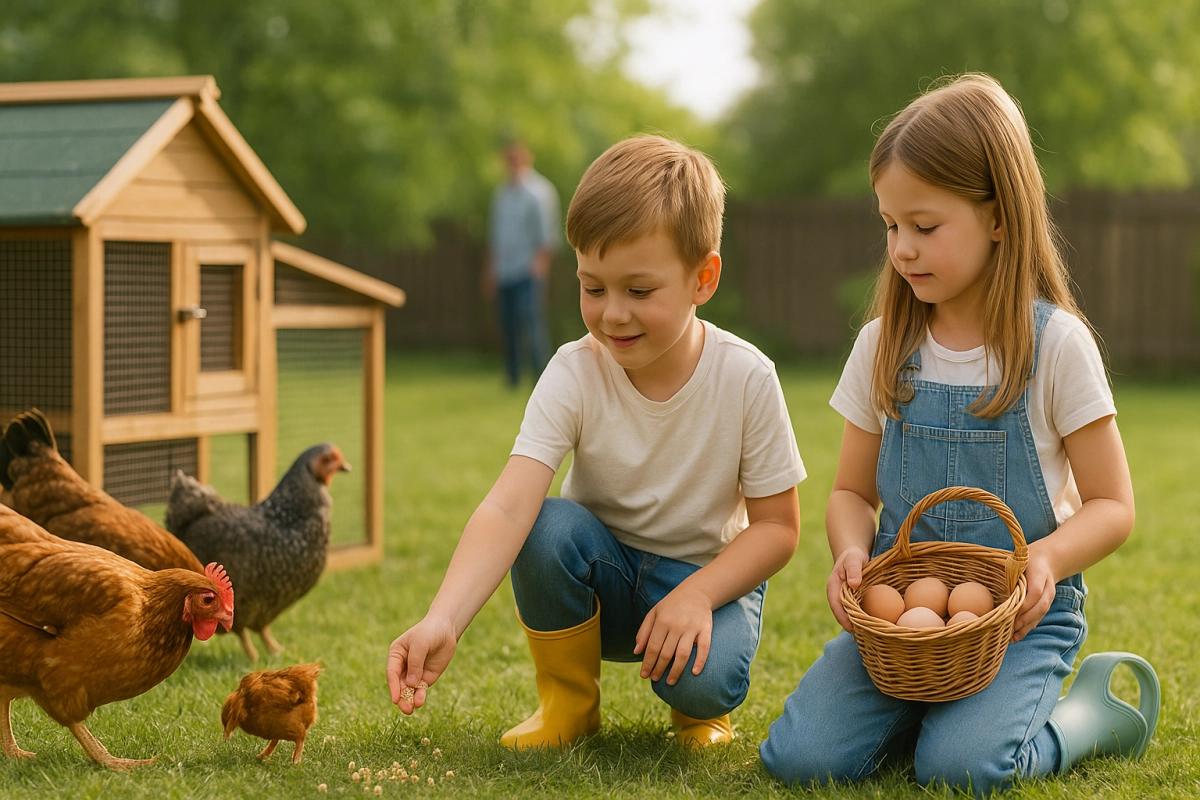
Thinking about raising chickens with your kids can feel exciting and a little scary at the same time. On one hand, you picture your children collecting warm eggs and learning about nature. On the other hand, you’re worrying about germs, noise, time, and whether this is really practical for your family.
This guide is written for parents and teachers in the US, UK, and Europe who are asking:
-
Is raising chickens with kids actually a good idea?
-
What are the real pros and cons?
-
How big are the safety and health risks?
-
Is there a simpler alternative, like just hatching eggs instead of keeping a full flock?
Below we’ll walk through the benefits, the drawbacks, the official safety guidance, and then a gentler “first step” option that still gives kids the magic of chickens without a long-term commitment.
Quick Answer: Is Raising Chickens With Kids a Good Idea?
Raising chickens with kids can be a fantastic project for some families and a stressful mistake for others. The difference usually comes down to space, time, kids’ ages, and your willingness to manage hygiene and rules.
It’s usually a good idea if:
-
You have a yard and legal permission to keep chickens.
-
At least one adult can reliably do daily care 365 days a year.
-
Kids are old enough to follow hygiene and safety rules.
-
No one in the household has serious immune problems or severe bird allergies.
You should think twice if:
-
You live in a very small space with close neighbors and strict local rules.
-
Your schedule is already overloaded or you travel often.
-
Your children are very young (under 5) or put everything in their mouths.
-
There are high-risk family members (very young, elderly, or immunocompromised).
If you fall somewhere in the middle, a short-term hatching project can be a safer and easier way to start. We’ll come back to that later.
Benefits of Raising Backyard Chickens With Kids
Responsibility and Daily Routines
Chickens need food, water, and clean housing every single day. When kids help with these simple tasks, they get a very concrete version of “being responsible.”
Daily chores like:
-
Filling feeders and waterers
-
Collecting eggs
-
Helping with basic coop tidy-up
teach children that living animals depend on them. Research and parenting resources consistently note that animal care can build responsibility and follow-through better than many abstract chores.
Understanding Where Food Really Comes From
Most children only see eggs and meat in supermarkets. Caring for live hens helps them connect:
grass and grain → chicken → eggs → breakfast
Family and education blogs often emphasize this as one of the biggest benefits: kids see that food comes from real animals, not just boxes and plastic packaging, and they develop more respect for both food and animals.
Emotional and Mental Health Benefits
Chickens can be surprisingly calming. Watching them scratch, dust-bathe, and interact with each other gives kids a quiet, outdoor focus. This kind of gentle interaction:
-
Gets children outside and away from screens.
-
Gives them a living creature to care about and empathize with.
-
Can help anxious or shy kids feel useful and needed.
Several child-focused articles highlight that tending chickens can strengthen empathy and emotional regulation, especially for kids growing up in very digital environments.
STEM, Nature, and Life Science Learning
Chickens turn your yard or classroom into a mini biology lab:
-
Kids can observe feathers, beaks, feet, and behaviour.
-
They can learn about life cycles, reproduction, and ecology.
-
Older students can keep simple data on egg production, weight, or feed consumption and turn it into graphs.
Homeschool and parenting resources often use chickens as a hands-on way to teach science, maths, and even writing (journals, stories, reports).
Life Skills: Money, Planning, and Teamwork
If your family has extra eggs, kids can:
-
Sell cartons to neighbors or friends.
-
Keep very basic records of costs (feed, bedding) and income (egg sales).
-
Learn what “profit” means in a simple, real-world way.
Siblings or classmates can divide responsibilities, which helps with teamwork and negotiation. Many homesteading and parenting writers note that chickens can be a gentle introduction to entrepreneurship for children.
Real-Life Cons and Challenges of Raising Chickens With Kids
Time and Daily Workload
Chickens are not a weekend-only project. They require:
-
Daily feeding and watering
-
Regular cleaning and bedding changes
-
Health checks and occasional problem-solving
For busy families, this can become a burden rather than a joy. If an adult isn’t willing to be the “backup farmer” when kids are tired or forgetful, things can go wrong quickly.
Mess, Smell, Noise, and Neighbors
Chicken coops generate:
-
Manure and bedding that need disposal
-
Odors, especially in hot weather
-
Flies and insects if not cleaned well
Hens also make noise, and roosters are loud and often banned in towns. In dense neighborhoods, poorly managed coops can cause real tension with neighbors, and in some European and US towns there are specific rules controlling flock size, coop placement, and waste management.
Cost and Long-Term Commitment
There is an idea that eggs from your own chickens are “free.” In reality, you have:
-
Upfront costs: coop, fencing, feeders, waterers, nest boxes.
-
Ongoing costs: feed, bedding, potential vet visits, parasite treatments.
Health and welfare guidelines in both North America and Europe emphasize giving poultry adequate space, shelter, and care. Doing this properly is not free, especially over several years.
Vacation and “Who Feeds the Chickens?” Problem
Chickens can’t be left with a big bowl of food and water like a cat for a weekend. When you travel, you need:
-
A reliable neighbor, friend, or farm-sitter who understands basic poultry care.
-
Clear instructions about closing the coop at night, checking water, and collecting eggs.
Families often underestimate this issue and end up stressed before each holiday.
Emotional Ups and Downs: Predators, Illness, and Death
Backyard chickens bring real-world events that are both educational and emotionally heavy:
-
Predators (foxes, raccoons, hawks, dogs) can kill birds.
-
Hens can get sick or injured.
-
Older birds eventually decline and die.
For some kids, this is powerful life-cycle education. For others, it can be quite distressing. Parents should be ready to frame these events and support their children emotionally.
Health and Safety Risks: Are Backyard Chickens Safe for Kids?
Germs and Salmonella – What Health Authorities Say
Backyard poultry, including chickens, can carry Salmonella and other germs even when they look healthy and clean.
Health agencies in the US, Canada, and Europe have documented outbreaks where children got Salmonella from:
-
Touching chickens or chicks
-
Touching contaminated surfaces in coops or runs
-
Then touching their mouth or food before washing hands
Key points from public-health guidance:
-
Young children (especially under 5) are more likely to become seriously ill from these infections.
-
People with weakened immune systems are also higher risk.
Physical Safety – Scratches, Bites, and Allergies
Chickens can scratch or peck, especially if:
-
They are startled or cornered.
-
Kids pick them up roughly or chase them.
Feathers, dust, and dander can also trigger allergies or asthma in sensitive children. Some kids adapt fine; others may struggle with sneezing, itchy eyes, or wheezing.
Age-Based Guidelines for Kids Around Chickens
Based on typical public-health advice and pediatric risk levels:
-
0–4 years
-
High infection risk; poor hand-to-mouth control.
-
Better to let them watch chickens from a distance rather than handling them.
-
-
5–8 years
-
Can help with simple tasks with close supervision.
-
Must be trained to wash hands every time and not touch face while in the coop.
-
-
9+ years
-
Can take on more complex chores and help supervise younger siblings.
-
Still need reminders about hygiene and safe handling.
-
Non-Negotiable Hygiene Rules for Families
Most health-risk reviews and guidance documents repeat the same core rules:
-
Always wash hands with soap and water right after handling chickens, eggs, or anything in the coop or run.
-
No eating or drinking in the chicken area.
-
No kissing or snuggling chickens, chicks, or ducklings.
-
Keep a pair of “chicken shoes” or boots that stay outside.
-
Clean feeders, waterers, and tools outside the house.
Following these simple rules significantly lowers (but does not eliminate) disease risk.
When Chickens Are Not a Good Fit for Your Household
Backyard chickens might not be a good idea if:
-
Someone in the home is very immunocompromised (e.g., undergoing chemotherapy, organ transplant, severe immune disease).
-
There are very young children who often put hands or objects in their mouths and cannot follow hygiene rules.
-
Severe bird or dust allergies already make daily life difficult.
In these cases, a short, well-controlled hatching project may be safer than keeping a permanent flock.
How to Raise Chickens Safely With Children (Practical Tips)
If you’ve looked at the pros and cons and still feel excited, here are practical ways to make it work.
Choosing Child-Friendly Chicken Breeds
Some breeds are generally calmer and better with kids. While individual personalities vary, families often prefer:
-
Docile, larger breeds that are easier to catch and hold.
-
Good layers with gentle temperaments.
Avoid very flighty or aggressive breeds, or any rooster that shows human-aggression. Many family-oriented resources specifically recommend choosing for temperament, not just egg color.
Designing a Safe, Kid-Friendly Coop and Run
A kid-friendly setup usually includes:
-
A secure coop and run that keep predators out.
-
Enough space per bird to reduce aggression and stress.
-
A designated “viewing/working” zone where kids can safely help without walking through the dirtiest areas.
Clear boundaries—like a gate that only adults open—help manage both safety and hygiene.
Age-Appropriate Chores by Stage
You can match chores to children’s age and ability:
-
3–5 years
-
Scatter scratch feed under supervision.
-
Help carry an egg basket.
-
Watch and talk about what chickens are doing.
-
-
6–9 years
-
Collect eggs carefully.
-
Help fill feeders and waterers.
-
Assist with light cleaning, like replacing nesting box bedding.
-
-
10+ years
-
Help monitor egg counts and food usage.
-
Assist in cleaning the coop more thoroughly.
-
Learn to check for obvious health issues (injuries, strange behaviour).
-
The key is to clearly explain what they can do and what remains adult-only (like handling sick birds or using strong cleaning products).
Teaching Proper Handling and Respect for Animals
Before kids ever pick up a chicken, show them:
-
How to move slowly and avoid chasing.
-
How to support the bird’s body with two hands.
-
How to put the chicken down gently, facing away from them.
Many empathy-focused articles about kids and chickens stress that learning to treat animals kindly is as important as collecting eggs.
Turning Chicken Care Into Learning and Fun
You can turn ordinary chores into learning:
-
Keep a simple egg chart and let kids graph daily or weekly totals.
-
Use a notebook to track feed bags used, then estimate cost per egg.
-
Encourage kids to write or draw “chicken diaries” about behaviour and weather.
This helps justify the time investment because you’re getting both life experience and informal lessons in maths, science, and writing.
Is Raising Chickens With Kids Right for Your Family?
Space, Zoning, and Local Regulations
Before falling in love with fluffy chicks, check:
-
Local zoning or council rules about backyard chickens.
-
Limits on flock size or bans on roosters.
-
Requirements for coop placement or setbacks from property lines.
In the EU, broader poultry and animal-health laws also influence how birds and hatching eggs can move between locations, which indirectly shapes local backyard policies.
Time, Schedule, and Lifestyle Fit
Ask yourself honestly:
-
On a bad day, when everyone is tired, who still goes out to feed and check the chickens?
-
If you commute long hours or work irregular shifts, can someone else reliably cover?
The flock will not adjust itself to sports schedules, exams, or work deadlines.
Budget and Long-Term Plans
It helps to think beyond the first cute year:
-
Will you still want chickens when egg production drops after a couple of years?
-
What will you do with older birds who eat but lay little?
-
Are you prepared for vet bills or at least humane euthanasia if needed?
Kid’s Age, Personality, and Interests
Consider:
-
Is your child genuinely interested in animals, or just excited in the moment?
-
Can they respect rules about washing hands and not chasing birds?
-
Are they ready to cope with illness or death in the flock?
Not every child needs daily contact with live chickens to benefit; some will do better with shorter projects.
Simple “Yes/No/Maybe” Scenarios
You can think in simple patterns:
-
“Probably Yes” – You have a yard, moderate regulations, kids over 6 who love animals, and an adult at home most days.
-
“Probably Not” – You live in a flat, have very young children and an immunocompromised family member, or strict local bans.
-
“Maybe, Start Small” – You like the idea but aren’t sure about long-term commitment. In that case, starting with a hatching-only project may make more sense than buying a full flock.
A Gentler First Step: Just Hatching Eggs With Kids Instead of Keeping a Flock
Why a Short-Term Hatching Project Is Easier for Families
A home or classroom incubator project is a 21- to 28-day commitment rather than a multi-year one. It usually involves:
-
Eggs in a clean incubator inside your home or classroom.
-
A limited number of chicks for a short period.
-
A clear plan for where the chicks go afterward (farm, breeder, or another prepared home).
This setup is:
-
Easier to keep hygienic and supervised.
-
Less likely to cause neighbor issues.
-
Much simpler to fit around holidays and school terms.
What Kids Still Learn From Just Hatching Eggs
Even without a permanent flock, kids get:
-
The full life-cycle story from egg to chick.
-
Daily observation of embryo development if you candle eggs.
-
A strong lesson in patience and delayed gratification as they wait for hatch day.
For many families and teachers, this delivers 80% of the educational magic with far fewer long-term risks.
If you want ready-to-use checklists and kid-friendly incubation guides, you can explore EggBloom’s home and classroom incubation resources, which are built specifically for families and educators.
Home vs Classroom Incubation Projects
In a home project, parents can:
-
Integrate the incubator into daily routines.
-
Let children help check temperature, humidity, and turning if appropriate.
In a classroom project, teachers can:
-
Build lessons in science, maths, and writing around the incubator.
-
Set strict rules for when and how students interact with the eggs and, later, chicks.
In both cases, clear hygiene rules still apply, but it’s easier to manage than a muddy outdoor coop.
Basic Overview of How an Incubator Project Works
The basic steps are:
-
Selecting fertile eggs from a reputable source.
-
Setting up the incubator with correct temperature and humidity.
-
Turning eggs regularly (or using an automatic turner) for most of the incubation period.
-
Lockdown in the last few days, where turning stops and humidity is increased.
-
Hatch day, when chicks emerge and dry off before moving to a brooder.
A good incubator and clear instructions remove much of the guesswork for first-time families and teachers.
You can browse different home egg incubator models that fit family and classroom projects here: egg incubator options for home and schools
When (and If) to Move From Hatching to Keeping Chickens
After a hatching project, you can ask:
-
Did your kids stay engaged through the whole process?
-
How did they handle the responsibility and rules?
-
Did you find the hygiene and daily checks manageable?
If all answers are positive and your space and regulations allow, then exploring a small permanent flock might make sense. If it felt stressful, there is no harm in keeping chickens as an occasional guest project rather than a permanent addition.
For families and teachers who are ready to run more advanced or larger hatching projects, an automatic three-tray egg incubator for birds and quail can make it easier to handle more eggs with precise control and less manual turning.
Practical Next Steps for Parents and Teachers
If You’re Ready to Raise Chickens With Your Kids
-
Start with a small flock size.
-
Choose gentle breeds and invest in a secure, well-designed coop.
-
Set clear family rules about chores and hygiene.
-
Inform yourself about local regulations and basic poultry health.
If You’d Rather Start With Hatching Eggs
-
Plan a single 21-day project with a clear start and end date.
-
Decide in advance where chicks will live after the project.
-
Use a reliable incubator and follow step-by-step guides.
-
Combine the project with simple lessons, charts, and journals.
Talking to Your Kids Before You Start
Before the first egg goes into an incubator or the first chick arrives:
-
Explain that chickens are living animals, not toys.
-
Agree on safety and hygiene rules.
-
Talk openly about the possibility of illness or death as part of life.
This conversation sets the tone for a more respectful and meaningful experience.
FAQ: Common Questions About Kids and Chickens
Are Backyard Chickens Safe for Toddlers?
Backyard chickens are not ideal for toddlers to handle directly. Public-health agencies warn that children under 5 are at higher risk of serious illness from germs like Salmonella, and they often put their hands or objects in their mouths. Watching chickens from a distance is usually safer for this age group.
How Old Should Kids Be to Help With Chickens?
There is no strict age, but:
-
Under 5: look, don’t touch (or only touch under close supervision, followed by handwashing).
-
5–8: simple chores with supervision.
-
9+: more responsibility, but rules still apply.
Parents should match tasks to the individual child’s maturity and ability to follow hygiene rules.
How Many Chickens Should a Family Start With?
Many families start with 3–6 hens. This is usually enough egg production without overwhelming beginners. Smaller flocks are easier to house, clean, and manage with children involved.
What If My Child Gets Very Attached and a Chicken Dies?
This is hard but also one of the most powerful parts of animal care. You can:
-
Name and honour the chicken.
-
Talk about life cycles and grief.
-
Emphasize that caring well for animals includes being there when life ends.
Handled gently, this can be a meaningful lesson in compassion and resilience.
References
-
Centers for Disease Control and Prevention (CDC). Backyard Poultry – Healthy Pets, Healthy People. 2025.
-
CDC. CDC Announces Salmonella Outbreak Linked to Backyard Poultry. Media Release, 2025.
-
CDC. Outbreaks of Salmonella Infections Linked to Backyard Poultry – Investigation Updates. 2024.
-
CDC. Notes from the Field: Neonatal Salmonellosis Associated with Backyard Poultry. MMWR, 2023.
-
Los Angeles County Department of Public Health. Before You Get Backyard Chickens: FAQs Every Owner Should Know. 2024.
-
Public Health Ontario. Reducing Health Risks Associated with Backyard Chickens – Evidence Brief (2nd ed.). 2023.
-
Barton Behravesh C. Do Backyard Chickens Pose Any Health Risks to Humans? Clinician’s Brief / WSAVA. 2018.
-
Backyard Boss. Raising Backyard Chickens: Health Hazards and Risks to Know. 2024.
-
ParentData (Emily Oster). Are Backyard Chickens Safe for Kids? 2025.
-
Backyard Visitors. The Benefits of Raising Backyard Chickens for Kids: Teach Responsibility and Learning to Children. 2023.
0 Comments