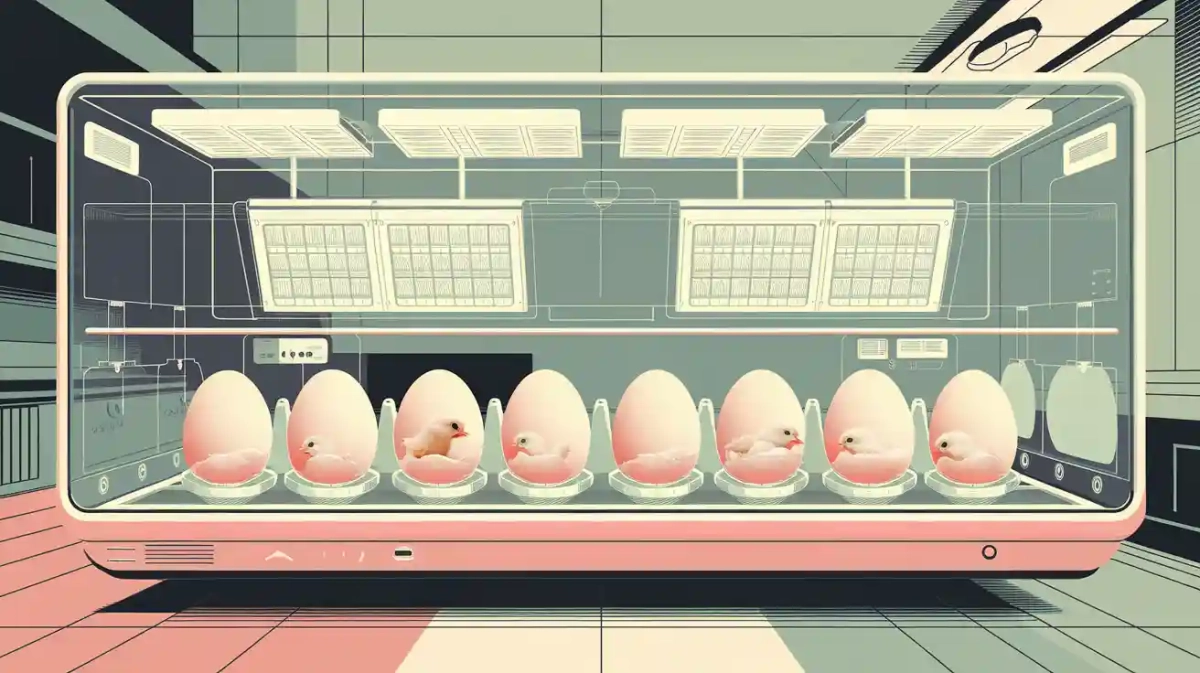
Quick Take: A transparent egg incubator lets you watch eggs closely without lifting the lid or changing the settings. You can keep the temperature and humidity steady, avoid direct sunlight, and prevent fog from building up on the walls.
You should try not to open the lid, especially in the last three days. Research shows that:
-
Less lid opening during the final days helps more chicks survive.
-
Long holding times after hatching can lower chick quality and raise death rates.
-
One study found that keeping chicks for 72 hours raised deaths in the first week, with a clear link to lid openings.
When you follow these steps, you help your chicks hatch safely and grow stronger.
Key Takeaways
-
Use a clear egg incubator to watch eggs. You do not need to open the lid. This keeps the temperature and humidity steady. Steady conditions help eggs hatch better.
-
Do not open the incubator in the last three days. This helps more chicks survive. It also makes the hatch better.
-
Keep the incubator away from sunlight and wind. A steady place keeps the temperature and humidity right. This helps embryos grow well.
-
Be careful with light around the eggs. Use soft LED lights for candling. Do not use bright lights or sunlight. Bright light can stress embryos.
-
Check the temperature and humidity often. Change the settings if needed. Good settings help eggs hatch and chicks stay healthy.
Visibility and Monitoring
A transparent egg incubator lets you see your eggs all the time. You do not have to open the lid to look at them. This helps keep the temperature and humidity the same inside. When you can watch the eggs, you notice changes fast. You can find problems before they get worse. For example, you might see an egg that is not growing or a chick having trouble hatching.
Tip: Use built-in lights or an egg candler to see inside better. You can look for healthy veins, movement, and air cell growth without touching the eggs.
Here are some ways seeing the eggs helps you:
-
You can watch eggs without opening the lid, so the inside stays steady.
-
You can spot hatching problems early by looking closely.
-
You can use candlers and built-in lights to find eggs that are not growing.
A transparent egg incubator makes it easy to check every stage of growth. You can act quickly if you see something wrong.
Teaching and Inspection
If you want to teach others about hatching, a transparent egg incubator is a good choice. Students and family can watch the whole process. You can show them how embryos grow and how chicks come out of their shells. You do not have to stop the process or risk hurting the eggs.
You can check eggs for cracks, color changes, or other problems. You can see how humidity and temperature change the eggs. This hands-on learning helps everyone understand hatching science. You help others learn safe ways to check eggs.
Note: Always tell learners not to touch or move the eggs unless they have to. Watching is the safest way to learn.
Room Setup
Placement Tips
To help your incubator work well, pick a spot that is not too hot or cold. Do not put it near windows, heaters, or air conditioners. These things can make the temperature change fast. Put the incubator on a flat table that does not shake. Leave space on every side so air can move around it.
Tip: The best room temperature is between 70 and 75°F (21–24°C). This helps the incubator keep the eggs at 99.5°F (37.5°C).
Here are some important things to remember:
-
Do not put the incubator in sunlight or near heat.
-
Stay away from places with drafts or vents blowing air.
-
Leave at least 10 cm of space around the incubator for air.
-
Let eggs sit out until they are the same temperature as the room before starting. This stops water drops from forming on the eggs.
Power Supply
Eggs need steady power to stay safe. If the power goes out, the eggs can get hurt. You can use a battery backup to keep the incubator working. These batteries turn on very fast if the power stops. Some setups use inverters and batteries to last up to 12 hours.
-
Battery backups help the incubator work during power loss.
-
You can pick a battery that lasts as long as you need.
-
Automated incubators can still work if the power goes out.
-
Some incubators can use coal (not recommended for indoor/home/classroom use; prefer 12V battery or UPS) heat if you live far away.
Note: Plug the incubator into a surge protector or UPS for extra safety.
Avoiding Direct Sunlight
Sunlight can make the incubator too hot very quickly. This can hurt the eggs and make fewer chicks hatch. Always keep the incubator away from windows or glass doors. Sunlight can also make the heat uneven and mess up the humidity.
-
Pick a place with shade and no sunlight.
-
Keep the incubator away from bright lights or heat lamps.
-
A steady room temperature helps keep the right humidity. Keep 45–50% (chicken/quail) or 50–60% (duck/goose) until the last three days; then 65–75%.
If you follow these tips, your eggs will grow in a safe and steady place.
Egg Storage
Temperature and Humidity
You need to store eggs in the right conditions before putting them in the incubator. The temperature and humidity in the storage area affect how well the chicks hatch. If you keep eggs too warm or too dry, the embryos may not develop properly. If you store eggs too cold or too wet, you can lower the hatch rate.
Here is a table showing the best temperature and humidity ranges for storing eggs:
| Storage Duration |
Temperature Range (°F) |
Temperature Range (°C) |
Relative Humidity (%) |
|---|---|---|---|
| Up to 1 week |
64–68 |
18–20 |
70–75 |
| 7–28 days |
54–64 |
12–18 |
70–80 |
| Up to 10 days |
61–64 |
16–18 |
50–60 |
You should keep eggs in a room with steady temperature and humidity. Use a thermometer and hygrometer to check the levels. Place eggs away from direct sunlight and drafts. If you store eggs longer than one week, hatchability drops by about 0.5–1.5% each day.
Tip: Higher humidity helps prevent eggs from drying out during storage.
Positioning Eggs
How you position eggs during storage matters. You should place eggs with the pointed end down and the large end up. This helps keep the air cell in the right spot and supports embryo health. If you store eggs with the pointed end up, hatch rates go down.
Here is a table showing how egg positioning affects hatch rates:
| Egg Positioning |
Storage Duration |
Hatchability Percentage |
|---|---|---|
| Pointed Down |
1 day |
Best performance |
| Pointed Down |
4 days |
Good performance |
| Pointed Up |
1 day |
Lower hatchability |
| Pointed Up |
4 days |
Decreased hatchability |
| Pointed Down |
> 7 days |
Drops from 94.8% to 76.3% |
You can gently tilt eggs a little each day to keep the yolk centered. This helps the embryo stay healthy.
Resting Period
Eggs need a resting period before incubation. After you receive eggs, let them sit for 12–24 hours at room temperature (about 70°F or 21°C). This helps the inside settle and reduces the risk of condensation. If you store eggs longer than one week, hatch rates drop and chick quality goes down. After two weeks, chick health can suffer.
-
Longer storage lowers hatch rates.
-
Chick quality drops after two weeks.
-
Some breeds lose hatchability faster than others.
You should try to set eggs in the incubator within seven days for the best results. Letting eggs rest before incubation helps the embryos start strong.
Light Management
When you control light in your transparent egg incubator, you help keep embryos safe. Good light control helps more chicks hatch and keeps them healthy. You need to watch how much light gets in, pick the right lights, and stop extra light from leaking inside.
Light Exposure
Embryos can change if they get too much or the wrong kind of light. Too much light can slow their growth or cause problems. Keep your incubator away from sunlight and bright indoor lights. Even a little sunlight can hurt embryos and lower hatch rates.
| Light Exposure Type |
Development Outcome |
Tissue stress (lab measure) Incidence |
Developmental setback Rate |
|---|---|---|---|
| Cool Fluorescent Light (15 min) |
44% developed to live embryos |
Increased |
20% |
| Warm Fluorescent Light (15 min) |
58% developed to live embryos |
Not significant |
20% |
| Sunlight (1 min) |
25% developed |
Marked increase |
35% |
| Control (No light exposure) |
73% developed to live embryos |
N/A |
N/A |
Embryos do best when they stay in the dark. Sunlight is the most harmful, even for just one minute. If you use a transparent egg incubator, put it somewhere shady. Use blackout curtains or covers during the day to block light. This keeps the light low and steady.
Tip: When you candle eggs, use a small light and do it quickly. This lets you check eggs without hurting them.
Some research says green light for 12 hours on and 12 hours off can change how embryos grow. Do not use strong or bright lights for a long time. If you need light, use it gently and for a short time.
LED Lighting
LED lights let you control how bright and what color the light is. You can use LEDs to look at eggs or candle them. LEDs do not get hot, so they do not change the temperature inside. Some studies suggest LED lighting is less heat-intensive; use lighting sparingly and avoid heating the chamber.
Use LED lights only when you need to check eggs. Pick soft, cool white or green LEDs for the best results. Do not leave the lights on for a long time. Put LED lights above or next to the eggs, not right on top.
Note: LEDs are good for candling and checking eggs. They help you see inside the eggs without making them hot.
Preventing Light Leaks
Light leaks can mess up the natural cycle inside your transparent egg incubator. Extra light can stress embryos and make them grow unevenly. You need to block all extra light and keep it dark except when you check the eggs.
-
Use thick plastic or strong tubs to stop light from getting in.
-
Cover any holes you are not using with neoprene or net pot covers.
-
Fix cracks or gaps with black tape or shiny tape.
-
Look for places where light sneaks in.
-
Use blackout curtains or special tape to seal entry points.
-
Put shiny materials inside to bounce light away from the eggs.
Tip: Put your incubator in a room that is not very bright. Turn off all the lights and look for any glow inside to find leaks.
Always check for light leaks before you start incubating eggs. This helps keep the inside safe and steady for your eggs.
Settings
Temperature Control
You need to set the right temperature for your eggs to grow well. Start by preheating your incubator for 8–12 hours before adding eggs. This helps you check if the temperature stays steady. For a forced-air incubator, set the temperature to 99.5°F (37.5°C). If you use a still-air incubator, set it a bit higher, between 101°F and 102°F (38.3–38.9°C), measured at the top of the eggs. Always use a thermometer at egg height to get the most accurate reading.
Temperature is crucial for embryo development. If the temperature is too high or too low, chicks may not grow right or may not hatch at all.
Here is a table with the best temperature settings for different types of poultry eggs:
| Poultry Type |
Incubation Temperature (°F) |
Incubation Temperature (°C) |
Days to Hatch |
|---|---|---|---|
| Chickens |
99.5 |
37.5 |
21 |
| Ducks |
99.5 |
37.5 |
28 |
| Geese |
99.5 |
37.5 |
28–32 |
| Quail |
99.9 |
37.7 |
16–23 |
Check the temperature at least twice a day. If you see big changes, adjust the settings right away. Forced-air incubators help keep the temperature even across all eggs. Always double-check your thermometer to make sure it is accurate.
Humidity Control
Humidity helps eggs lose the right amount of water and lets chicks hatch easily. For most eggs, keep humidity at 45–50% relative humidity (RH) for the first 18 days. In the last three days, raise it to 65–75% RH. Use a hygrometer at egg height to measure humidity.
-
Humidity control stops eggs from drying out too much.
-
Good humidity helps chicks break the shell when hatching.
-
The right humidity supports the air cell, which chicks need to breathe before hatching.
Tip: Adjust humidity by changing the water surface area inside the incubator. Use shallow pans, sponges, or cloth strips to increase or decrease humidity.
You can check if humidity is right by weighing your eggs. By day 18, eggs should lose about 11–13% of their starting weight. If eggs lose too much weight, raise the humidity. If they lose too little, lower the humidity. You can also look at the air cell size during candling. A bigger air cell means more water loss.
Here is a table with the best humidity settings for different poultry eggs:
| Poultry Type |
Humidity Days 1–18 (%) |
Humidity Last 3 Days (%) |
|---|---|---|
| Chickens |
45–50 |
65–75 |
| Ducks |
50–60 |
65–75 |
| Geese |
50–60 |
65–75 |
| Quail |
45–50 |
65–75 |
Check humidity every day. If you see condensation on the walls, lower the humidity a little. If the air feels dry or eggs lose weight too fast, add more water.
Sensor Placement
Sensors help you keep track of temperature and humidity. Place your sensors at the same height as the eggs, about 2–3 inches (5–7 cm) away from the eggs. Do not put sensors right above water trays or near fans. This helps you get the most accurate readings.
Always calibrate your sensors before each hatch. Calibration makes sure your readings match the real conditions inside the incubator.
Follow these steps for the best sensor setup:
-
Put the temperature and humidity sensors at egg level.
-
Keep sensors away from direct airflow, water sources, and heating elements.
-
Double-check sensor readings with a second thermometer or hygrometer.
-
Calibrate your sensors before every batch of eggs.
Calibrated sensors help you keep the right settings. This leads to better hatch rates and healthier chicks. If you use a transparent egg incubator, you can see the sensors and eggs easily, making it simple to monitor and adjust as needed.
Note: Accurate sensors help you avoid problems like uneven temperatures, too much moisture loss, or poor chick quality.
Egg Turning
Automatic vs. Manual
Egg turning is a key part of hatching healthy chicks. You need to turn eggs so the embryo does not stick to the shell. You can use either an automatic turner or turn eggs by hand. Each method has its own benefits.
-
Both work well; automatic turning offers steadier cadence, while careful manual turning also works if you keep to ≥3–5 turns/day. When you turn eggs by hand, you can make sure each egg is in the right position. This hands-on method also gives eggs a short cooling period, which helps the embryo develop.
-
Automatic turners save you time and effort. They move eggs on a set schedule, so you do not have to remember to turn them. However, automatic turners may not always place eggs as well as you can by hand.
Tip: If you use a manual method, wash your hands before touching eggs to keep them clean.
Frequency
How often you turn eggs matters a lot. Turning eggs many times each day helps more chicks hatch. If you turn eggs too few times, you may lose more embryos.
-
Turning eggs 24 times a day gives the best hatch rates.
-
Turning eggs only 12, 6, or 3 times a day lowers hatch rates.
-
More frequent turning means fewer chicks die early or late in the process.
Most automatic turners turn eggs every hour. If you turn eggs by hand, aim for at least 3 to 5 times a day; spreading turns out across the day helps. Try to spread out the turns during the day.
| Number of Turns per Day |
Hatch Rate |
Chick Health |
|---|---|---|
| 24 |
Highest |
Very frequent (automatic) |
| 12 |
— |
Moderate |
| 6 |
— |
Fair |
| 3 |
Minimum recommended |
Poor |
Stopping Before Hatch
You should stop turning eggs three days before they hatch. For chicken eggs, stop turning on day 18. This lets chicks get into the right position to break out of the shell. When you stop turning, raise the humidity and avoid opening the lid. This helps chicks hatch safely.
Note: Mark your calendar or set a reminder so you do not forget to stop turning at the right time. This small step can make a big difference in your hatch results.
Candling
Schedule
Candling helps you check if your eggs are growing well. You shine a light through the shell to see inside. You should follow a schedule to get the best results. Here is a simple table to guide you:
| Day |
Purpose of Candling |
Key Observations |
|---|---|---|
| 7 |
First Check |
Blood vessels, dark spot (embryo), movement |
| 14 |
Checking Progress |
Larger embryo, visible veins, air cell growth |
| 18 |
Final Candling |
Fully occupied shell, defined air cell, minimal movement |
Start with the first check on day 7. Look for blood vessels and a small dark spot. On day 14, you should see a bigger embryo and more veins. By day 18, the chick fills most of the shell, and the air cell is easy to see.
Tip: Mark your calendar for these days so you do not miss a candling session.
Techniques
You can use different methods to candle eggs. Early checks around day 5 or 6 show if the embryo is alive. Using a candling table on day 9 or 10 lets you look at many eggs quickly. Automatic candling equipment lights up all eggs at once, which helps you avoid mistakes from manual checks. Hold the egg with the large end up and shine a bright LED or candler at the bottom. Move the egg gently to see veins and movement.
Note: Always use a cool light source like an LED. Hot lights can harm the embryo.
Minimizing Lid Openings
Keeping the incubator closed helps your eggs stay safe. Opening the lid can drop humidity fast, which is bad for embryos. Try to keep lid openings under one minute. Use the transparent walls to watch eggs instead of opening the lid, especially during the last days.
-
Quick checks keep humidity steady.
-
Less lid opening means better temperature control.
-
Watching through the window protects developing chicks.
If you need to open the lid, plan ahead and work quickly. This helps you keep the environment stable for your eggs.
Lockdown
The last three days before hatching are called the "lockdown" phase. You need to make a few key changes to help your chicks hatch safely. Stop turning the eggs, raise the humidity, keep good airflow, and avoid opening the lid.
Increasing Humidity
During lockdown, you should increase humidity to help chicks break out of their shells. The best range is 60–75% relative humidity. Avoid exceeding 80% unless correcting clearly small air-cells, if the first 18 days had the right humidity. High humidity keeps the egg membranes soft, so chicks do not get stuck. If you keep humidity too high for too long, chicks can drown, so only raise it during these final days.
Tip: Add warm water to the incubator trays or use a wet sponge to boost humidity quickly.
Key points for humidity during lockdown:
-
Keep humidity between 65–75% RH.
-
You can go up to 90% if needed, but only for the last three days.
-
Avoid high humidity before lockdown, or chicks may have trouble hatching.
Ventilation
Chicks need fresh air to breathe as they hatch. Good airflow helps remove carbon dioxide and brings in oxygen. Make sure the incubator vents stay open during lockdown. Do not block them, even if you want to keep humidity high. If you use a transparent incubator, you can watch the chicks without opening the lid, which helps keep the air steady.
Note: Proper ventilation is just as important as humidity. Chicks can become weak or even die if they do not get enough air.
Minimal Intervention
Try not to open the incubator during lockdown. Each time you open the lid, humidity drops and chicks can dry out. Only step in if you see a chick struggling for a long time. If a chick starts to pip (break the shell) but does not finish after 24 hours, you may need to help.
If you must help a stuck chick:
-
Wash your hands and tools to keep everything clean.
-
Keep humidity high to stop the membrane from drying.
-
Gently chip away small pieces of shell. Stop if you see blood or if the chick seems stressed.
-
Watch the chick closely. If it looks weak or the membrane is tough and dry, help a little more, but always be gentle.
Remember: Most chicks hatch on their own. Only help if you are sure the chick cannot finish alone.
Cleaning
Materials and Cleaners
You need the right tools to clean your transparent egg incubator. Choose soft sponges or microfiber cloths. These materials will not scratch the clear walls. Use a mild dish soap or a cleaner made for food surfaces. Avoid harsh chemicals like bleach or ammonia. These can leave harmful residues and damage plastic parts.
Recommended cleaning materials:
-
Soft sponge or microfiber cloth
-
Mild dish soap
-
Warm water (about 100°F or 38°C)
-
Small brush for corners and vents
-
Paper towels or clean rags
Tip: Always unplug your incubator before you start cleaning.
Disinfection
After you wash the incubator, you need to disinfect it. Disinfection kills germs and keeps your chicks safe. You can use a diluted white vinegar solution (1 part vinegar to 9 parts water) or a commercial incubator disinfectant. Spray or wipe all surfaces, including trays, lids, and water pans. Let the solution sit for at least 10 minutes.
Simple disinfection steps:
-
Mix your disinfectant.
-
Apply it to all surfaces.
-
Wait 10 minutes.
-
Rinse with clean water.
-
Dry with a towel.
Note: Never use strong chemicals that can leave a smell or residue. Chicks are sensitive to leftover fumes.
Drying and Storage
Dry your incubator completely before you store it. Use a clean towel to wipe all parts. Leave the incubator open in a warm, dry room for several hours. Make sure no water stays in corners or under trays. Store the incubator in a dust-free place. Keep all parts together so you do not lose anything.
Checklist for drying and storage:
-
Wipe all surfaces dry
-
Air-dry for at least 2 hours
-
Store in a clean, dry area
-
Keep sensors and trays together
Keeping your incubator clean and dry helps you get better hatching results every time.
Fog-Free Operation
Fog can block your view inside a transparent egg incubator. You need clear walls to monitor eggs and keep settings steady. Fog happens when warm, moist air meets a cooler surface. You can prevent and remove fog with a few simple steps.
Ventilation
Good airflow keeps the inside of your incubator clear. You should check that air vents stay open and free from dust. Balanced ventilation helps warm, moist air move out and fresh air come in. If you notice fog, increase the return airflow by opening vents a little more. Place your incubator in a room with steady temperature, around 70–75°F (21–24°C). Avoid placing it near cold drafts or direct heat.
Tip: Leave at least 4 inches (10 cm) of space around your incubator for better air movement.
Humidity Adjustment
Humidity plays a big role in fog formation. You should watch the humidity level with a hygrometer at egg height. Keep humidity between 45–50% for most of the incubation, then raise it to 65–75% for the last three days. If you see fog, lower the humidity slightly by reducing the water surface area. Use shallow pans or damp sponges instead of adding more water. Make small changes and check the results after 30 minutes.
| Humidity Level (%) |
Effect on Fog |
|---|---|
| 45–55 |
Low fog risk |
| 65–75 |
Higher fog risk |
| Over 80 |
Fog likely |
Preventing Condensation
You can stop condensation by keeping the inside and outside temperatures close. Avoid sudden changes in room temperature. Wipe the inside shell with warm water to clear fog quickly. Use a soft cloth and a cleaner made for food surfaces. Do not use alcohol or ammonia, as these can damage the plastic. Dry the shell completely before closing the lid. If fog keeps coming back, you can use a compatible anti-fog agent on the inside shell. Always follow the product instructions.
Note: Regular cleaning and drying help keep your incubator walls clear. Check for fog every day and clean as needed.
Troubleshooting
Temperature Fluctuations
Temperature changes can cause problems for your eggs. You might see slow growth or weak chicks. You should check the incubator temperature at least twice a day. Use a reliable thermometer at egg height. If you notice the temperature dropping or rising, look for drafts or sunlight. Make sure the incubator is not near a window or vent. If the room gets cold at night, use a battery backup or a surge protector.
Tip: Keep the room between 70–75°F (21–24°C) for best results.
Common causes of temperature swings:
-
Power outages
-
Sunlight hitting the incubator
-
Room temperature changes
Humidity Issues
Humidity helps chicks hatch easily. If humidity is too low, eggs dry out. If it is too high, chicks may drown. You should use a hygrometer at egg level. Adjust humidity by changing the water surface area, not just adding more water. Use shallow pans or damp sponges. Check for condensation on the walls. If you see fog, lower the humidity a little.
| Problem |
Solution |
|---|---|
| Low humidity |
Add water or use a wet sponge |
| High humidity |
Remove water or use a dry tray |
Note: Eggs should lose about 11–13% of their weight by day 18.
Persistent Fog
Fog blocks your view and can hide problems. You should keep vents open for good airflow. Place the incubator away from cold drafts and direct heat. If fog appears, wipe the walls with a warm, damp cloth. Dry the inside before closing the lid. Use an anti-fog agent if needed, but always follow the instructions.
Steps to reduce fog:
-
Open vents for airflow.
-
Adjust humidity.
-
Clean walls with a soft cloth.
Sticky Shells
Sticky shells make it hard for chicks to hatch. This often happens when humidity is too high or too low. You should watch the humidity during the last three days. If you see chicks struggling, raise humidity a little. If shells stay sticky, check the water trays and adjust the surface area.
�� If a chick gets stuck, help gently. Wash your hands first. Chip away small pieces of shell. Stop if you see blood or the chick looks stressed.
Resources
Egg Incubator Options
You have lots of choices for egg incubators. Each kind works best for different needs and spaces. Here are some common types:
-
Transparent incubators let you see eggs without opening the lid. You can watch every step as the eggs grow.
-
Manual turn incubators need you to turn eggs by hand. This gives you more control but takes more time.
-
Automatic turn incubators turn eggs for you. This saves time and keeps things steady.
-
Humidity control models help you keep the right moisture. You can change settings for different kinds of eggs.
Tip: Pick an incubator that fits your space and the number of eggs you want to hatch.
Desktop and Cabinet Models
You can choose between desktop and cabinet incubators. Each one has its own good points.
| Model Type |
Capacity (Eggs) |
Size |
Best For |
|---|---|---|---|
| Desktop |
7–48 |
Small, portable |
Home, classroom, hobby |
| Cabinet |
50–500+ |
Large, upright |
Farms, labs, big flocks |
-
Desktop incubators are small and fit on a table or shelf. You can move them easily. They are good for small groups of eggs.
-
Cabinet incubators are big and hold many eggs. Use these if you want to hatch a lot of chicks at once.
Note: Always check the size and power needs before you buy.
Incubation Guides
You can find many guides to help you hatch eggs. These guides show you what to do step by step. They talk about temperature, humidity, turning, and candling.
-
Look for guides with easy charts and pictures.
-
Use online resources for updates and help with problems.
-
Try videos or interactive tools for extra help.
�� For more tips, check out egg incubator, desktop egg incubator, cabinet incubator, and incubation guides. These links give you more help for every step.
You can get steady hatching results by doing a few important things.
-
Watch the light closely to keep embryos safe.
-
Make sure temperature and humidity are set just right.
-
Stop fog so you can see inside at all times.
-
Look at your incubator and eggs often.
A transparent egg incubator lets you watch every step and helps your chicks hatch healthy and strong.
FAQ
Does a transparent shell let light affect hatching? How can you see inside without direct sunlight?
You can watch eggs through the clear shell. Keep your incubator away from windows and bright lights. Use built-in LED lights or a candler for safe viewing. Sunlight can harm embryos, so always block it with curtains or covers.
Why do transparent models fog up more? What is the fastest fix?
Warm, moist air meets cooler plastic and causes fog. Open vents for better airflow. Wipe the inside with a warm, soft cloth. Keep room temperature steady at 70–75°F (21–24°C) to prevent fog from returning.
If humidity reads normal but shells are sticky, how do you use weight loss and air cell size to adjust?
Check egg weight loss. Eggs should lose 11–13% by day 18. Candle eggs to see air cell size. If shells stay sticky, lower humidity or reduce water surface area. Use a table to track changes.
| Day |
Weight Loss (%) |
Air Cell Size |
Action |
|---|---|---|---|
| 18 |
11–13 |
Large |
Moderate |
| 18 |
<11 |
Small |
Lower humidity |
Why must you measure temperature at the top of eggs in still air models?
Heat rises in still air incubators. The top of the eggs gets warmer than the bottom. Place your thermometer at egg top to get the most accurate reading. This helps you keep embryos safe and growing well.
How can you reduce noise and accidental touches in teaching or home settings?
Set up your incubator in a quiet spot. Use signs or tape to mark “Do Not Touch.” Teach everyone to watch, not touch. You can use a checklist for safe viewing.
Tip: Remind students and family to keep hands off for better hatch results.
0 Comments