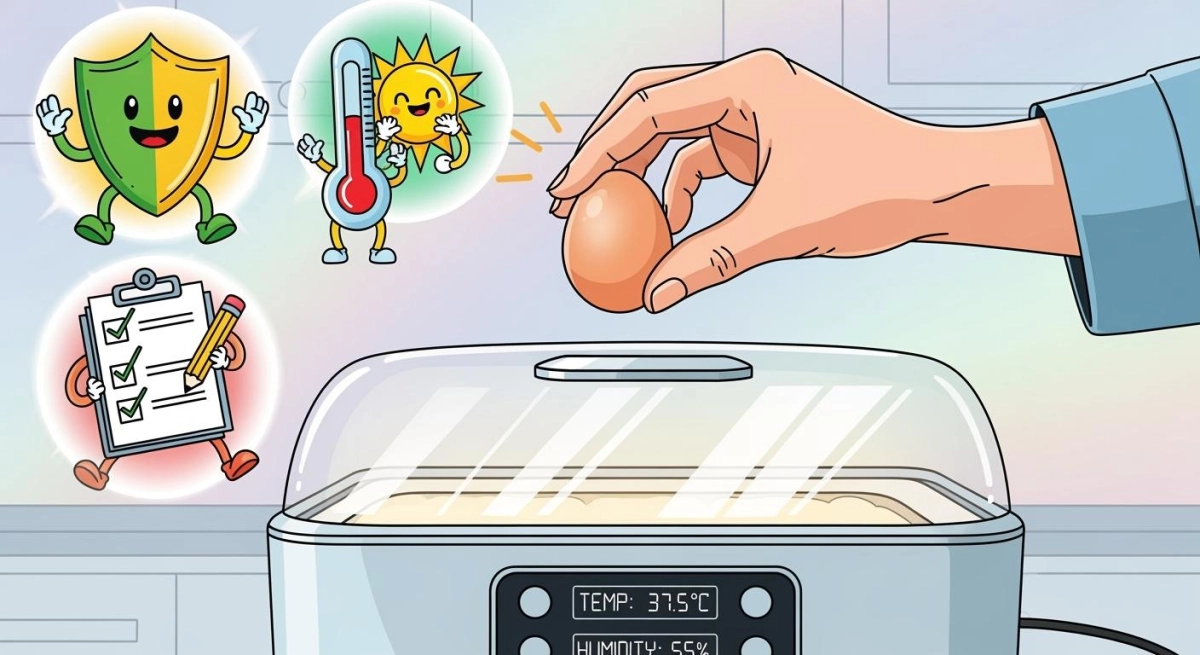
You might ask if eggs from the store can hatch in an egg incubator. Most eggs from stores are not fertile. They also have a bigger food safety risk. When you use eggs from big producers, you have a higher chance of getting salmonella. The table below shows how this risk can affect your family.
| Description |
Details |
|---|---|
| Salmonella Illnesses |
1.2 million cases each year in the U.S. |
| Hospitalizations |
23,000 people go to the hospital every year |
| Deaths |
450 people die every year |
-
Eggs from big farms can spread germs across the country.
-
It is harder to find and stop disease outbreaks.
If you follow safe handling steps, you can lower the risk of germs. This also helps keep your incubator clean.
Key Takeaways
-
Store-bought eggs are not usually fertile. You should not use them in incubators. These eggs are for eating, not for hatching chicks.
-
Salmonella is a big risk with store eggs. Always handle eggs safely. This helps keep your family healthy.
-
Pick eggs from NPIP-certified hatcheries. This gives you a better chance to hatch healthy chicks. It also lowers the risk of germs.
-
Keep your incubator away from places where you make food. This stops germs from spreading. Always wash your hands after touching eggs.
-
Look for recall notices before you use eggs. If eggs are recalled, throw them away safely. Clean anything the eggs touched.
-
Follow safe steps when handling eggs. Store eggs at the right temperature. Clean your incubator before and after you use it. Do not wash eggs.
-
Use the traffic-light rule to pick eggs. Green means certified hatcheries. Yellow means local farms with roosters. Red means grocery store eggs.
-
Candle your eggs often to check how they grow. Take out any eggs that look bad. This keeps your incubator clean.
Why most store eggs aren’t for egg incubator use
Fertility vs non-fertility basics
You may wonder if shell eggs from the grocery store can hatch in your incubator. Most eggs you find at the store are not fertile. Producers collect eggs from hens that do not live with roosters. Fertile eggs need a rooster in the flock. Without a rooster, the eggs will never develop into chicks. When you buy shell eggs at the store, you get eggs meant for eating, not hatching. Even if you find a rare fertile egg, the chances of a successful hatch are very low.
Tip: Always ask sellers if their eggs are sold as hatching eggs and if they keep roosters with their hens.
Cold storage and embryo loss
Store eggs go through cold storage to keep them safe for eating. Producers chill shell eggs to 45°F or below within 36 hours after the hens lay them. This cold temperature helps prevent bacteria growth, but it also stops embryo development. Research shows that cold storage longer than 7 days harms embryo viability. The longer eggs stay cold, the more the egg quality drops. Yolk and albumen change, and the blastoderm loses its ability to grow. You will see higher embryo mortality and fewer chicks hatching. If you want to hatch eggs, you need fresh, fertile eggs that have not spent days in cold storage.
Contamination risks in incubators
When you use store eggs in your incubator, you increase the risk of contamination. Shell eggs from stores may carry bacteria like Salmonella. If you place these eggs in your incubator, germs can spread inside the machine. This can lead to cross-contamination and make cleaning harder. You should keep shell eggs for eating away from your incubator. Always wash your hands after handling eggs and sanitize surfaces. Clean your incubator well after each use to protect future hatches.
Note: Keeping your incubator clean and using eggs from trusted sources helps lower the risk of contamination and keeps your household safer.
Food safety and Salmonella: what beginners must know
Understanding recalls and outbreak signals
You need to understand why food safety matters when you use an egg incubator at home. Salmonella is a common cause of foodborne illness in the United States. It can spread through shell eggs, especially if you do not follow safe handling steps. In September 2024, the CDC reported a salmonella outbreak linked to shell eggs. Ninety-three people got sick, and thirty-four needed hospital care. This outbreak led to a recall of eggs from several stores.
You should watch for recall notices from the CDC or your local health department. These notices often appear on news sites, social media, or store signs. If you see a recall, check the brand, lot number, and dates on your eggs. Outbreak signals include reports of foodborne illness in your area, especially if people have eaten eggs from the same source.
Food safety tip: Always check for recall alerts before you use shell eggs in your kitchen or egg incubator.
What to do if a recall affects your eggs
If you find out your eggs are part of a recall, you must act quickly to protect your family from foodborne illness. Here is a simple checklist to follow:
-
Do not eat or incubate the recalled eggs.
-
Keep the eggs away from your kitchen and food prep areas.
-
Dispose of the eggs safely or return them to the store for a refund, following the recall instructions.
-
Clean and sanitize any surfaces, containers, or tools that touched the eggs. Use hot, soapy water or a dishwasher.
-
Report any recalled eggs you see for sale to your state’s complaint hotline.
-
If you feel sick after eating or handling the eggs, call your healthcare provider.
If you get a recall notice:
Do not place the eggs in your egg incubator.
Separate the eggs from all kitchen areas.
Clean and sanitize all surfaces and tools that touched the eggs.
Dispose of the eggs as directed by the recall notice.
Salmonella symptoms usually start six hours to six days after you eat or handle contaminated shell eggs. You may have diarrhea, fever, and stomach cramps. Most people recover in four to seven days. Children under five, adults over sixty-five, and people with weak immune systems have a higher risk of severe foodborne illness.
Keeping your egg incubator away from food prep areas
You can lower the risk of foodborne illness by keeping your egg incubator far from your kitchen. Shell eggs can carry salmonella on their surface, even if they look clean. If you set up your incubator near food prep areas, you might spread germs to counters, utensils, or food. Always wash your hands with soap and water after you touch eggs or the incubator. Never eat or drink near your incubator or eggs. Supervise children and make sure they wash their hands after handling shell eggs.
Follow these food safety steps every time you work with eggs:
-
Wash your hands after touching eggs or poultry.
-
Do not kiss or snuggle poultry or eggs.
-
Collect eggs often and throw away any that are cracked.
-
Clean dirt off eggs gently, but do not wash them before incubation.
-
Store eggs in the refrigerator to keep egg quality high and slow germ growth.
By following these food safety tips, you protect your family from foodborne illness, keep your incubator clean, and improve your chances for a healthy hatch. You also help prevent cross-contamination and make it easier to trace problems if they happen.
Egg source decision: traffic-light rule for safe handling
Picking the right shell eggs is important for hatching and safety. The traffic-light rule is an easy way to make good choices. It helps you stay safe and avoid problems at home.
Green: NPIP hatchery or certified breeder
You get the best eggs from an NPIP-certified hatchery or a breeder with papers. These places follow strict rules for food safety and handling. They test their birds for sickness and keep records. You can ask to see their certification. These eggs hatch well and are less likely to have germs. If something goes wrong, you can find out where the eggs came from.
Safe handling tip: Always ask for NPIP papers before buying. Keep eggs at the right temperature and follow all safety steps.
Yellow: local farm with roosters (questions to ask)
You might buy eggs from a local farm or farmers’ market. If the farm has roosters, the eggs can be fertile. You should ask about the health of the birds, how old the eggs are, and how they are stored. Farms may not use the same safety rules as hatcheries. Check if the eggs are fresh and handled safely. There is some risk of germs if the farm does not use good care.
-
Ask how old the eggs are.
-
See if the farm collects and stores eggs the right way.
-
Make sure eggs are not washed or kept cold too long before you use them.
Red: grocery eggs, unknown, or recalled
Do not use eggs from the grocery store, unknown eggs, or recalled eggs in your incubator. These eggs are usually not fertile. They have been kept cold, so chicks will not grow. Grocery and recalled eggs can have Salmonella. This germ can live on the shell and inside the egg. It can grow at room temperature and make people sick. Kids and older adults can get sicker from Salmonella. Using these eggs can spread germs in your incubator and home.
Note: Never use recalled or old eggs for hatching. Keep raw eggs away from food areas and clean your incubator after each use.
Traffic-light decision table
| Egg Source |
Hatch Viability (Green/Yellow/Red) |
Food Safety/Recall Risk Notes |
|---|---|---|
| Grocery carton |
Red – Not fertile, cold storage |
High risk: Salmonella can survive on shell eggs; increases contamination risk in incubator. |
| Farmers’ market |
Yellow – Ask about roosters, age |
Moderate risk: Food safety depends on farm practices; ask about handling and expiration date. |
| Local breeder |
Green – Certified, fresh, fertile |
Low risk: Follows safe handling instructions; traceable if problems occur. |
| NPIP hatchery |
Green – Best choice, documented |
Lowest risk: Meets food safety standards; best for clean incubator and healthy chicks. |
If you use the traffic-light rule, you can avoid surprises and keep your family safer. You lower the chance of getting sick and make cleaning up easier. You also have a better chance of hatching healthy chicks.
How to buy hatching eggs: safe handling instructions
When you decide to buy hatching eggs, you need to follow safe handling instructions to protect your household and improve your chances for a successful hatch. Start by choosing a seller who meets high standards for safety and quality.
Key questions for sellers
Before you buy, ask the seller important questions. This helps you avoid surprises and ensures you get healthy eggs. Use this question script when you contact a hatchery or breeder:
-
Is your hatchery or flock NPIP-certified? Which classifications?
-
How old are the eggs when shipped or picked up?
-
How are eggs packed, and what’s your policy for damage in transit?
-
Are these sold specifically as hatching eggs (fertile eggs), not table eggs?
-
Where did you acquire your foundation stock?
-
Do you breed other varieties, and if so, how long are breeds separated before hatching?
-
How large is your breeding flock for each particular breed?
Asking these questions helps you trace the source of your eggs and reduces the risk of disease or poor hatch rates.
Shipping and packing expectations
You want your eggs to arrive in good condition. Sellers should pack eggs with care, using clean materials and sturdy boxes. Eggs should be shipped as soon as possible after collection. Look for sellers who:
-
Ship only clean, dry eggs.
-
Use padding to prevent cracks or breaks.
-
Mark packages as fragile.
-
Provide tracking information.
-
Allow eggs to settle for 24 hours after arrival before incubation.
-
Keep eggs cool and humid during storage (40-60°F).
-
Avoid washing eggs before shipping.
Inspect your eggs when they arrive. Select only normal-shaped eggs of average size. Store them with the big end up in a cool place with little temperature change.
Red flags to avoid
Watch for warning signs when you buy hatching eggs. These red flags can signal unsafe eggs or unreliable sellers:
-
Seller has few reviews or only perfect ratings.
-
Listings show only one or two photos, or images look blurry.
-
Contact information is missing or hard to find.
-
Seller claims NPIP certification but will not provide a number.
-
Eggs arrive dirty, cracked, or wet.
If you see any of these signs, consider finding another seller. Reliable sellers make it easy to check their credentials and answer your questions.
Planning estimate: expected outcome math
If you order 10 eggs, you should expect at least one egg to be infertile, based on the Quick Reference Card baseline of 10% infertility. This means you may see 9 eggs develop, but sometimes fewer. Planning for this helps you avoid disappointment and sets realistic expectations.
By following these tips, you lower the risk of mystery failures, keep your incubator cleaner, and make it easier to trace any problems. You also protect your family from germs that can live on shell eggs.
Beginner roadmap: from delivery to setting eggs
Starting a hatching project needs a simple plan. These steps help you avoid mistakes and keep everyone safe.
Arrival inspection and “do not wash” rule
Check your eggs as soon as they arrive. Put them in a room with the right temperature. If eggs are left in a hot or cold place, move them fast. Do not leave eggs out overnight. Look at each egg for cracks or dirt. Pick only clean and dry eggs for your incubator. Never wash eggs. Washing takes away the protective layer and lets germs in. Use clean, dry hands when you touch eggs to stop bacteria.
Tip: Keep eggs in their box until you check them.
| Step |
Description |
|---|---|
| 1 |
Move eggs to a room with steady temperature when they arrive. |
| 2 |
If eggs are dropped off in a stuffy spot, move them right away and do not leave them overnight. |
| 3 |
Let eggs rest for at least 12 hours before putting them in the incubator. |
Resting, pre-warming, and storage
Let eggs rest after you get them. This helps stop early embryo loss. The Quick Reference Card says shipped eggs should settle for 24 hours. Before you start, warm eggs to room temperature for 4–8 hours. This stops water drops from forming. Store eggs at 55–60°F and 70–80% humidity. Good storage keeps eggs fresh. Do not let the temperature change quickly. Put eggs with the big end up.
| Condition |
Temperature (°C) |
Relative Humidity (%) |
|---|---|---|
| Storage |
13–16 |
70–80 |
| Incubation |
37.5–37.8 |
55–60 |
Note: Storing eggs the right way helps them stay healthy and lowers the chance of germs.
Incubator prep and stabilization
Get your incubator ready before you use it. Clean it well, even if it is new. Use a bleach mix or hot soapy water. Dry every part. Set the incubator to the right temperature and humidity. Let it run for 24 hours before adding eggs. Use a good thermometer to check the temperature. The Quick Reference Card says to set the incubator at 99.5°F and 58% humidity. Make sure eggs are at room temperature before you put them in.
Receiving checklist for shipped eggs
Follow this checklist to help you:
-
Wash and dry your hands before touching eggs.
-
Check eggs for cracks, dirt, or wet spots.
-
Move eggs to a room with steady temperature.
-
Let eggs settle for 24 hours.
-
Warm eggs to room temperature for 4–8 hours before starting.
-
Clean and set up the incubator.
-
Keep the incubator at the right temperature and humidity for 24 hours.
-
Put eggs in with the big end up.
Doing these steps helps you avoid problems and keeps your incubator clean. You make your home safer and stop germs from spreading. You also make it easier to find out what went wrong if there is a problem.
Table: store-bought vs local vs NPIP hatching eggs
Hatchability and safety comparison
You might wonder how eggs from different places compare for hatching and safety. The table below shows the main differences. You can use this guide to make safer choices and avoid problems.
| Feature |
Store-Bought Eggs |
Local Farm Eggs |
NPIP Hatching Eggs |
|---|---|---|---|
| Handling Goal |
Eat |
Hatch (ask first) |
Hatch |
| Cleaning/Washing |
Washed before sale |
Usually unwashed |
Unwashed, clean |
| Storage Temperature |
40–45°F (cold) |
Varies, often room temp |
55–60°F (best practice) |
| Fertility Expectation |
Not fertile |
Fertile if roosters kept |
Fertile, documented |
| Traceability |
Low |
Moderate |
High |
| Recall Readiness |
Yes, but not for hatching |
Sometimes |
Yes, with records |
| Buyer Should Ask For |
Not for hatching |
Rooster presence, egg age |
NPIP papers, egg age |
Store-bought eggs are for eating, not hatching. Producers wash and chill these eggs to keep them safe to eat. These eggs will not hatch because they are not fertile. You cannot find out which flock they came from if there is a problem. Local farm eggs might be fertile if the farm has roosters. You should ask about the health of the flock and how old the eggs are. Farms may not follow strict safety rules, so you need to check how they handle eggs. NPIP hatching eggs come from certified flocks. Sellers keep records and follow safety steps. You get better tracking and lower risk.
Tip: Picking NPIP hatching eggs gives you the best chance for healthy chicks and a clean incubator.
If you want to hatch eggs, look for sellers who answer your questions and show proof. This lowers your chance of being disappointed or having mystery problems. You also keep your home cleaner and safer. You avoid spreading germs and can find problems more easily. This helps protect your family and future chicks.
Candling checkpoints: what to look for
Candling helps you check the progress of your eggs during incubation. You shine a bright light through each egg to see what is happening inside. This step lets you spot healthy development and remove eggs that will not hatch. Following these checkpoints keeps your incubator cleaner and helps you avoid mystery failures.
First candling: developing vs clear
You should do your first candling between day 8 and day 12 of incubation. At this stage, you look for signs that show if the embryo is growing. Healthy eggs show spider-like veins and a dark central spot near the large end. These signs mean the embryo is developing well.
| Indicator |
Description |
|---|---|
| Spider-like veins |
You see thin lines spreading from the center. |
| Dark central spot |
A dark area confirms the egg is fertile. |
| Clear |
The egg looks bright inside, with no veins. |
If you see a clear egg with no veins, it is likely infertile or lost early. You may also notice a detached air cell, which looks like a bubble moving inside the egg. Detached air cells can lower hatch rates, so mark these eggs for extra attention.
Tip: Use a small, cool LED flashlight for candling. Avoid hot bulbs that can overheat eggs.
Second candling: failure signs
You should check your eggs again around day 18, just before lockdown. Look for common failure signs:
-
Blood ring: A red circle inside the egg means the embryo died early.
-
No veins: The egg stays clear, showing no growth.
-
Bad smell: A rotten odor means you must remove the egg right away.
Remove eggs with these signs to prevent contamination. If you see cracks, leaks, or strong odors, take those eggs out immediately.
Safe candling practices
Handle eggs gently during candling. Hold each egg with clean, dry hands to avoid cracks. Limit the time eggs spend outside the incubator to less than 10 minutes. This keeps temperature and humidity stable. Remove eggs with blood rings or bad smells right away. Candling gets easier with practice, so take your time and observe carefully.
Remove or Continue? Decision Table
| Condition |
Action |
|---|---|
| Cracked, leaking, or smelly |
Remove |
| Blood ring |
Remove |
| Clear after day 12 |
Consider removing |
| Spider-like veins, dark spot |
Continue |
| Detached air cell |
Monitor |
Note: Following these steps helps you keep your incubator clean and lowers the risk of cross-contamination. You improve traceability and reduce disappointment in future hatches.
Hatch-day hygiene and post-hatch cleanup
Handwashing and surface safety
On hatch day, you need to keep your work area clean and safe. Chicks and eggs can carry germs, so you must wash your hands before and after touching them. Use warm water and soap, scrubbing for at least 20 seconds. Dry your hands with a clean towel. This simple step helps stop the spread of bacteria.
You should also clean any surfaces that come in contact with eggs or chicks. Follow these steps for best results:
-
Remove all visible debris from tables and tools using a brush or paper towel.
-
Wash surfaces with hot, soapy water.
-
Rinse with clean water to remove soap.
-
Let surfaces dry completely.
-
Disinfect using a safe cleaner, such as a diluted bleach solution or hydrogen peroxide.
Tip: Keep food and drinks away from your hatching area. This lowers the risk of cross-contamination and keeps your family safer.
Cleaning the egg incubator
After chicks hatch, your egg incubator will have broken shells, fluff, and other residues. Cleaning right away prevents bacteria from growing and keeps your next hatch healthier. Start by unplugging the incubator and removing all loose parts.
You can use these cleaning agents:
-
Dawn dish soap works well for washing plastic or styrofoam parts.
-
Lysol wipes are safe for styrofoam and help remove germs.
-
Hydrogen peroxide is a good choice for disinfecting after cleaning.
Follow this cleaning process:
-
Take out all debris, shells, and leftover eggs.
-
Wash all surfaces with warm, soapy water. Use a soft brush for corners.
-
Rinse with clean water and let everything dry.
-
Disinfect with a 10–20% bleach solution. Spray the inside and let it sit for a few minutes.
-
Turn on the incubator empty at 100°F for about an hour. This helps circulate air and dry the inside.
-
Store the incubator in a cool, dry place when not in use.
Note: Always clean and disinfect your incubator before and after each use. This habit reduces the risk of germs and keeps your equipment ready for the next batch.
By following these steps, you improve household hygiene, reduce cross-contamination, and make future hatches more successful. Careful handling and cleaning protect both your family and your chicks.
2026 regulations and best practices for egg incubator use
New egg processing and labeling rules
There are new rules for eggs in 2026. These rules help you make safer choices at home. Producers must put clear expiration dates on egg labels. You can see when eggs were packed and when to use them. This helps you avoid old eggs and lowers the risk of salmonella. Labels also say if eggs are for eating or hatching. Look for packaging that says "hatching eggs" if you want to use an egg incubator.
Check the label for these things:
| Label Feature |
Why It Matters |
|---|---|
| Expiration date |
Shows when eggs are fresh |
| Source farm or hatchery |
Helps you trace the eggs |
| NPIP certification |
Proves food safety standards |
| Intended use |
Stops handling mistakes |
Tip: Always look at the expiration date before you buy eggs. This easy step helps you avoid problems and keeps your family safer.
Updated food safety guidelines for home hatching
You need to follow new food safety rules when you hatch eggs at home. These rules help protect your family and keep your egg incubator clean. The guidelines tell you how to handle, store, and clean eggs. Store eggs at the right temperature and keep them away from food prep areas. Wash your hands after touching eggs to lower the risk of salmonella. Clean your incubator before and after each use. Use disinfectants that are safe for surfaces that touch food.
Follow these best practices:
-
Store eggs at 40°F or a little colder until you incubate them.
-
Keep eggs away from kitchens and food prep spots.
-
Wash hands with soap and water after touching eggs.
-
Clean and disinfect your egg incubator before and after each hatch.
-
Use only eggs with clear expiration dates from trusted sellers.
-
Remove eggs that are cracked, leaking, or smell bad.
Note: These steps help you stop germs from spreading, keep your home cleaner, and make it easier to find problems if they happen.
Watch for recall notices and follow instructions if your eggs are recalled. If you see signs of salmonella, like diarrhea or fever, call your doctor. By following these rules, you lower the risk of getting sick and have a better chance for a good hatch.
Practical benefits of these tips include:
-
Fewer mystery failures and disappointments
-
Better household hygiene and less cross-contamination
-
Improved traceability if problems occur
-
A cleaner incubator for future hatches
You can use these best practices every time you hatch eggs. They help keep your family safe and make hatching more successful.
You can keep your family safe by using food safety rules. These steps also help you get better hatching results. Buy eggs only from sellers you trust. Make sure the eggs are fresh before you use them. Clean your incubator before you start each project. Keep eggs at the right temperature and humidity. Use the checklist and table below for every hatch.
| Step |
Details |
|---|---|
| Buy eggs |
Pick good sellers and check if eggs are fresh |
| Food safety |
Wash your hands and clean surfaces after eggs |
| Incubation |
Set the temperature and humidity as needed |
| Candling |
Look at eggs for growth and take out bad ones |
Tip: Following these food safety steps helps you stop problems and keeps your incubator clean.
FAQ
Can you hatch eggs from the grocery store?
No, you cannot hatch eggs from the grocery store. These eggs are not fertile and have been kept cold. You will not get chicks. Using them may also increase the risk of germs in your incubator.
How do you know if an egg is fertile before incubating?
You cannot tell by looking at the shell. Ask the seller if the eggs come from a flock with roosters. Only eggs from hens kept with roosters can be fertile and suitable for hatching.
What is the safest place to set up my egg incubator?
Set up your incubator in a clean, dry room away from kitchens and food prep areas. This helps prevent cross-contamination and keeps your family safer.
How often should you clean your egg incubator?
You should clean and disinfect your incubator before and after every hatch. This habit keeps germs away and helps you get better results with future hatches.
What should you do if an egg cracks during incubation?
Remove cracked or leaking eggs right away. Cracks let germs in and can spoil other eggs. Always wash your hands after handling these eggs.
Why is NPIP certification important when buying hatching eggs?
NPIP certification shows the seller follows strict safety rules. You get better traceability and lower risk of disease. This helps you avoid mystery failures and keeps your incubator cleaner.
What are the signs of a bad egg during candling?
Look for blood rings, clear eggs with no veins, or a bad smell. Remove these eggs to protect the rest. Use a small, cool flashlight for candling.
Who is at higher risk from Salmonella when hatching eggs at home?
Children under five, adults over sixty-five, and people with weak immune systems face higher risks. Always follow food safety steps to protect everyone in your home.
0 Comments