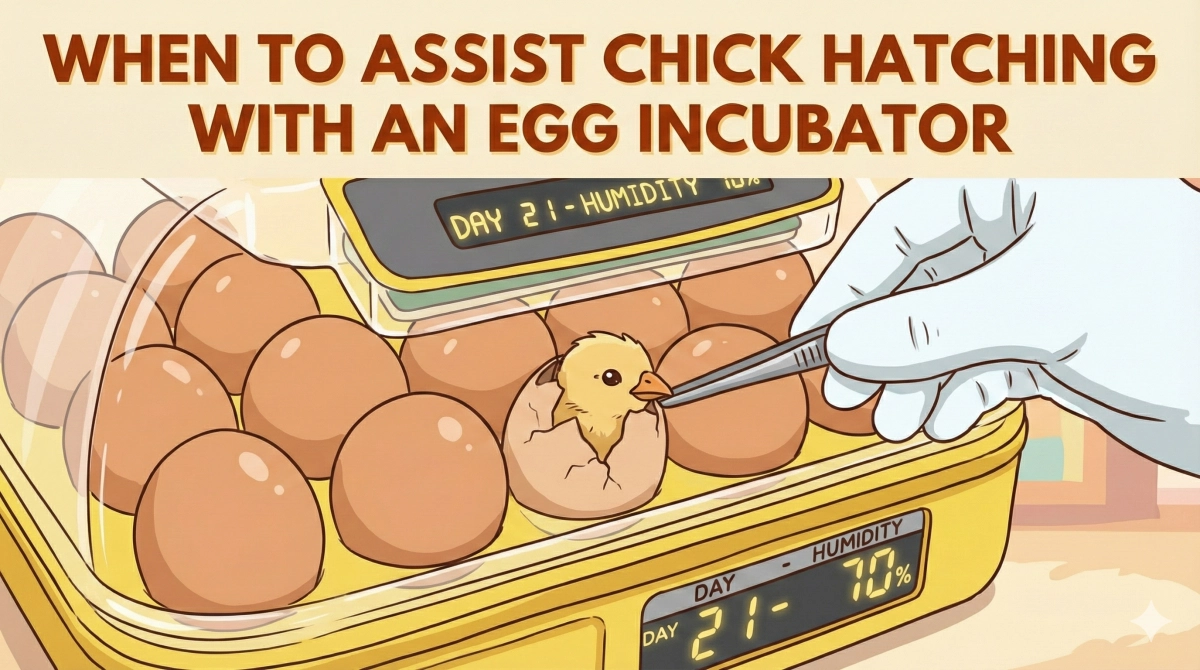
You may feel tempted to step in and help a chick hatch as soon as it looks like it is struggling. In reality, most chicks do not need human help at all. If you assist too early or too aggressively, you can hurt or even kill the chick. Safe hatching starts with patience and careful observation. Many problems that look like “stuck chicks” actually come from issues inside the egg incubator. Common causes include wrong temperature, poor humidity control, rough handling of eggs, or not turning eggs enough.
| Common Cause |
Possible Result |
|---|---|
| Wrong temperature |
Chicks hatch too late or too soon |
| Bad humidity |
Chicks are weak or do not hatch |
| Improper handling of eggs |
Eggs get germs or chicks die |
| Insufficient turning |
Chicks get stuck to the shell |
Always remember: only consider helping a chick hatch if you see real, ongoing problems and nothing changes after a long, careful wait. Most chicks are better off finishing the job on their own.
Key Takeaways
-
Most chicks hatch by themselves. Only think about helping if you see clear, repeated signs of trouble.
-
Use a “wait first” mindset. Many chicks take 12–24 hours after the first external pip to finish hatching.
-
Watch incubator settings closely. Beginner incubator tips can help you keep the temperature near 99.5°F and the humidity steady for healthy hatching.
-
Look for serious warning signs before you step in: a dry, tight membrane, no progress for many hours, very weak peeping, or no movement.
-
Helping too soon can cause bleeding, infection, or long-term weakness. Safe assisted hatching is slow, gentle, and used only as a last resort.
-
Use clean hands and tools in a warm, humid space if you must assist. Good hygiene lowers the risk of infection.
-
After you help, give the chick careful aftercare. Keep it warm, hydrated, and under close watch for signs of distress or infection.
-
Write down your hatching steps and results. Good records help you spot patterns and improve every future hatch.
Should You Help a Chick Hatch?
Why Most Chicks Hatch Alone
You may feel worried when you see a chick rocking in the egg or pausing after a pip. Most of the time, this is normal. Chicks have hatched by themselves for thousands of years. Their bodies know when to start, pause, and finish the process. Your main job is to give them a stable incubator and then step back.
Here are some important steps you should follow for a successful hatch:
-
Choose an incubator that keeps the temperature steady, close to 99.5°F.
-
Stop turning the eggs about three days before hatch day (lockdown).
-
Place eggs in the hatching tray if your incubator has one.
-
Keep the incubator closed as much as possible to hold in heat and moisture.
-
Raise humidity during the last three days so the egg membrane stays soft and flexible.
-
Watch the incubator closely. Even small temperature changes can affect hatch timing and chick strength.
Patience is part of good animal care. Chicks often rest for hours between making the first crack and pushing out of the shell. Long quiet periods are usually normal, not an emergency.
Risks of Early Assistance
You might want to help a chick hatch if you think it is “stuck.” You must slow down and look for real danger signs first. Helping too early can cause more problems than it solves.
Assisting too early can kill a chick. Hatching is a process that takes time. A baby chick/duckling/gosling/etc needs to absorb its yolk and the blood in the veins along the shell before it can hatch safely. Assisting too early could cause a baby to bleed out and die, or could mean that the yolk is not fully absorbed.
You should only help a chick hatch as a last resort. Early assistance can lead to heavy bleeding, infection, or weak chicks that never fully recover.
When Not to Help a Chick Hatch
You should not rush to help a chick hatch. Most experts agree that you should wait at least 12 to 24 hours after you see the first pip (small hole in the shell) before you even consider intervening. Trust the chick’s natural process whenever possible.
-
If you do not see a pip yet, do not try to help.
-
If the chick is moving, peeping, and the membrane looks moist and flexible, wait longer.
-
If you see bright red blood vessels in the membrane, stop and wait. The chick is not ready.
-
Sometimes a chick makes a small hole but cannot break through a tough or dry membrane.
-
If you wait around 24 hours and see no real progress, you may consider helping, but only with great care.
-
Waiting too long can also cause problems, like the chick drying out and getting stuck, so you must balance patience with observation.
A poultry keeper once waited to help a chick, but the chick died. This kind of story shows that patience is important, but you must also watch for real signs of distress. Helping should be a careful final step, not your first reaction.
Recognizing When to Assist Chick Hatching
Normal Hatching Timeline
Understanding the normal hatching timeline helps you know when to wait and when to watch more closely. Most bird eggs hatch in about 10 to 35 days, but chicken eggs usually take around 21 days in an egg incubator. The exact time depends on the species and on how well you manage incubator temperature and humidity.
| Poultry Species |
Typical Incubation Time (Days) |
|---|---|
| Chickens |
21 |
| Other Birds |
10 to 35 |
You should aim to keep the temperature close to 99.5°F, usually within a narrow range of about 99–100°F. Humidity should stay in a moderate range (often around the low- to mid-50% range) for most of incubation. Turn the eggs several times each day, or use automatic turning. These steps help the chick develop well and get ready for hatch day.
The hatching process has several stages:
-
The chick breaks through the inner membrane into the air cell. This is called the internal pip.
-
The chick makes a small hole in the shell, known as the external pip.
-
The chick rests and absorbs the yolk and blood from the membrane.
-
The chick starts to “unzip” the shell by making a line of cracks.
-
The chick pushes out of the shell and lies still while it dries and recovers.
You may see a chick rest for many hours between these steps. This is normal. Do not rush to help during quiet times. Most chicks need that time to finish absorbing the yolk and closing off blood vessels before they can safely hatch.
Signs a Chick Needs Help
You need to watch for certain signs that show a chick may truly need help. Not every slow hatch is a problem; some chicks simply take longer than others. However, some signals tell you it is time to take a closer look and possibly plan a gentle assist.
| Observable Sign |
Explanation |
|---|---|
| Pip Location |
The chick should pip at the air cell at the blunt end. Pipping in the wrong location can be a sign of trouble. |
| Egg Size |
Very small or odd-shaped eggs can make it harder for chicks to move and hatch. |
| Hatching Position |
The chick’s head should be under its right wing. Other positions can cause problems. |
| Air Cell Position |
The air cell should be at the blunt end. If it is misplaced, hatching may be difficult. |
| Noise and Movement |
Active, noisy chicks are usually fine. Very weak or silent chicks may need extra help. |
| Shell Membrane |
The membrane should be moist and flexible. Dry, tough membranes can trap chicks. |
| Breed History |
Some breeds struggle more at hatch. Knowing this helps you prepare for possible assists. |
| Partial Unzipping |
If a chick starts to unzip but cannot finish, it may be stuck and need careful help. |
You should look for these signs after the chick has pipped. If you see a dry, tight membrane or the chick is stuck in the same spot for many hours, you may need to consider a gentle assisted hatch. Weak peeping, no movement, or a chick that cannot finish unzipping after a long rest are also warning signs.
Tip: Always check membrane color and chick activity together. A moist, moving chick is usually fine. A dry, silent chick often needs your attention.
When to Help a Chick Hatch After 24 Hours
You may wonder exactly when to help a chick hatch after it has pipped and then stopped making progress. Most experts say you should wait and watch for at least 12 hours after the first pip, and many chicks take up to 24 hours to finish hatching. After 24 hours with almost no change, a more careful check is helpful.
-
Wait and monitor the chick’s progress for at least 12 hours after pipping; many chicks need this time.
-
Make sure the chick has absorbed the blood in the membrane and the yolk before you begin peeling any shell.
-
If you decide to step in, move slowly and stop right away if you see any bleeding.
Assisted hatching should always be your last resort. You should only assist a stuck chick if it shows clear signs of distress and truly cannot finish on its own. If you help too soon, you can cause bleeding or infection. If you wait far too long, the chick may dry out and get stuck to the membrane.
Note: Assisted hatching can sometimes save a chick’s life, but it also carries risks. Always use clean hands and tools, and keep the egg warm and humid during each step.
You play a key role in deciding when to help. Careful observation, good records, and patience will help you make the safest choice for your chicks.
Red Flags and When Not to Intervene
You may want to help every chick, but sometimes the safest choice is to wait and accept that not every egg will hatch. Not every slow hatch means you should step in. Some warning signs tell you that you should avoid intervention, because opening the egg will do more harm than good.
Here are the main red flags that mean you should not assist a chick:
-
You see bright-red blood vessels in the membrane. This means the chick is not ready. Helping now can cause heavy bleeding.
-
Blood appears when you remove even a small piece of shell. This shows the chick still needs more time inside the egg.
-
The chick has a large, unabsorbed yolk sac visible on its belly. It must absorb this yolk before it can live safely outside the shell.
-
You notice a strong, foul odor or leaking fluid from the egg. This often means infection or a non-viable chick. Do not open these eggs.
-
The chick shows no movement or peeping, and the membrane looks brown or discolored. These signs suggest the chick has stopped developing or has died.
Tip: Always check for these warning signs before you consider assisted hatching. If you see any of them, close the incubator and give the chick more time, or safely remove clearly non-viable eggs. Patience protects both the chick and your whole hatching project.
You may feel worried if a chick takes longer than its siblings. Some chicks just need extra time. If you rush in despite red flags, you can injure the chick or disturb the whole hatch. Assisted hatching is only for cases where the chick is clearly stuck, shows no progress after a long wait, and does not show the warning signs above.
Remember, your main goal is a strong, healthy flock. Careful observation, a calm approach, and a well-managed incubator will prevent more problems than any single rescue.
Why Chicks Get Stuck in the Egg
Shrink-Wrapped Chicks
You may notice some chicks cannot break free from their shells. This often happens because the inner membrane dries out and sticks tightly to the chick’s body. This problem is called shrink-wrapping. Shrink-wrapping usually occurs when the humidity inside your egg incubator drops too low or when you open the incubator too often during hatch. The dry membrane acts like plastic wrap, making it hard for the chick to move or breathe. You might see the chick pushing but unable to turn or unzip the shell.
If you see a dry, white, or leathery membrane, the chick may be shrink-wrapped. You need to act with caution. Only consider helping if the chick shows clear signs of distress and cannot free itself with more time and proper humidity.
Some common causes of chicks getting stuck include:
-
The shell is abnormally hard or thick.
-
The chick is unusually weak or compromised.
These problems can make it impossible for even a fairly healthy chick to finish hatching without some support.
Sticky or Wet Chicks
Sticky or wet chicks are another common problem in artificial incubation. You may find chicks that look wet, have gooey fuzz, or seem glued to the shell. This usually happens when the humidity in the incubator stays too high during most of incubation. High humidity prevents the egg from losing enough moisture, so extra fluid remains when the chick tries to hatch.
Sticky chicks often struggle to move and may not be able to break free. Stronger chicks might still hatch, but weaker ones can get trapped and die. Sometimes, excess liquid can clog the chick’s nostrils, making it hard to breathe.
You might also see chicks with fuzz stuck to their bodies. This fuzz is important because it helps keep the chick warm. If the fuzz stays wet, the chick can get chilled and weak. Sticky or wet chicks need special warmth and close monitoring after hatching. You should also review your incubator settings to prevent this problem in future batches.
Malpositioned Chicks
Malpositioned chicks do not line up correctly inside the egg for hatching. In a normal hatch, the chick’s head should be under its right wing and pointed toward the air cell at the large end of the egg. Sometimes, chicks end up in the wrong position, such as with their beak above the right wing, their head at the small end, or their feet over their head.
These malpositions can make it very hard or even impossible for the chick to break out of the shell on its own. You may see a chick pipping at the small end of the egg, or you may notice that it is struggling without making progress.
Malpositioning can greatly reduce hatching success rates. In most healthy batches, malpositions should be rare. If you notice this problem often, you may need to review how you handle and store eggs and how your incubator runs. Assisted hatching may help some malpositioned chicks, but you should always use caution and only help when you see clear signs of distress and no progress.
Weak or Compromised Chicks
You may notice that some chicks struggle more than others during hatching. Weak or compromised chicks often face extra challenges inside the egg incubator. These chicks may not have the strength to break through the shell or to finish the hatching process alone. Learning to recognize these signs helps you decide when to assist and when to let nature take its course.
Weak chicks can show several signs that set them apart from healthy hatchlings:
-
�� They may have trouble absorbing the yolk sac, which provides vital nutrients for their first hours of life.
-
�� You might see problems with the blood vessels in the membrane. These vessels may not close off properly, making assisted hatching more risky.
-
�� Weak chicks often peep softly or remain silent, showing little movement compared to their siblings.
-
�� They may fail to unzip the shell or get stuck after making only a small pip.
-
�� Some appear exhausted, lying still for long periods without progress.
You can calculate the percentage of weak day-old chicks in your hatch by using a simple formula:
Percentage of weak chicks = (Number of weak chicks at hatch / Number of total chicks hatched) × 100
This calculation helps you track your hatching success and spot patterns that may need attention in future batches.
Many weak or compromised chicks struggle because of factors like genetics, poor nutrition in the breeder flock, or temperature swings in the egg incubator. Sometimes, these chicks have developmental problems that you cannot fix by helping them out of the shell. You should always use caution and remember that assisted hatching is a last resort. If you see a chick with a large, unabsorbed yolk sac or bright red blood vessels, wait before you try to help. These chicks generally need more time to finish their development.
Note: Weak chicks may need extra support after hatching. You should keep them warm, offer clean water, and provide starter feed. Watch them closely for signs of infection or trouble standing. If you see ongoing problems, seek advice from an experienced poultry keeper or an avian veterinarian.
Knowing how to decide when a chick needs help hatching is important for animal welfare. You want to give every chick a fair chance, but you must balance patience with careful observation. When should you help a chick hatch? Only step in if you see clear signs of distress and no progress after a long wait. Assisted hatching can sometimes save lives, but it also carries risks. Always prioritize chick safety and use your egg incubator to create the best environment possible.
How to Assist Chick Hatching Safely
Assisted hatching requires careful preparation, patience, and gentle technique. Your goal is to support a chick that truly cannot finish alone, not to rush the natural process. You must put chick safety first and only step in when you see clear signs that progress has stopped and the chick is in trouble. This section walks you through key steps, tools, and precautions for safer assisted hatching in an incubator.
Preparation and Tools
Before you attempt to help a chick, you need to set up your workspace and gather the right tools. Good preparation lowers stress for both you and the chick and helps you avoid mistakes.
Follow these steps to prepare:
-
Place your incubator and brooder heater in a stable, draft-free location.
-
Test all equipment ahead of time to confirm it works correctly.
-
Maintain the correct temperature and humidity throughout the hatching period.
-
Rotate eggs regularly until day 18, then stop turning for lockdown.
Keep these conditions stable:
-
Try to keep temperature close to 99.5°F, usually within about 99°–100°F.
-
Keep humidity in a moderate range (often around 40%–50%) for the first 18 days, then increase it into a higher range (around the mid-60s to mid-70s) for the last few days.
-
Ensure proper ventilation for airflow so chicks can breathe well as they hatch.
Essential tools for assisted hatching:
| Equipment |
Purpose |
|---|---|
| Incubator |
Keeps eggs at the right temperature |
| Thermometer |
Measures incubator temperature |
| Hygrometer |
Monitors humidity levels |
| Egg Candler |
Checks chick development inside the egg |
| Brooder Heater |
Warms chicks after hatching |
| Chick Starter Feed |
Provides nutrition for new chicks |
��️ Tip: Wash your hands thoroughly before you help a chick hatch. Use clean tweezers and cotton swabs. Prepare a warm, moist paper towel to wrap the egg if needed, keeping the chick’s beak exposed so it can breathe.
Step-by-Step Assistance
When you decide to help a chick hatch, you must work slowly and gently. Assisted hatching should happen in stages, with plenty of resting time in between so the chick can absorb yolk and blood and regain strength.
Small Shell Removal
Start by making a tiny viewing window at the air cell end of the egg. Use fine tweezers to chip away a small piece of shell. Avoid puncturing the inner membranes. This lets you check the chick’s position and the condition of the membrane.
-
Chip a small window at the air cell end.
-
Look for the chick’s beak and check the membrane color and moisture.
-
If the membrane looks dry, moisten it lightly with warm saline using a cotton swab.
�� Alert: Never flood the chick’s nostrils with liquid. Only moisten the membrane lightly so the chick can still breathe.
Avoiding Blood Vessels
You must avoid damaging blood vessels during assisted hatching. These vessels supply nutrients and oxygen to the chick until it is ready to hatch.
-
If you see bright red, branching blood vessels, stop immediately.
-
Return the egg to the incubator for 1–3 hours and reassess later.
-
Wait until the vessels recede and look thin or thread-like before continuing.
�� Note: If you see bleeding, stop and gently press a clean cloth on the area. Place the egg back in the incubator and wait so the vessels can close.
Working in Stages
Assisted hatching works best when you help in short, careful sessions. Allow the chick to rest between steps so it can catch up and stabilize.
-
Work for 20–40 minutes, then return the egg to the incubator.
-
Let the chick rest and continue absorbing the yolk and blood.
-
If needed, wrap the egg in a warm, damp paper towel, keeping the beak exposed.
-
When the shell is mostly unzipped and the membranes are pale and bloodless, let the chick push out on its own.
⏳ Tip: Patience is key. Rushing the final push can damage the chick. Allow time for natural processes to finish whenever possible.
What Not to Do
You must avoid common mistakes when you help a chick hatch. These errors can cause injury, infection, or death.
Never do the following:
-
Do not assist before about day 21 for chicken eggs. Early help can cause bleeding or incomplete yolk absorption.
-
Avoid opening the incubator repeatedly. Each opening drops humidity and can create shrink-wrapped chicks.
-
Do not force the chick to come out. Let it push and build strength as much as it safely can.
-
Never ignore temperature and humidity settings. Low humidity can dry out membranes. High temperature can create weak or deformed chicks.
-
Do not use dirty tools or dirty hands. Poor hygiene greatly increases the risk of infection.
-
Low average humidity can cause chicks to die fully formed without pipping.
-
Inadequate ventilation may lead to chicks dying in the shell.
-
Excessive humidity during hatching can result in rough or poorly healed navels.
-
High temperature can cause chicks to hatch too early with bloody navels.
-
Low average temperature can produce weak, gasping chicks that struggle to thrive.
⚠️ Alert: Assisted hatching is a last resort. Always try to let the chick hatch naturally. Only intervene when you see clear signs of distress and no progress after a long, careful wait.
You can help a chick more safely by preparing your tools, working slowly, and watching for warning signs. Assisted hatching can sometimes save chicks when done with care, but it always carries risks. Always put chick welfare first and use your incubator to create the best conditions you can.
Caring for Assisted Chicks
Immediate Aftercare
After you help a chick hatch, you must provide careful aftercare to give it the best chance of survival. Place the chick back in the warm incubator so it can fluff out and recover from the stress of assisted hatching. Do not rush to move the chick. Wait until it is fully dry and most of the eggs in the incubator have finished hatching. This helps the chick stay warm and reduces the risk of chilling.
Once the chick is fluffed out, move it to a brooder that you have prepared in advance. The brooder should be warm, draft-free, and safe from pets and young children. Use a brooder box until the chick grows fully feathered. Make sure the brooder has clean bedding, fresh water, and chick starter feed. Keep the temperature steady and watch for any signs of stress.
Checklist for immediate aftercare:
-
Keep the chick in the incubator until it is dry and fluffy.
-
Move it to a warm, draft-free brooder with food and water.
-
Ensure the area is safe, clean, and not overcrowded.
-
Avoid handling the chick too much during the first few hours.
�� Tip: Assisted chicks often need more time to rest than others. Give them a quiet, calm space to recover. Children should always wash their hands after handling chicks and be supervised by an adult.
Monitoring for Complications
You need to watch assisted chicks closely for any problems. These chicks may face more challenges than those that hatched on their own. Look for signs of infection, such as redness or swelling around the navel. Check for leg weakness or trouble standing. Make sure the chick eats and drinks within the first day.
If you notice any of the following, take action quickly:
-
The chick seems very weak or does not stand.
-
The navel area looks red, swollen, or leaks fluid.
-
The chick breathes with an open mouth or gasps for air.
-
The chick does not eat or drink after several hours.
⚠️ Alert: If you see serious problems, contact an experienced poultry keeper or an avian veterinarian for advice.
Long-Term Considerations
Chicks that needed help during hatching may grow differently from those that hatched alone. You might notice that an assisted chick appears smaller or develops a bit more slowly. Over time, many assisted chicks catch up in size and color, but some stay more fragile. You should keep an eye on their growth and health.
Assisting chicks can also affect the strength of your flock in the future. Chicks that cannot hatch on their own may pass on weaker traits if you breed them. Strong chicks build stamina and resilience by hatching independently. For backyard flocks or classroom projects, you may choose to keep assisted chicks as pets. If you plan to breed chickens, select the strongest, healthiest birds for future generations.
�� Note: Track the progress of assisted chicks. Record their size, behavior, and health as they grow. This helps you make better decisions for your flock and your future hatching plans.
You play a key role in supporting assisted chicks. Careful aftercare, close monitoring, and thoughtful long-term planning help more chicks grow into strong, healthy birds.
Preventing Hatching Problems
You can prevent many hatching problems by focusing on three things: incubator settings, egg quality, and good record keeping. Doing these steps creates a safer environment for your chicks and lowers the chances that you will ever need to assist hatching.
Incubator Settings and Maintenance
Stable incubator conditions are very important for good hatch rates. You must control temperature, humidity, and egg turning. Even small changes can cause big trouble for chicks.
| Parameter |
Value |
|---|---|
| Temperature |
99.5ºF |
| Relative Humidity |
50–55% |
Aim to keep the temperature close to 99.5°F, usually within a narrow range of about 99–100°F. For most small incubators, that pairs well with humidity around 50–55% during the main part of incubation. If the temperature is too high or too low, embryos may die or hatch weak. Check your thermometer and hygrometer often so you can keep the settings steady.
Turning eggs is needed for healthy chicks. Turn eggs several times each day for the first 18 days. This stops the embryo from sticking to the shell and helps it grow in a good position.
��️ Tip: Using a reliable Egg Incubator with steady temperature, humidity, and automatic turning can help you avoid many assisted hatching emergencies.
Humidity is important, too. Keep it at about 50–55% during most of incubation. Raise humidity to roughly 65–70% for the last few days before chicks hatch so membranes stay soft. Do not open the incubator often; this can lower humidity and cause shrink-wrapped chicks. Too much humidity can also cause problems, so avoid overfilling water trays.
Egg Quality and Handling
Egg quality has a big impact on how many chicks hatch. Always pick clean, uncracked eggs from healthy hens. Handle eggs gently so you do not break or stress them.
-
Store eggs for less than about 7 days before putting them in the incubator.
-
Storing eggs too long lowers hatch rates and can cause more chick deaths.
-
Very fresh eggs may have higher carbon dioxide, which can slow early growth if handled poorly.
-
Long storage can damage the yolk and white, making it harder for chicks to grow well.
Keep eggs at a cool, steady temperature before incubation. Place eggs with the large end up and turn them gently if you store them for a few days so the yolk stays centered.
Record Keeping and Troubleshooting
Good records help you find problems and improve future hatches. Write down your incubator’s temperature, humidity, and turning schedule every day. Note when you set the eggs and when you see the first pip.
-
Track how your incubator performs for each batch.
-
Check embryos at around 10 days and after hatching to find common issues.
-
Watch egg quality before putting them in the incubator.
-
Store eggs with enough space and at the right temperature.
-
Check incubator operation, including temperature, humidity, and ventilation.
-
Watch for damage when moving eggs.
-
Make sure the incubator works well after you move or clean it.
-
Check chick health after hatching and note any problems.
-
Ensure good airflow in the incubator at all times.
�� Note: Good records help you fix problems if something goes wrong. You can look back and find patterns for better results next time.
If you follow these steps, your chicks have a much better chance to hatch strong and healthy with less need for hands-on assistance.
You should only help a chick hatch if it really cannot finish by itself. Look for clear signs that the chick is in trouble and has stopped making progress. Always use a slow, careful method and stay gentle. Keep these things in mind:
-
Do not help unless you have to. Stepping in too soon can hurt the chick or upset the whole hatch.
-
Chicks need time to take in the yolk. The yolk can feed them for up to three days after hatching.
-
If you open the incubator too much, chicks can get stuck in the shell and feel stressed.
If you are not sure what to do, ask someone with more experience or talk to a poultry expert. Watching closely, keeping good notes, and using the right steps can help more chicks live and make your hatching projects go more smoothly. ��
Data authenticity note: The timelines, temperature and humidity ranges, and hatch patterns in this article are based on typical incubator manuals, standard small-flock practice, non-branded poultry extension teaching materials, and aggregated records from backyard keepers. Real-world results vary with breed, incubator model, room conditions, and flock health. Always follow your own incubator’s manual and consult local experts or an avian veterinarian if you see serious health problems or repeated hatch failures.
FAQ
How long should you wait before helping a chick hatch?
You should usually wait at least 12 to 24 hours after the first external pip. Most chicks need this time to rest and absorb the yolk. Only consider assisted hatching if you see no progress plus clear signs of distress, such as a dry membrane or very weak peeping.
What are the signs that a chick needs help hatching?
Look for a dry, tight membrane, weak or fading peeping, no movement, or no progress after 24 hours. These signs can show when it may be time to consider carefully helping a chick. Always check for active blood vessels before you start.
Should you help a chick hatch after 24 hours?
You should only help a chick hatch after about 24 hours if it clearly shows distress and cannot finish alone. If the membrane looks dry or the chick is stuck in one position for many hours, you may need to plan a gentle assisted hatch.
How do you know when a chick needs help hatching?
You know a chick may need help if it pipped but made no progress for many hours, the membrane is dry and tight, or the chick seems very weak. Use your incubator to keep conditions stable while you watch closely and use the checklists from this article.
Is it safe to help a chick hatch?
Helping chicks hatch always carries risks. You can cause bleeding, infection, or long-term weakness if you help too soon or too quickly. Only use assisted hatching as a last resort. Always use clean tools and keep the egg warm and humid.
What should you do if you see blood while helping a chick hatch?
Stop immediately if you see blood. Gently press a clean cloth on the area and return the egg to the incubator. Wait until blood vessels shrink and look pale before you try again. Rushing after you see blood can seriously harm the chick.
Can assisted chicks grow up healthy?
Many assisted chicks grow up healthy, especially if the problem came from incubator settings instead of the chick itself. Watch them closely for complications and focus on good care. For breeding, choose the strongest, healthiest birds so your flock stays robust over time.
0 Comments