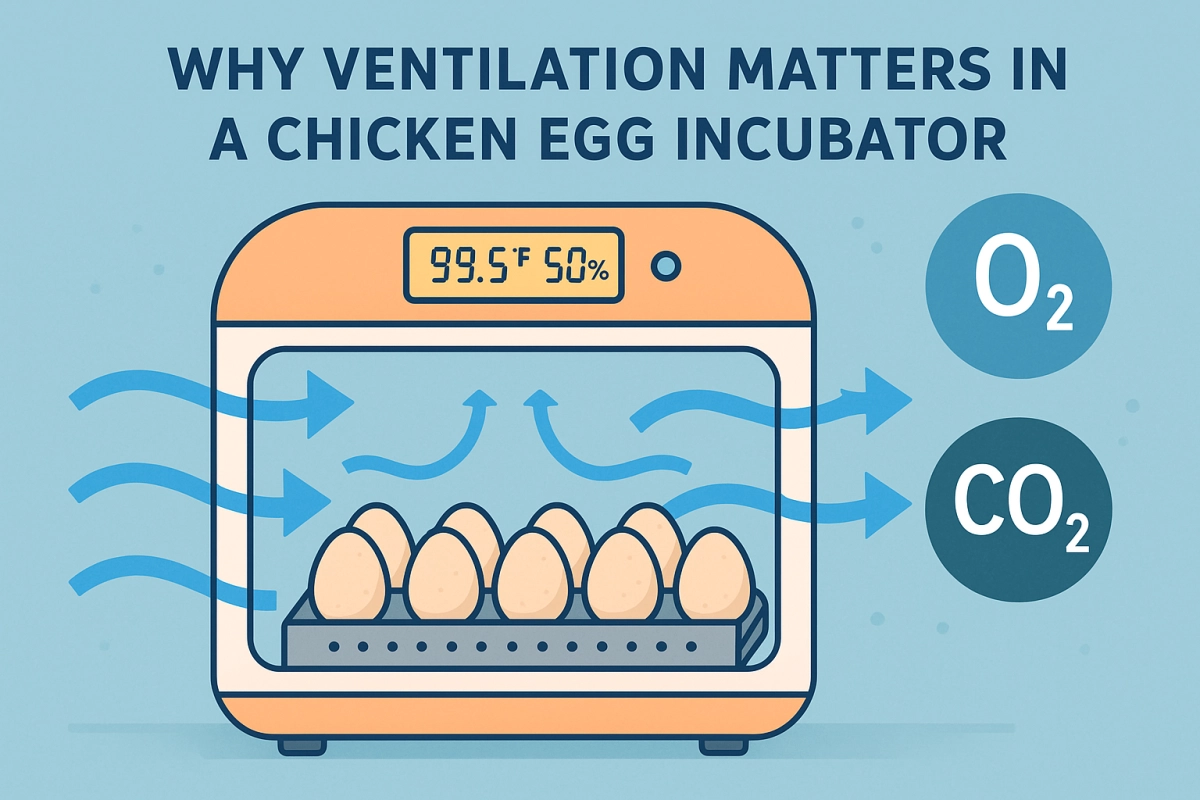
You need proper ventilation in a chicken egg incubator to help your chicks grow strong and healthy. When you use good airflow, oxygen can enter and carbon dioxide can leave. This exchange keeps the air safe for developing embryos. If air cannot move, harmful gases build up and may slow growth or cause problems for the chicks. Using the right ventilation helps you create the best environment for your eggs. Learn more about choosing a chicken egg incubator here.
Key Takeaways
-
Good ventilation is very important for chicks to grow well. It lets oxygen come in and lets carbon dioxide go out. This stops bad gases from building up inside.
-
Watch the humidity levels carefully. The right humidity keeps eggs from losing too much water. This is needed for chicks to hatch well.
-
Look at your incubator’s vents every day. Checking often makes sure air moves well. It also helps you find problems with airflow early.
-
Pick an incubator that has vents you can change and fans inside. These things help keep the air and temperature steady for hatching.
-
Learn what kind of ventilation your eggs need. Some eggs need different humidity and airflow than others.
Ventilation Basics in a Chicken Egg Incubator
Oxygen and Carbon Dioxide Exchange
Good ventilation is needed so eggs get enough oxygen. As embryos grow, they use oxygen and make carbon dioxide. If fresh air cannot come in, carbon dioxide builds up and can hurt chicks. Eggs need more fresh air as hatching gets closer. For example, by Day 18, one egg needs about 0.143 cubic feet of fresh air each day. If you have 10 eggs, you need 1.43 cubic feet of fresh air daily. This proves why moving air inside the incubator is important.
Different incubators handle ventilation in their own ways. Commercial incubators use special systems to keep air fresh. These systems stop air from getting stale and help eggs get enough oxygen. Small incubators may not have these systems, so you must check vents and airflow often. If you want to know more about picking an incubator, visit this guide.
Tip: In still air incubators, put vents above and below the eggs. This helps air move in and out, so chicks can grow well.
Airflow and Moisture Control
Airflow does more than bring in oxygen. It also helps control humidity and temperature inside the incubator. When airflow is managed well, humidity stays at the right level. This stops too much moisture from leaving and keeps harmful gases away. Keeping the temperature even is important because big changes can hurt embryos.
You should watch how much water leaves the eggs while they are in the incubator. The right amount of moisture loss helps the air cell inside the egg grow to the right size. The air cell is important because chicks use it to breathe before hatching. Scientists have studied how moisture loss and air cell size affect hatching. The table below shows some important results:
| Study Title |
Key Findings |
|---|---|
| Effects of Induced Moisture Loss in Chicken Embryos at Embryonic Day 18 and Post-hatch Immune Response During Salmon... |
Shows that watching moisture loss is very important for good hatching and chick health. Humidity control matters during incubation. |
| Influence of temperature and humidity manipulation on chicken embryonic development |
Talks about how water loss changes embryo growth and the air cell size needed for hatching. |
| Relationship of Air Cell Size to Shell Temperature and Weight Loss in Broiler Hatching Eggs |
Looks at how egg weight loss and air cell size are linked, showing why these things matter in incubation. |
Things like room temperature and humidity change how much ventilation is needed. For example, higher temperatures make embryos use more oxygen. Humidity changes how much water leaves the eggs. If you live high up, you may need to change your incubator settings to keep things right.
-
Humidity is very important for hatching.
-
Good ventilation keeps humidity levels right.
-
People often give different advice about humidity.
If you want an incubator that is easy to control, look for models with automatic trays and built-in fans, like this automatic egg incubator.
When you know how ventilation, airflow, and moisture work together, you can help your chicks start life well.
Impact of Ventilation on Embryo Health
Growth and Development
You help your chicks grow by controlling ventilation. Embryos need different amounts of oxygen as they grow. At first, they use less oxygen. Later, they need more fresh air. If there is not enough ventilation, embryos do not get enough oxygen. This can slow their growth or stop it.
Scientists found that oxygen and carbon dioxide levels matter. Sometimes, low oxygen or high carbon dioxide helps embryos for a short time. But if these levels stay wrong for too long, growth slows down. Embryos may not grow to the right size. Their organs might not develop well.
Here is a table that shows how poor ventilation affects chick growth:
| Findings |
Description |
|---|---|
| Blunted Ventilatory Chemosensitivity |
Chicks with low oxygen or high carbon dioxide may not breathe well after hatching. |
| Alteration in Peripheral Chemoreceptors |
Changes in embryo sensors can affect how they use oxygen and grow. |
| Reduced Growth |
Low oxygen can make chicks smaller and weaker. |
| Weight Changes |
Some embryos gain too much weight, which causes problems. |
Note: If you do not ventilate for the first 12 days, embryos and chicks can be harmed. Always check airflow in your incubator to help chicks grow well.
Hatch Rate and Chick Quality
Ventilation helps embryos grow and affects how many chicks hatch. It also helps chicks stay healthy. When you control air, chicks get the right moisture and oxygen. This leads to better hatch rates and stronger chicks.
The table below shows how different things affect hatching:
| Factor |
Impact on Hatching Efficiency |
|---|---|
| Ventilation Quality |
Good ventilation helps more chicks hatch. |
| Temperature |
Needed for embryo growth and hatching time. |
| Humidity |
Affects embryo survival and growth. |
| Egg Quality |
Changes how many chicks hatch and survive. |
| Storage Conditions |
Storing eggs too long lowers hatch rates. |
Watch humidity and egg weight loss. Eggs should lose 11-13% of their weight in 18 days. If humidity is too high, chicks may not lose enough weight. This can lower hatch rates. If you close vents for a few days, embryos grow at the same rate. After that, open vents slowly to remove extra moisture.
-
Do not let humidity go above 75% in the first week. This can make chicks lose too much weight later.
-
Eggs stored for about 3 days make healthier chicks than eggs stored longer.
Tip: Pick an incubator with vents you can adjust and a fan, like this automatic egg incubator, to control airflow and humidity.
When you manage ventilation well, chicks grow strong and hatch healthy. To learn more about picking an incubator, visit this guide.
Risks of Poor Ventilation
Low Oxygen and High CO2 Effects
If your incubator does not have enough ventilation, the air changes. Oxygen goes down, and carbon dioxide goes up. These changes can hurt chicks before they hatch. Chicks need the right amount of oxygen to grow. If oxygen drops below 17%, or goes above 25%, fewer chicks will hatch. Some may not survive. A little more carbon dioxide can help at first, but too much (over 0.5–1.57%) is dangerous.
Here is a table that shows what happens when oxygen and carbon dioxide levels are not right:
| Evidence |
Description |
|---|---|
| Embryonic Development |
Chicks need enough oxygen and low carbon dioxide for normal growth and survival. |
| Optimal Oxygen Levels |
Both low and high oxygen levels hurt hatching and chick health. |
| CO2 Concentrations |
A little extra CO2 early on can help, but too much is harmful. |
If you do not fix ventilation, these problems can happen:
-
Fewer chicks hatch because they do not get enough oxygen.
-
Chicks can be weak or have body issues.
-
Bacteria can grow in bad air and make chicks sick.
-
Some eggs get too hot, others stay too cold.
-
It is hard to keep humidity at the right level.
Bad air can cause more chicks to die. Chicks may not gain weight well and can get sick with breathing problems. High humidity and ammonia make things worse.
Signs of Ventilation Problems
You can find ventilation problems if you know what to look for. Watch for these signs in your incubator:
| Sign of Poor Ventilation |
Recommendation |
|---|---|
| Improper ventilation |
Increase ventilation rate, but avoid strong drafts. |
| Inadequate ventilation |
Raise ventilation, but keep air gentle. |
| Poor airflow in hatcher unit |
Adjust vents to let more air in, but avoid drafts. |
Other warning signs are:
-
Chicks with yolk sacs that are not absorbed
-
Chicks that are weak or tired after hatching
-
Uneven temperatures inside the incubator
-
Bad smells or mold you can see
Bacteria can get into eggs if the incubator is not clean. Dirty eggs or old embryos left inside make it worse. Changing temperatures and humidity from bad ventilation can also cause health problems for chicks.
To help your chicks and get better hatching, check airflow in your incubator often. Pick a model with vents you can adjust and a fan, like this automatic egg incubator. For more tips on picking the right incubator, visit this guide.
How to Improve Ventilation in Your Incubator
Adjusting Vents and Airflow
You can make ventilation better by checking the vents. Make sure nothing is blocking the vents. Keep the vents open for the first 18 days. This lets fresh air come in and gives eggs oxygen. In the last three days, close or move the vents to keep humidity high for hatching.
-
Check humidity often. Use a hygrometer and test it with salt to make sure it is right.
-
Change the vents to control moisture. If you see too much water on the walls, open the vents a little more.
-
Put a small fan inside to help air move around. This keeps the temperature and humidity the same everywhere.
-
Make sure there are holes above and below the eggs. This helps air go in and out.
Tip: As chicks grow, open the vents more. They need more oxygen as they get bigger.
You should know how much humidity your eggs need. Some eggs need more moisture than others. Check often to find problems early.
Choosing a Chicken Egg Incubator with Good Ventilation
When you pick an incubator, look for ones with good airflow. Good incubators have vents you can move and fans inside. These things help you control air and keep the right conditions for hatching.
New incubators use special systems to control air and humidity. Some have water systems outside the incubator. You can add water without opening the lid, so heat does not escape. Some designs use spiral airflow or special trays to mix air and keep eggs warm.
Here is a table to help you choose:
| Feature |
Why It Matters |
|---|---|
| Adjustable vents |
Lets you control airflow and humidity |
| Built-in fan |
Moves air evenly for stable conditions |
| External water system |
Keeps humidity steady without heat loss |
| Easy-to-clean design |
Prevents blockages in ventilation holes |
Note: Pick an incubator with vents you can move and a fan for the best results. For a good choice, see this automatic egg incubator.
If you follow these steps, you can make incubator ventilation better and help chicks hatch strong and healthy.
You help your chicks grow well by watching ventilation in your chicken egg incubator. Good airflow keeps the temperature and humidity even. This helps chicks stay strong and healthy. It also stops bad gases from building up and lowers stress. Always look at the vents and check how air moves. If you want more tips, check out these guides:
FAQ
How often should you check the vents in your incubator?
You should check the vents every day. This helps you keep airflow steady and avoid problems with humidity or temperature. Regular checks help you spot issues early.
What happens if you close all the vents during incubation?
If you close all the vents, oxygen drops and carbon dioxide rises. Chicks may grow weak or not hatch. Always keep some vents open for fresh air.
Can you use a fan in a chicken egg incubator?
Yes, you can use a small fan. A fan helps move air and keeps temperature even. Many automatic incubators include built-in fans. Learn more here.
How does humidity affect chick hatching?
Humidity controls how much water eggs lose. If humidity is too high or low, chicks may not hatch well. You can read more about humidity and incubators here.
What signs show poor ventilation in your incubator?
You may see weak chicks, bad smells, or uneven temperatures. Mold or wet spots can also mean poor airflow. Fix these problems quickly to help your chicks.
0 Comments