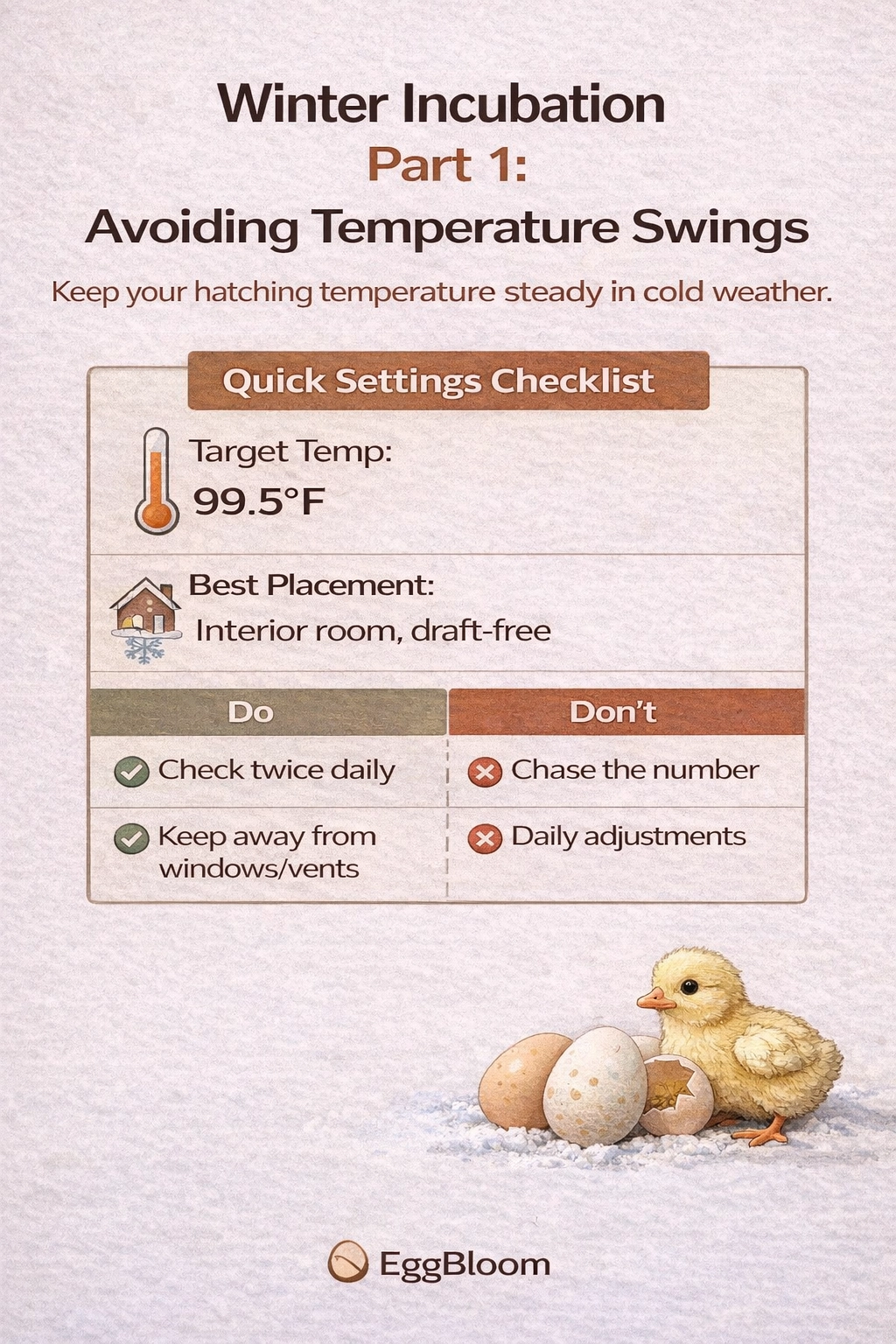
If you’ve ever tried using an egg incubator in winter, you already know the stress. One day everything looks fine. The next morning, the room temperature drops overnight, and suddenly you’re wondering if you just lost the whole batch.
I’ve been there. Winter hatching is absolutely doable—but it punishes small mistakes much faster than warm-season incubation. The good news? You don’t need perfect numbers or fancy tricks. You need stability, good placement, and fewer chances for human error.
In this guide, I’ll walk through the winter incubation points that actually matter, based on what consistently works for backyard poultry keepers and small flocks.
Why Winter Makes Temperature Control Harder
In warm months, most homes sit within a fairly stable temperature range. In winter, that cushion disappears.
- Heating systems cycle on and off
- Nighttime temperature drops are sharper
- Cold exterior walls pull heat away
- Power interruptions happen more often
University extension research consistently shows that frequent temperature swings are more damaging than running slightly above or below the ideal setpoint. Embryos tolerate small deviations, but repeated fluctuations slow development and increase late-stage losses.
This is why winter incubation failures often look mysterious—everything “looked fine,” but stability was quietly lost.
The Most Common Winter Mistake: Chasing the Number
A lot of beginners fall into the same trap: constantly adjusting the incubator to “fix” the reading.
Here’s what usually happens:
- Room cools overnight
- Incubator display drops a bit
- User bumps the setting up
- Room warms during the day
- Incubator overshoots
Now the eggs experience multiple swings instead of one gentle curve. Poultry science research makes it clear: embryos do better with consistency than with perfection.
If this sounds familiar, you may also want to read our guide on common incubation mistakes beginners make, which covers this pattern in more detail.
Room Placement Matters More Than the Incubator Brand
Before adjusting settings or blaming equipment, look at where your incubator sits.
Best Winter Locations
- Interior rooms (not garages or sheds)
- Away from windows and exterior walls
- Not near heating vents or fireplaces
- Areas with minimal foot traffic
Extension studies show that incubators placed in draft-free, interior locations experience significantly fewer temperature swings—even when the room itself isn’t heated aggressively.
In my own setup, simply moving the incubator two feet away from an exterior wall made a noticeable difference.
Why Thermal Mass Is Your Winter Friend
One overlooked factor in winter incubation is thermal mass.
Thermal mass means the ability of the incubator system to resist rapid temperature change. Heavier materials, internal water reservoirs, and thicker insulation all help smooth out short-term fluctuations.
This is why many experienced keepers prefer an Automatic Egg Incubator with a more solid build during winter months—it simply reacts more slowly to sudden room changes.
Slower reaction equals fewer spikes and drops.
Don’t Ignore Humidity—But Don’t Obsess Either
Cold air holds less moisture. When heated, winter air becomes extremely dry, which can quietly pull humidity out of your incubator.
However, the solution isn’t constant tweaking.
- Check water levels once or twice daily
- Avoid opening the lid “just to check”
- Focus on trends, not hourly readings
If humidity management is new to you, our article on incubator humidity basics breaks it down in plain language.
Automatic Turning Reduces Winter Risk
Every time you open an incubator in winter, you dump warm air and replace it with cold, dry air. Manual turning increases how often this happens.
That’s why many winter hatchers quietly switch to a chicken incubator with automatic turning—not for convenience, but for stability.
Fewer lid openings mean:
- More consistent temperature
- More stable humidity
- Less recovery time after disturbances
It’s not about being fancy—it’s about removing one more variable you don’t need.
Power Stability: Planning, Not Panic
Winter storms happen. Even short outages can drop incubator temperatures quickly.
Rather than worrying constantly, plan once:
- Know how long your incubator holds heat when unplugged
- Have towels ready for insulation if needed
- Avoid opening the incubator during outages
Research from poultry extension programs shows that embryos tolerate short-term cooling far better than repeated reheating cycles. Again, stability wins.
Stop Comparing Winter Hatches to Spring Results
This is more of a mindset issue, but it matters.
Winter hatches often take:
- Longer to start pipping
- More patience near lockdown
- A calmer approach overall
Trying to force spring-like behavior out of winter conditions leads to unnecessary interference—and interference causes losses.
A Stable System Beats Constant Adjustment
If there’s one takeaway from winter incubation, it’s this:
A stable system with fewer touchpoints beats perfect numbers managed too often.
That’s why many backyard keepers eventually settle on a dependable Egg Incubator setup that lets them check less and trust more—especially during colder months.
Winter doesn’t require heroics. It requires calm management.
Final Thoughts
Winter incubation isn’t harder because eggs are fragile—it’s harder because conditions change faster.
Focus on placement, reduce unnecessary adjustments, and choose systems that smooth out swings instead of amplifying them. Do that, and winter hatching becomes predictable instead of stressful.
Data sources include mainstream poultry science research and university extension publications.
0 Comments